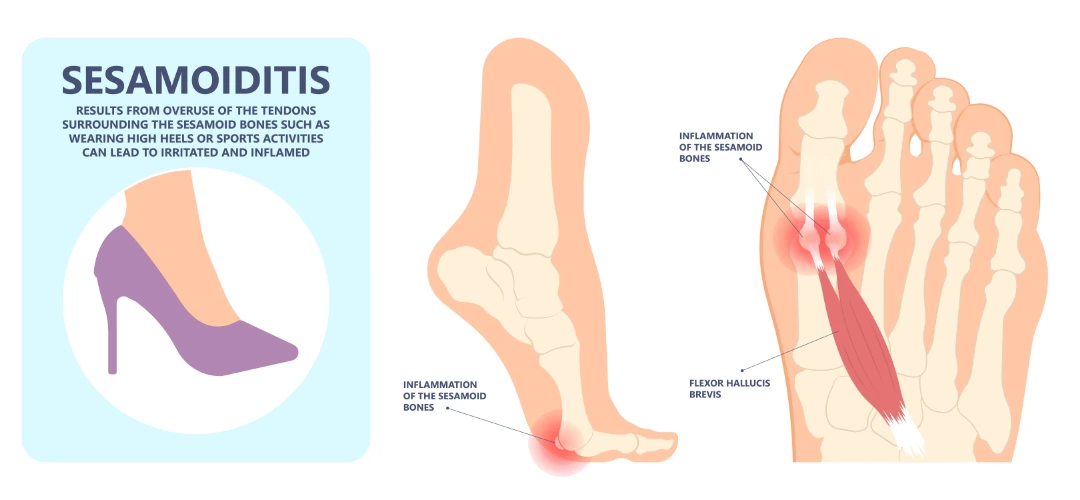
Sesamoiditis refers to the inflammation (tendonitis) and irritation of the tendons surrounding the sesamoid bones, specifically in the ball of the foot under the big toe joint.
Unlike other bones, sesamoid bones are connected to other bones via tendons as opposed to joints.
Sesamoiditis is a specific type of tendinitis that affects the sesamoid bones in the feet due to inflammation, and irritation.
What causes sesamoiditis?
Sesamoiditis occurs when the tendons surrounding the small sesamoid bones in the foot become overworked or irritated. These unique bones help absorb shock, assist with movement and are subject to the same stresses as the tendons they interact with. Additionally, the medial sesamoid, which is located closer to the centre of the foot, typically endures more stress than the lateral (tibial) sesamoid, making it more prone to injury.
Who is at risk of developing sesamoiditis in Singapore?
While anyone is susceptible to sesamoiditis, it is more common among those with the following risk factors;
Age: sesamoiditis is more common among young to middle-aged adults.
Foot mechanics: if you have high arches or flat feet, then you are more likely to develop sesamoiditis.
Footwear: your chances of developing sesamoiditis are increased if you frequently wear high heels, ill-fitted shoes or shoes with poor structure.
Medical condition: if you are diagnosed with gout, then you are more than likely to develop sesamoiditis.
Obesity: your risk of developing sesamoiditis is increased if you are obese or overweight.
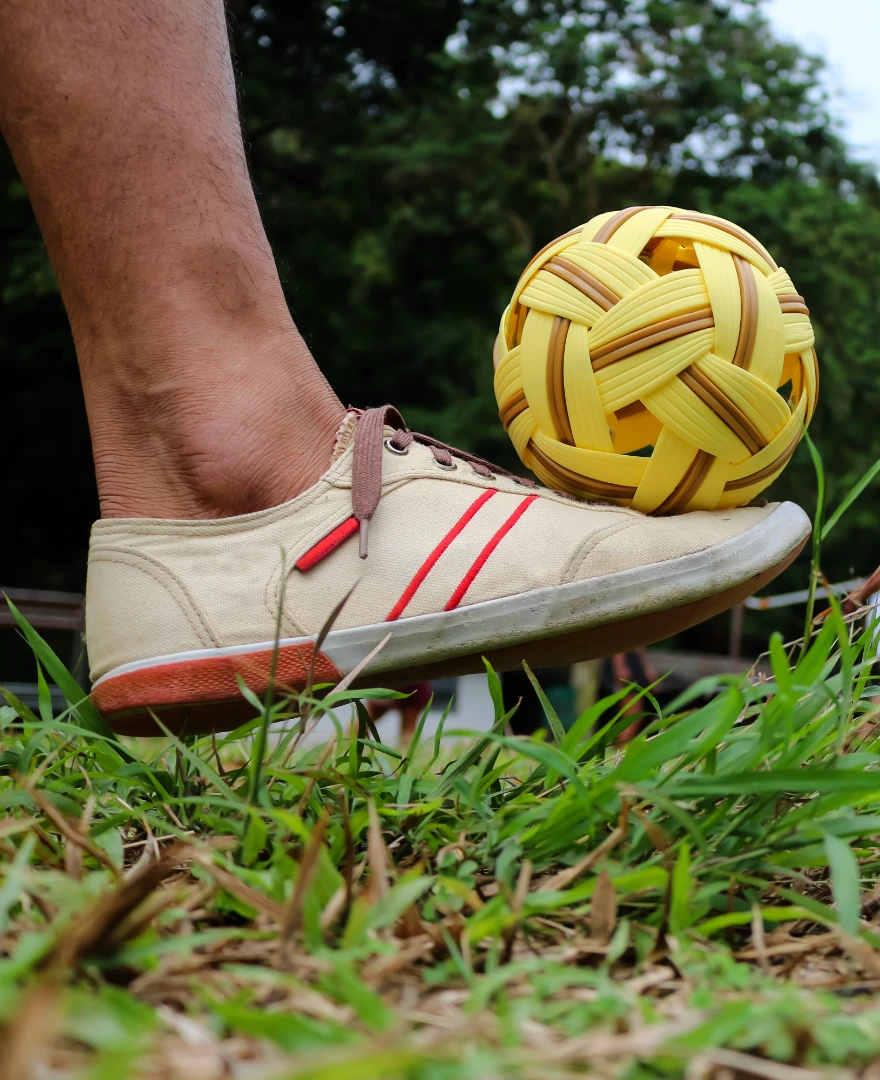
Repetitive activities: if you frequently engage in activities that involve repetitive stress (such as dancing, sports like football and running) to the sesamoid bones and tendons, then you are highly likely to develop sesamoiditis.
Walking style: if you have an overpronation walk, whereby you walk with a slight inward roll, then your risk of developing sesamoiditis is increased.
Weight exercises: if you frequently engage in weight exercises, then you are at a higher risk of developing sesamoiditis.
Athletes and dancers are more prone to developing sesamoiditis as they frequently apply pressure to the sesamoid bones due to repetitive movements.
What are the symptoms of sesamoiditis?
You may have sesamoiditis if you are experiencing the following symptoms:
A dull aching pain under the big toe.
Bruising.
Difficulty bending the big toe.
Difficulty walking or bearing weight.
Redness.
Swelling.
Doctors will recommend imaging tests to be performed to confirm a sesamoiditis diagnosis, while ruling out other potential causes.
How is sesamoiditis diagnosed in Singapore?
To diagnose sesamoiditis, an orthopaedic specialist will begin with a physical examination to assess:
The extent of bruising redness or swelling in the big toe.
The extent of mobility in the big toe.
The tenderness of the ball in the foot.
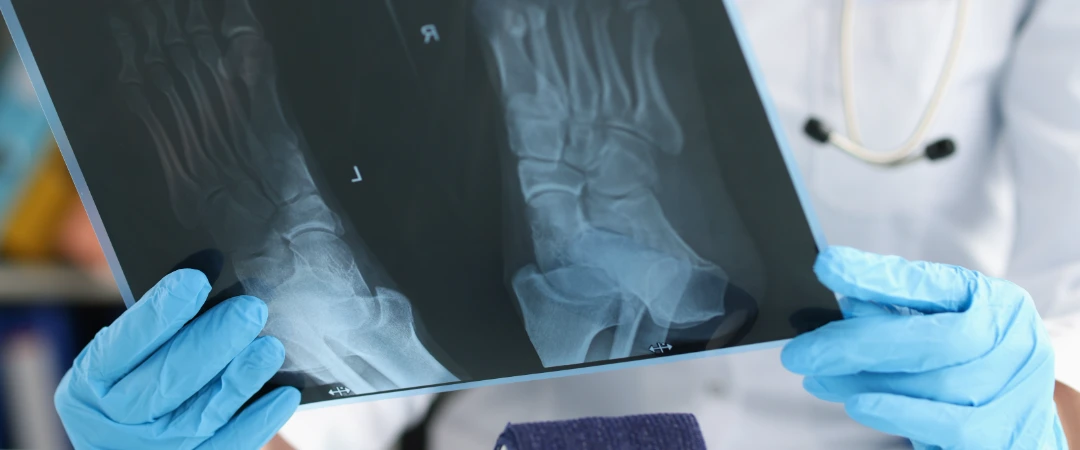
Following a physical examination, imaging tests may be recommended to rule out potential issues such as acute or stress fractures and bunions. The imaging tests can include:
X-ray: An X-ray scan provides doctors with a detailed and closer look at the bones to check for jagged edges on the sesamoid bones. A confirmed presence of these jagged edges may indicate a fracture.
Bone scan: a bone scan is effective in identifying underlying bone conditions by using a small amount of radioactive dye to highlight problems that a traditional x-ray might miss.
Computed tomography (CT) scan: a CT scan offers doctors a more detailed image of the bones and structures of the foot, which enables doctors to identify any potential bone-related issues.
Magnetic resonance imaging (MRI): an MRI produces detailed images of the soft tissues and inflammation in the tendons around the sesamoid bones.
Ultrasound: an ultrasound produces images of the soft tissues that aid in analysing the condition of the joints and tendons while in motion.
How is sesamoiditis treated in Singapore?
Treating sesamoiditis often centres on offering pain relief and alleviating your troublesome symptoms. Below are some conservative measures that may be recommended;
Applying an ice pack over the affected area to reduce swelling.
Elevating the foot when you are going to bed.
Opting for more well-fitted footwear that offers ample cushioning and support.
Refraining or taking a temporary break from engaging in activities or sports that cause stress to the sesamoid bones.
Additionally, you may also be prescribed medications such as non-steroidal anti-inflammatory drugs (NSAIDs) to complement one or a combination of the following treatment options:
Corticosteroid injections: are often recommended to help reduce swelling and alleviate pain and discomfort.
Orthotics: orthotics, such as customised padded insoles, offer pain relief and assist in reducing swelling and irritation.
Therapy: depending on the severity of your condition, you may need to undergo physical or soft tissue therapy to rehabilitate the injured tissues.
Surgery: although rare, surgery may be recommended to remove the sesamoid bones as a means of alleviating pain. However, surgery is often the last resort in cases where patients do not respond positively to more conservative measures and are faced with deteriorating conditions.
It can be challenging to differentiate normal muscle pains from worrying symptoms that could potentially indicate orthopaedic conditions. Be that as it may, it is important to be on top of your feet health as it can impact your quality of life. If you are concerned about your foot mobility and health, contact Cove Orthopaedic today to schedule an appointment.
Frequently asked questions
It takes approximately between 2-3 weeks to fully recover from sesamoiditis. However, this will depend on the severity of your condition.
To lower your risk of developing sesamoiditis, it is advisable to:
Allow your sesamoid muscles to properly heal if you sustain any injuries.
Allow ample interval between your exercising or sporting sessions.
Not overexert your sesamoid muscles.
Wear properly fitted shoes with ample space and cushioning.
It can be tricky to differentiate between sesamoiditis, gout, and turf toe as the symptoms often overlap. However, the key differences between each condition are as follows:
Characteristics
Sesamoiditis
Gout
Turf Toe
Location
Under the ball of the foot, near the big toe joint.
Often at the base of the big toe.
Usually at the base of the big toe joint.
Causes
Inflammation or injury to sesamoid bones.
Build-up of uric acid crystals in the joint.
Hyperextension of the big toe.
Onset
Gradual onset.
Sudden onset, often at night.
Sudden onset, usually after injury.
Major symptoms
Dull, aching pain, worsened by activities like walking or running.
Sudden onset of intense, sharp pain, redness, and heat.
Sharp pain, worsened by pushing off the toe or running.
Delaying treatment will result in symptoms worsening to the point that it limits your range of motion and foot mobility, consequently deteriorating your quality of life.
At Cove Orthopaedic Clinic, our utmost importance is in helping our patients maintain or regain the mobility that they deserve, all through excellent patient care right from the start.
Happy and satisfied patients are what keeps us going!
If you have further enquiries or would like to make an appointment at Cove Orthopaedic Clinic, simply fill in the form below or call us at +65 9631 7637.