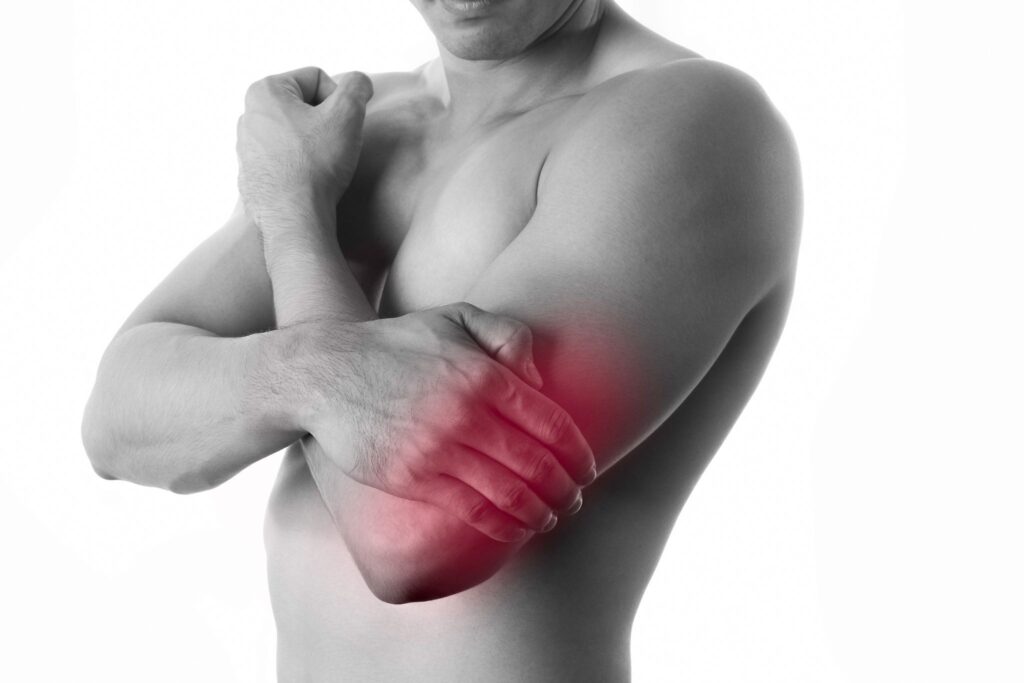
Triceps tendinopathy is an overuse condition where the triceps tendon becomes irritated or degenerates, leading to pain at the back of the elbow, especially during pushing movements.
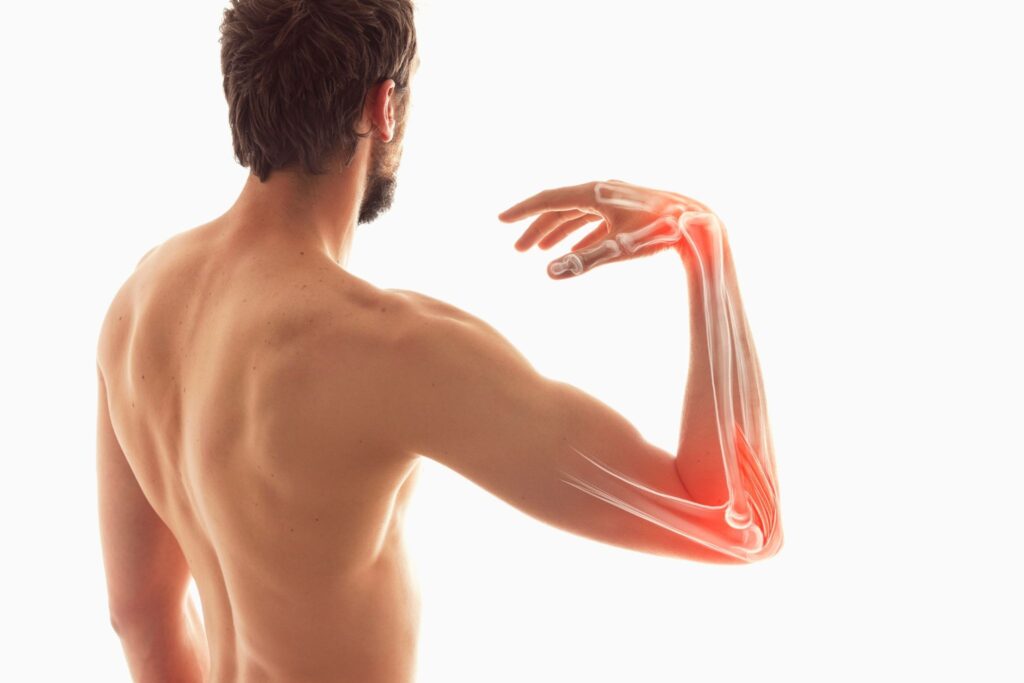
Triceps tendinopathy is a condition involving irritation or degeneration of the triceps tendon, which is located at the back of the elbow. This tendon connects the triceps muscle in the upper arm to the tip of the elbow and plays an important role in arm movement. When the tendon is subjected to repeated stress or insufficient recovery, it can become painful and less able to tolerate load.
The condition often develops gradually rather than from a single injury. It is commonly associated with overuse, particularly in activities that involve repeated pushing or straightening of the arm. Over time, small areas of tendon damage may accumulate, leading to discomfort, stiffness and reduced strength at the back of the elbow.
What is the triceps tendon and what does it do?
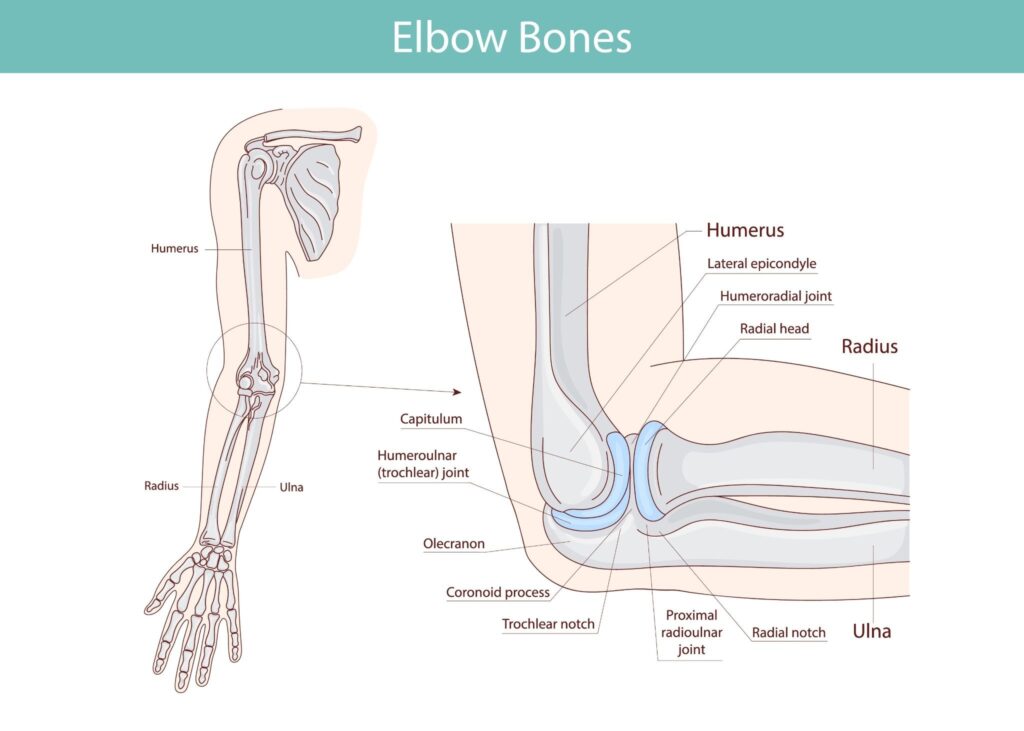
The triceps tendon is a strong, fibrous structure that connects the triceps muscle at the back of the upper arm to the olecranon, which is the bony tip of the elbow. This connection allows the force generated by the muscle to be transmitted to the forearm, enabling movement at the elbow joint.
Its primary function is to extend the elbow, straightening the arm during activities such as pushing, lifting or supporting body weight. Because it is involved in many daily and sporting movements, the tendon is regularly exposed to load, which makes it susceptible to irritation or injury when stressed repeatedly.
The triceps tendon connects the triceps muscle to the tip of the elbow and enables the arm to straighten during movement.
What causes triceps tendinopathy?
Triceps tendinopathy typically develops due to repeated stress on the tendon or factors that affect its ability to recover.
Sudden increase in activity — a rapid increase in training intensity, frequency or load can overwhelm the tendon before it has time to adapt, increasing the risk of injury.
Direct stress or microtrauma — repeated loading of the tendon during forceful movements can cause small areas of damage over time, contributing to pain and dysfunction.
Underlying tendon degeneration — age-related changes or inadequate recovery between activities can reduce the tendon’s ability to withstand stress, making it more prone to tendinopathy.
What are the symptoms of triceps tendinopathy?
The symptoms of triceps tendinopathy usually develop gradually and are related to repeated stress on the tendon.
Pain at the back of the elbow — discomfort is typically felt over the tip of the elbow and may worsen with activity.
Pain during pushing or extension — activities that involve straightening the arm, such as pushing, lifting or supporting body weight, may trigger or aggravate pain.
Tenderness over the tendon — the area at the back of the elbow may feel sore when touched, especially after use.
Stiffness after rest — the elbow may feel stiff after periods of inactivity, with symptoms easing slightly once movement begins.
Reduced strength — weakness may develop in the affected arm, particularly during movements that require forceful extension.
Triceps tendinopathy may cause pain at the back of the elbow, especially during pushing or straightening movements.
When should you see a doctor for triceps tendinopathy?
Medical evaluation is recommended when symptoms persist or begin to affect normal function. Ongoing pain at the back of the elbow, particularly when it interferes with daily activities or exercise, should not be ignored.
Weakness during arm extension or difficulty performing routine tasks may indicate more significant tendon involvement. If symptoms do not improve with rest or continue to worsen over time, assessment is important to guide appropriate treatment.
Who is most at risk of triceps tendinopathy in Singapore?
Triceps tendinopathy is more likely to occur in individuals who place repeated or high levels of stress on the elbow.
Athletes — weightlifters and gym-goers are at increased risk due to repetitive loading of the triceps during exercises such as presses and push-ups.
Individuals performing repetitive upper limb activities — regular use of the arms in repetitive motions can place ongoing strain on the tendon, increasing the risk of irritation.
Manual workers — jobs that involve lifting, pushing or sustained use of the arms can expose the tendon to repeated stress over time.
Middle-aged individuals — age-related changes in tendon structure and reduced recovery capacity can make the tendon more susceptible to degeneration and injury.
Can triceps tendinopathy heal without treatment?
Triceps tendinopathy may improve on its own in mild cases, particularly if the affected tendon is given adequate rest and the aggravating activity is reduced. However, recovery is often slow, and symptoms may persist or recur if the underlying cause is not addressed.
Without appropriate management, repeated strain on the tendon can lead to ongoing discomfort or progression of the condition. Early intervention with structured rehabilitation helps promote more reliable and sustained recovery.
How is triceps tendinopathy diagnosed?
Diagnosis is based on a clinical assessment, with imaging used when needed to confirm tendon involvement.
Clinical assessment — the doctor takes a detailed history of symptoms, including onset, activity level and any recent increase in load. This helps identify patterns consistent with overuse or tendon stress.
Physical examination — the elbow is examined for localised tenderness at the back of the joint. Strength testing is performed, particularly during resisted elbow extension, to assess tendon function.
Imaging (if needed)
Ultrasound — used to assess tendon thickening, inflammation or structural changes.
MRI — provides a more detailed view to evaluate the extent of tendon damage or detect partial tears.
What are the treatment options for triceps tendinopathy in Singapore?
Treatment focuses on reducing pain, which can allow the tendon to recover and gradually restore strength and function. Most cases improve with conservative care, although more advanced cases may require further intervention.
Conservative (Non-Surgical) Treatment
Rest and activity modification — reducing or temporarily stopping activities that place strain on the triceps tendon is essential in the early stages. This helps prevent further irritation and allows the tendon to begin healing. Gradual reintroduction of activity is important to avoid recurrence.
Physiotherapy — a structured rehabilitation programme is central to recovery. It focuses on improving strength, flexibility and control of the triceps and surrounding muscles, while also correcting movement patterns that may have contributed to the condition.
Ice application — applying ice to the affected area can help reduce discomfort, particularly after activity. It is most useful during flare-ups, as it helps manage local inflammation and provides short-term relief.
NSAIDs — anti-inflammatory medications may be prescribed to manage pain, especially in the early stages. While they can improve comfort, they do not address the underlying tendon changes and are typically used as part of a broader treatment plan.
Eccentric strengthening exercises — these exercises involve controlled lengthening of the muscle under load and are commonly used in tendon rehabilitation. Over time, they help improve the tendon’s capacity to handle stress and support long-term recovery.
Surgical Treatment
Surgery is considered when symptoms are persistent despite appropriate conservative treatment or when there is significant structural damage to the tendon.
Tendon debridement or repair — debridement involves removing damaged or degenerated tendon tissue to allow healthier tissue to function more effectively. In cases where there is a partial tear, surgical repair may be performed to restore the integrity of the tendon. These procedures aim to reduce pain, improve strength and allow a return to normal activity when non-surgical measures are insufficient.
What is recovery like after triceps tendinopathy treatment?
Recovery from triceps tendinopathy is typically gradual and depends on the severity of the condition and adherence to treatment. Mild cases may improve over a few weeks, while more persistent or advanced cases can take several months. Rehabilitation is a key part of recovery, which helps restore strength, flexibility and tendon capacity.
A gradual return to activity is important, as returning too quickly to heavy loading can delay healing or lead to recurrence. Following a structured programme ensures safer progression and better long-term outcomes.
How can triceps tendinopathy be prevented?
Preventing triceps tendinopathy involves managing how the tendon is loaded during activity. Gradual progression in training intensity allows the tendon to adapt without being overwhelmed. Strength and conditioning exercises help support the elbow and improve overall resilience.
Adequate rest and recovery between activities are essential to allow the tendon to repair and adapt. Maintaining proper technique during exercise or repetitive tasks also reduces unnecessary strain on the tendon and lowers the risk of injury.
Summary
Triceps tendinopathy is a condition involving irritation or degeneration of the triceps tendon at the back of the elbow, often caused by repetitive strain, overuse or inadequate recovery. It typically presents with pain during pushing movements, localised tenderness and reduced strength, which can affect both daily activities and exercise.
If you are experiencing persistent pain at the back of the elbow or difficulty with arm extension, schedule a consultation with Dr Sean Ng for a detailed assessment and a personalised treatment plan.
Frequently asked questions
Yes, if left untreated, triceps tendinopathy can progress from mild irritation to more significant tendon damage. Ongoing strain may lead to persistent pain and reduced strength over time.
These terms are often used interchangeably, but tendinopathy refers more broadly to degeneration and failed healing, not just inflammation. This distinction affects how the condition is managed.
Heavy or aggravating exercises should be avoided initially to allow the tendon to recover. Modified training may still be possible under guidance, focusing on movements that do not worsen symptoms.
Pain is often activity-related and may worsen during pushing or lifting movements. In early stages, it may settle with rest, but can become more persistent if the condition progresses.
Yes, prolonged stress on a weakened tendon can increase the risk of partial or complete tears. Early management helps reduce this risk.
No, many cases can be diagnosed clinically based on symptoms and examination. Imaging is usually reserved for unclear cases or when more significant damage is suspected.
It is more commonly seen in one arm, typically the dominant side, but both sides can be affected if similar strain patterns are present.
Rest may help reduce symptoms initially, but structured rehabilitation is usually needed to restore tendon strength and prevent recurrence.
Yes, incorrect form during activities such as weightlifting can place excessive stress on the tendon, increasing the risk of injury over time.
Yes, it can occur in anyone performing repetitive arm movements, including daily activities or occupational tasks, not just sports.
At Cove Orthopaedic Clinic, our utmost importance is in helping our patients maintain or regain the mobility that they deserve, all through excellent patient care right from the start.
Happy and satisfied patients are what keeps us going!
Consult Us Today
If you have further enquiries or would like to make an appointment at Cove Orthopaedic Clinic, simply fill in the form below or call us at +65 9631 7637 | +65 6475 7177