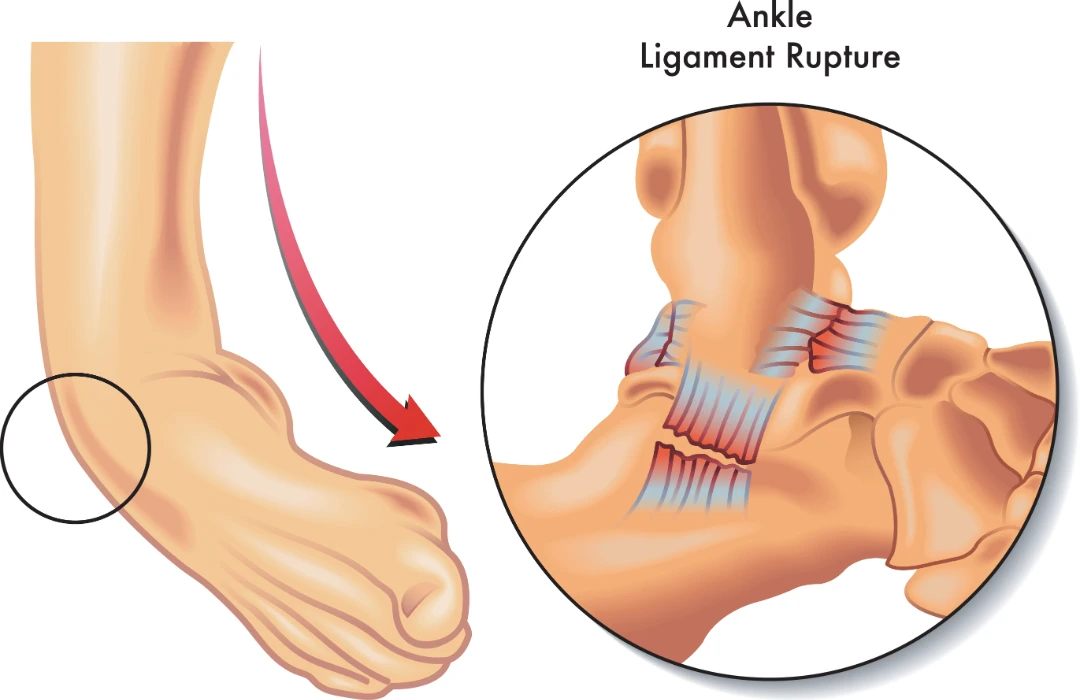
A ligament tear (or rupture) occurs when one of the tough, fibrous bands of tissue that connect bones is stretched beyond its capacity– leading to a partial or complete rupture.
Ligaments are essential for stabilising joints. When ruptured, the affected joint can become unstable and painful. Ankle ligament ruptures tend to occur during twisting injuries. Ligament tears vary in severity but they all involve some degree of compromise in the joint’s structure and function.
An ankle ligament rupture occurs when the ligament is overstretched or torn, typically due to sudden movements like twisting, pivoting or awkward landings.
What is a ligament tear?
A ligament tear (or rupture) occurs when one of the tough, fibrous bands of tissue that connect bones is stretched beyond its capacity– leading to a partial or complete rupture. Ligaments are essential for stabilising joints. When ruptured, the affected joint can become unstable and painful. Ankle ligament ruptures tend to occur during twisting injuries. Ligament tears vary in severity but they all involve some degree of compromise in the joint's structure and function.
What causes a ligament tear?
A common mechanism of ligament tear in the ankle involves a rapid twist or sudden impact that forces the joint to move beyond its normal range. For instance, a sprain can happen when the foot twists inward after landing unevenly, causing the ligaments to overstretch or tear.
Ankle ligaments are particularly prone to tearing because they bear significant body weight and are frequently exposed to stress, especially during sports that involve rapid directional changes or full contact, like basketball, tennis, or football. These activities place immense strain on the joints, which increases the likelihood of ligament damage due to the speed and intensity of the movements.
A common symptom of a ligament tear is sharp, sudden pain at the moment of injury, often followed by swelling and difficulty moving the joint.
What are the symptoms of a ligament tear?
The symptoms of an ankle ligament tear can vary depending on the severity of the injury and the specific ligament involved. Common symptoms of a ligament tear include:
Sudden, sharp pain at the moment of injury.
Swelling in the affected joint.
Bruising or discolouration around the injured area.
Instability or feeling like the joint is “giving way.”
Limited range of motion in the joint.
Popping or snapping sound at the time of the injury.
Difficulty bearing weight or moving the joint.
Hikers are prone to ligament tears at the ankle due to risks imposed by uneven terrains,
Who is at risk of a ligament tear in Singapore?
In Singapore, certain groups of people are more at risk of experiencing a ligament tear in their ankles due to their lifestyle, activities, or physical conditions. The most common at-risk individuals include:
Athletes and sports enthusiasts: those who participate in high-impact sports like football, basketball, tennis, or rugby are particularly vulnerable. Sports involving rapid directional changes, jumping, or physical contact often result in ligament tears.
Older adults: as people age, their ligaments lose elasticity and strength, which makes them more prone to injuries even during everyday activities. Simple falls or awkward movements can cause ligament tears in older individuals.
Active professionals: professions involving physical labour, such as construction workers, are at a higher risk of ligament injuries due to the demands of their job, including heavy lifting and awkward body movements.
Recreational runners and hikers: running and hiking on uneven surfaces or trails can increase the likelihood of ankle sprains and ligament tears due to the unpredictability of the terrain.
Individuals with previous injuries: people who have previously experienced ligament injuries are more likely to suffer recurring ligament tears as the joint may remain weak or unstable despite recovery.
These risk factors highlight the importance of proper physical conditioning, the use of supportive gear and awareness of joint safety to help minimise the chances of ligament tears.
How is a ligament tear diagnosed?
At Cove Orthopaedic, diagnosing an ankle ligament tear typically involves a combination of physical examination, patient history, and imaging tests;
Physical examination: our specialist will first assess the injured area by palpating (feeling) the joint and testing its range of motion. Stress tests like the Talar Tilt test may be employed to evaluate the stability of the ligament.
Patient history: the doctor will ask how the injury occurred, what symptoms are being experienced and whether there was a noticeable “pop” at the time of the incident. This information helps in assessing the likelihood of a ligament tear.
Imaging tests: one or more imaging tests may be recommended to confirm the diagnosis of ligament tear. These may include;
X-rays: while ligaments don't show up on X-rays, these tests help rule out bone fractures or dislocations that might accompany ligament injuries.
Magnetic Resonance Imaging (MRI): MRI is the most common method to definitively diagnose ligament tears. It provides detailed images of the soft tissues, which allows the doctor to see whether the ligament is partially or fully torn.
Ultrasound: in some cases, ultrasound may be used to visualise the ligament and assess any damage, especially in superficial ligaments like those in the ankle.
Arthroscopy: in more complex cases, an arthroscopy might be performed. This minimally invasive procedure involves inserting a small camera into the joint to view the ligament directly.
The combination of these methods ensures a thorough diagnosis, which allows the healthcare provider to plan the appropriate treatment.
What are the treatment options for a ligament tear?
At Cove Orthopaedic, our team of healthcare experts offers a variety of personalised treatment options for ankle ligament tears. Depending on the severity of your injury, the following treatment options may be recommended:
Conservative treatment: for minor ligament tears, you will be guided to observe the R.I.C.E. method—Rest, Ice, Compression, and Elevation—to manage pain and swelling. Anti-inflammatory medications may also be prescribed to alleviate discomfort and promote healing.
Physical therapy: physical therapy is crucial for restoring joint strength and flexibility, especially after the acute phase of the injury. At Cove Orthopaedic, we guide you through a customised therapy program to safely rebuild muscle and improve stability
Bracing: for moderate tears, a brace may be recommended to stabilise the affected joint during the healing process. This helps prevent further injury while allowing the ligament to recover.
Surgical intervention: in severe cases of ligament tears, surgery may be necessary.
Rehabilitation and follow-up: after surgery or conservative treatment, rehabilitation is critical to regaining full function of the joint. At Cove Orthopaedic, we provide a personalised rehabilitation plan to help you return to daily activities with confidence and prevent re-injury.
If you are experiencing joint pain or suspect a ligament tear, schedule an appointment with Cove Orthopaedic for expert diagnosis and personalised treatment to get you back on track.
Frequently asked questions
Recovery time depends on the severity of the tear and the treatment used. A mild tear may take 2-4 weeks with conservative treatment, while a complete tear that requires surgery can take several months for full recovery.
Some minor ligament tears can heal with rest and physical therapy, but more severe tears, such as complete ruptures, typically do not heal on their own and may require surgical intervention.
Not all ligament tears require surgery. Partial tears can often be managed with physical therapy and bracing, but a complete tear, especially in high-demand joints like the knee (ACL), might need surgery for full recovery.
Leaving a ligament tear untreated can lead to chronic joint instability, increased risk of re-injury, and long-term damage to surrounding tissues, which could ultimately lead to joint degeneration or arthritis.
Depending on the severity and treatment, it can take anywhere from a few weeks to several months before returning to sports. Post-surgery recovery, especially for ACL reconstruction, may take 6-9 months of rehabilitation before returning to high-impact activities.
Yes, a sprain refers to the overstretching or partial damage of the ligament, while a tear indicates that the ligament fibres are significantly damaged or completely severed.
At Cove Orthopaedic Clinic, our utmost importance is in helping our patients maintain or regain the mobility that they deserve, all through excellent patient care right from the start.
Happy and satisfied patients are what keeps us going!
If you have further enquiries or would like to make an appointment at Cove Orthopaedic Clinic, simply fill in the form below or call us at +65 9631 7637.