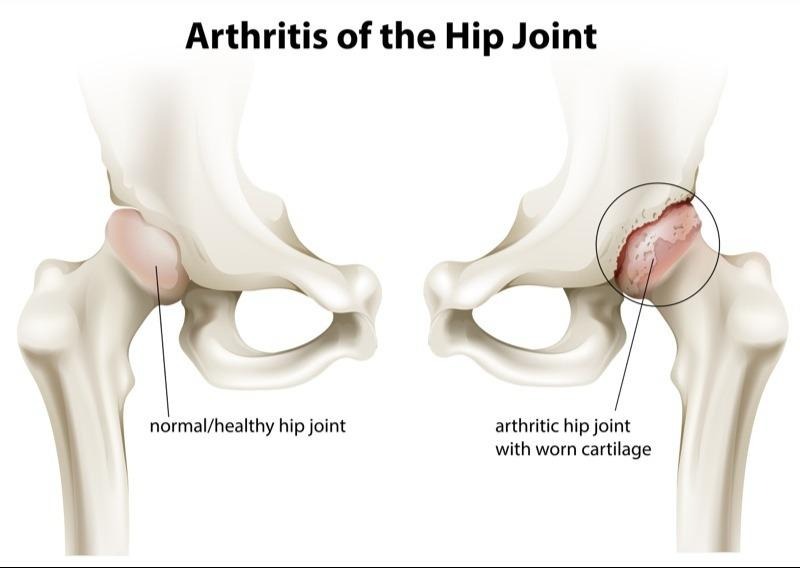
Inflammatory arthritis of the hip is a painful condition in which persistent inflammation damages the joint, causing stiffness, swelling and progressive loss of mobility.
The most common causes include rheumatoid arthritis, ankylosing spondylitis and psoriatic arthritis, although other systemic inflammatory disorders or, rarely, infections may also affect the hip. This condition can occur at any age but is more common in adults with established autoimmune disease.
If untreated, the ongoing inflammation erodes cartilage, weakens surrounding tissues, and alters the mechanics of the hip, leading to chronic pain and disability.
Doctors distinguish between inflammatory arthritis and non-inflammatory arthritis (such as osteoarthritis) based on several clinical features. Recognising these patterns helps guide early and accurate treatment.
Feature
Inflammatory arthritis
Non-inflammatory arthritis
Onset
May be sudden or gradual
Usually gradual
Common cause
Autoimmune disorders or infections
Wear and tear or overuse
Accompanying symptoms
Systemic features such as fatigue or fever are common
Usually confined to the joint
Morning stiffness
Lasts more than 1 hour
Lasts less than 30 minutes
Time of day pain is worse
Typically worse in the morning
Worsens as the day progresses
Effect of activity
Improves with gentle activity, worsens with rest
Worsens with activity, eases with rest
Inflammatory arthritis of the hip involves persistent joint inflammation that erodes cartilage and leads to pain, stiffness, and reduced mobility.
What causes inflammatory arthritis of the hip?
Inflammatory arthritis of the hip is most often caused by autoimmune diseases, in which the immune system attacks the lining of the joint. It may also develop secondary to metabolic conditions, crystal deposition or infections. Unlike osteoarthritis, which is degenerative and usually age-related, inflammatory arthritis can occur at any age and often affects multiple joints or body systems.
Types of inflammatory arthritis affecting the hip
Rheumatoid arthritis — a systemic autoimmune disease where the immune system targets the synovium, leading to joint inflammation, cartilage loss and bone erosion. Tobacco smoking is the strongest environmental risk factor. Hip involvement may occur alongside symptoms in other joints and extra-articular features such as lung or gum disease.
Psoriatic arthritis — a chronic arthritis seen in up to 20% of patients with psoriasis. It is usually seronegative and may mimic rheumatoid arthritis, making diagnosis difficult. Hip arthritis may be accompanied by psoriasis of the skin, nail changes or eye inflammation.
Systemic lupus erythematosus (SLE) — a multisystem autoimmune condition more common in premenopausal women. Hip arthritis in lupus is typically non-erosive but may cause pain, stiffness and reduced mobility. Other features include fatigue, rash, anaemia and systemic organ involvement.
Juvenile idiopathic arthritis — an autoimmune arthritis that develops in children under 16 years old. It often presents with hip or knee stiffness, pain and systemic symptoms such as rashes or fever. Eye inflammation (uveitis) and heart involvement may also occur.
Ankylosing spondylitis — a chronic inflammatory condition that primarily affects the spine and sacroiliac joints, but the hips are also commonly involved. It causes progressive stiffness, pain and reduced mobility. Other associated features include eye inflammation and bowel symptoms.
Crystal-induced arthritis — deposition of urate (gout), calcium pyrophosphate (pseudogout) or calcium phosphate crystals in the joint can trigger acute inflammation. Hip involvement is less common than in the knee or big toe, but when present it can be painful and disabling.
Infectious (septic) arthritis — infection of the hip joint by bacteria such as Staphylococcus aureus, Streptococcus pneumoniae or Neisseria gonorrhoeae can cause severe inflammation. Septic arthritis is a medical emergency as it rapidly destroys cartilage and bone if not treated promptly.
What are the signs and symptoms of inflammatory arthritis of the hip?
Inflammatory arthritis of the hip produces a combination of local joint symptoms and systemic effects related to the underlying autoimmune or inflammatory condition.
Local hip symptoms include:
Pain felt deep in the groin, outer thigh, buttock or sometimes radiating to the knee.
Morning stiffness or stiffness after long periods of rest, typically lasting more than an hour.
Relief with gentle activity, as pain often eases once the joint is moving.
Difficulty walking or limping due to pain and restricted motion.
Swelling or warmth around the hip joint in some cases.
Systemic symptoms may include:
Fever or generalised fatigue from ongoing inflammation.
Loss of appetite and weight changes associated with chronic disease.
Other organ involvement (skin, eyes, lungs, or bowel) depending on the specific type of inflammatory arthritis.
Red flag signs include:
Hip pain with sudden fever, significant swelling or inability to bear weight could indicate septic arthritis, a joint infection requiring urgent medical attention.
Inflammatory arthritis of the hip may cause symptoms such as pain in the groin, buttock, thigh, or even radiating to the knee.
Who is at risk of inflammatory arthritis of the hip in Singapore?
The risk factors for inflammatory hip arthritis vary depending on the underlying condition, but most involve a combination of genetic, environmental and lifestyle influences.
Genetic predisposition — autoimmune diseases such as rheumatoid arthritis, psoriasis, lupus and ankylosing spondylitis have a strong hereditary component. Having a family history of these conditions increases your risk of developing inflammatory arthritis, which can later involve the hip.
Environmental triggers — exposure to cigarette smoke, silica dust, certain infections or medications can trigger or worsen autoimmune activity, leading to joint inflammation. In rheumatoid arthritis, smoking is one of the strongest environmental risk factors.
What are the complications of untreated inflammatory arthritis of the hip?
If inflammatory arthritis of the hip is not diagnosed or treated promptly, the ongoing inflammation can lead to irreversible joint damage and systemic complications.
Joint destruction — chronic inflammation erodes cartilage and bone, eventually causing complete loss of the hip joint space and deformity.
Severe mobility problems — progressive pain and stiffness can make walking, climbing stairs or even sitting and standing difficult, often leading to reliance on walking aids.
Joint deformity — damage to the supporting structures may alter hip alignment, resulting in leg length discrepancy or abnormal gait.
Secondary osteoarthritis — long-standing inflammation accelerates cartilage wear, causing degenerative changes in addition to autoimmune damage.
Systemic complications — because many forms of inflammatory arthritis are autoimmune, other organs such as the eyes, skin, lungs or heart may also be affected if the disease remains uncontrolled.
Reduced quality of life — persistent pain, fatigue and physical limitations can impact work, social activities and overall wellbeing.
Early recognition and treatment greatly reduce the risk of these complications, preserving mobility and delaying or avoiding the need for joint replacement surgery.
How is inflammatory arthritis of the hip diagnosed?
Diagnosing inflammatory hip arthritis can be complex, as many conditions share overlapping symptoms. Doctors usually combine your medical history, physical examination and targeted tests to reach a diagnosis.
Clinical evaluation — your doctor will ask about symptoms, family history and underlying health conditions. A physical examination may include palpation to check for swelling, tenderness or restricted movement in the hip.
Synovial fluid analysis — in cases where infection or crystal arthritis is possible, fluid may be aspirated from the joint. Tests include cell counts, Gram staining for bacteria and microscopy to check for crystals such as urate or calcium pyrophosphate.
Imaging studies — X-rays are often the first test, showing joint space narrowing or bone erosion in later disease. CT scans give a more detailed view of subtle bone damage, while MRI is highly sensitive for early synovitis, marrow oedema and cartilage changes before they appear on X-ray.
Because multiple conditions can mimic each other, diagnosing inflammatory arthritis of the hip often requires ruling out infection, crystal-induced arthritis and degenerative disease. A rheumatologist or orthopaedic specialist typically coordinates this process.
What are the treatment options for inflammatory arthritis of the hip in Singapore?
Treatment for inflammatory arthritis of the hip should begin as early as possible. While inflammation can often be controlled or reversed, structural damage to the joint and bone cannot. Early diagnosis and management therefore increase the chance of preserving joint function and delaying the need for surgery.
Non-operative treatment
Conservative and medical therapies form the primary method of management. In many cases, treating the underlying autoimmune or metabolic disorder helps reduce hip inflammation.
Non-steroidal anti-inflammatory drugs (NSAIDs) — medicines such as ibuprofen, naproxen or celecoxib reduce pain and inflammation. They are commonly used in rheumatoid arthritis, ankylosing spondylitis, psoriatic arthritis and gout.
Corticosteroids — drugs such as prednisone or cortisone injections suppress inflammation quickly. They may be given orally or directly into the joint, but long-term use is limited by side effects.
Disease-modifying antirheumatic drugs (DMARDs) — conventional DMARDs (e.g., methotrexate, hydroxychloroquine, sulfasalazine) and biologic agents (such as TNF inhibitors or monoclonal antibodies) work by altering the immune system’s response, helping to prevent long-term joint damage.
Antibiotics — in cases of septic arthritis, urgent treatment with antibiotics is essential to clear the infection and prevent rapid joint destruction.
Lifestyle and supportive care
In addition to medical treatment, lifestyle adjustments can play an important role in managing symptoms and protecting the hip joint.
Weight management — maintaining a healthy weight reduces excess load on the hip joint and may slow progression of arthritis.
Smoking cessation — smoking is linked to worse outcomes in autoimmune arthritis, particularly rheumatoid arthritis. Quitting can improve both treatment response and overall health.
Assistive devices — canes, walkers or supportive footwear can improve stability and reduce pain during flares.
Balanced nutrition — diets rich in anti-inflammatory foods, calcium and vitamin D support bone and joint health.
Physical therapy — tailored exercises improve strength, maintain flexibility and support mobility. Physiotherapy also helps reduce stiffness and improves daily function.
Operative treatment
Surgery is considered if non-operative treatment fails to control symptoms or if the hip joint has already sustained significant damage.
Synovectomy — this procedure removes the inflamed synovial lining to relieve pain and improve motion. It is most effective when cartilage is still preserved. Synovectomy may be performed arthroscopically (keyhole) or through open surgery.
Total hip replacement (arthroplasty) — in advanced disease with bone and cartilage destruction, the joint may be replaced with a prosthetic implant. This offers pain relief and improved mobility but is not performed in cases of active infection.
As with any surgery, risks include infection, bleeding, blood clots or injury to nearby blood vessels and nerves.
Prognosis and outlook for inflammatory arthritis of the hip
The long-term outlook for inflammatory arthritis of the hip depends on the underlying condition, how early it is diagnosed and how well treatment is followed. With modern therapies such as DMARDs and biologic agents, many patients achieve good control of inflammation and can delay or even avoid the need for surgery.
If detected early, treatment can preserve hip mobility, reduce flares and maintain quality of life. However, once cartilage and bone are destroyed, damage cannot be reversed and joint replacement may eventually be required. Patients with aggressive forms of rheumatoid arthritis, ankylosing spondylitis or untreated septic arthritis are at higher risk of early disability.
Ongoing care is important, as inflammatory arthritis is usually a lifelong condition. Regular follow-up with a rheumatologist or orthopaedic specialist, adherence to prescribed medications and lifestyle modifications such as exercise and smoking cessation all contribute to a more favourable prognosis.
Summary
Inflammatory arthritis of the hip is a painful condition caused by autoimmune, metabolic or infectious diseases that trigger ongoing inflammation in the joint. Unlike osteoarthritis, which develops from wear and tear, inflammatory arthritis may occur at any age and often affects multiple body systems. Early diagnosis is essential, as treatment can control inflammation and preserve hip function, but joint damage cannot be reversed once it occurs. Management ranges from medication and physiotherapy to surgical options such as synovectomy or hip replacement in advanced cases.
If you are experiencing persistent hip pain, stiffness or systemic symptoms that could indicate inflammatory arthritis of the hip, schedule a consultation with Cove Orthopaedics for a thorough evaluation and tailored treatment plan.
Frequently asked questions
Early signs include hip or groin pain, morning stiffness lasting more than an hour and pain that improves with movement but worsens with rest.
Yes, inflammatory arthritis of the hip can affect all ages. Conditions like juvenile idiopathic arthritis and lupus may cause hip arthritis in children and young adults.
Inflammatory arthritis of the hip is caused by autoimmune or systemic disease and often improves with activity, whereas osteoarthritis is due to wear and tear and worsens with use.
Diagnosis usually involves blood tests for inflammation and autoimmune markers, joint fluid analysis and imaging such as X-ray, CT, or MRI.
There is no cure, but treatments such as DMARDs, biologics, physiotherapy and lifestyle measures can control inflammation and preserve hip function.
Untreated inflammatory arthritis of the hip can cause permanent joint destruction, severe mobility problems and systemic complications affecting other organs.
Surgery is considered if medication and therapy no longer control symptoms or if the hip joint has severe cartilage and bone damage.
Maintaining a healthy weight, quitting smoking, exercising regularly, and eating a balanced diet all help reduce flare-ups and protect the hip joint.
Yes, many autoimmune forms such as rheumatoid arthritis or ankylosing spondylitis can involve both hips, though one side may be worse.
Recovery varies; medications may control symptoms within weeks, but joint damage takes longer to stabilise and surgery may require months of rehabilitation.
Yes, the condition is chronic and may flare up over time, but ongoing treatment and lifestyle measures help keep symptoms under control.
At Cove Orthopaedic Clinic, our utmost importance is in helping our patients maintain or regain the mobility that they deserve, all through excellent patient care right from the start.
Happy and satisfied patients are what keeps us going!
Consult Us Today
If you have further enquiries or would like to make an appointment at Cove Orthopaedic Clinic, simply fill in the form below or call us at +65 9631 7637 | +65 6475 7177