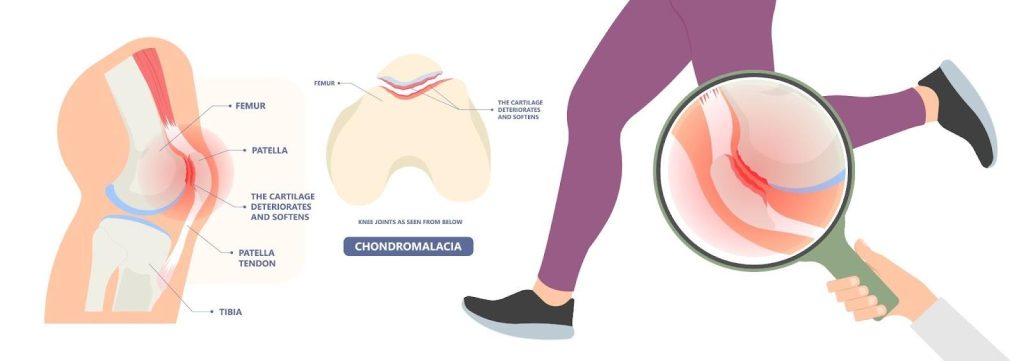
Chondromalacia Patellae, often referred to as “runner’s knee,” is a condition marked by the softening and degeneration of the cartilage on the underside of the kneecap (patella).
This degeneration occurs when the cartilage wears down due to repeated stress or improper alignment, causing the patella to rub against the femur rather than glide smoothly over it. Over time, this friction leads to pain, inflammation, and a characteristic grinding sensation in the knee joint, especially when the knee is bent.
This condition is common among athletes and physically active individuals, particularly those who engage in activities that involve repetitive knee bending, such as running, cycling, and jumping. It can also affect people who experience frequent strain on their knees from daily activities, which makes it one of the most prevalent causes of knee pain in young adults.
With that said, Chondromalacia Patellae is not limited to active individuals; anatomical factors, such as misalignment of the patella or muscle imbalances, can increase the risk of developing this condition.
What causes Chondromalacia Patellae?
Chondromalacia Patellae occurs when the smooth cartilage on the underside of the kneecap begins to soften and break down, leading to pain and discomfort. Normally, this cartilage provides a slick surface that allows the patella to glide effortlessly over the femur as the knee bends and straightens. However, when the mechanics of this movement are disrupted, the patella may start to rub against the femur improperly, causing damage to the cartilage over time.
One primary cause of this condition is abnormal patellar tracking, where the kneecap shifts or tilts out of its optimal path during movement. This misalignment, often due to muscle imbalances or anatomical variations, increases friction within the joint. Instead of moving smoothly, the patella is forced to press against certain areas of the femur with excessive pressure, which gradually weakens the cartilage layer. As this cartilage erodes, it loses its ability to cushion and protect the joint, leading to direct bone-on-bone contact in severe cases.
Another contributing factor is overloading of the knee joint, which happens when high-impact or repetitive activities subject the cartilage to more strain than it can withstand. Activities like running, squatting, or jumping put intense pressure on the knee, especially if the supporting muscles are not balanced and strong. Repeated stress without adequate rest leads to microscopic damage in the cartilage. This wear builds up over time, reducing the cartilage’s integrity and leaving it vulnerable to further breakdown.
When the cartilage deteriorates to a certain point, the knee may develop chronic inflammation as the body attempts to repair the damaged tissue. This inflammation can cause swelling and stiffness, exacerbating the pain and creating a cycle of continued irritation and damage in the knee joint.
Chondromalacia Patellae is caused by the misalignment or overuse of the kneecap, leading to cartilage breakdown and knee joint irritation.
What are the symptoms of Chondromalacia Patellae?
Chondromalacia Patellae can cause a range of discomforts, primarily centred around the kneecap. People with this condition may experience symptoms that worsen with activities involving knee bending or prolonged sitting.
Common symptoms include:
Dull, aching pain around or behind the kneecap, often intensified by activities such as climbing stairs, squatting, or sitting for extended periods.
A grinding or clicking sensation when bending or straightening the knee.
Swelling or tenderness around the knee joint.
Sensitivity to touch in the kneecap area.
Weakness or the feeling that the knee may give way.
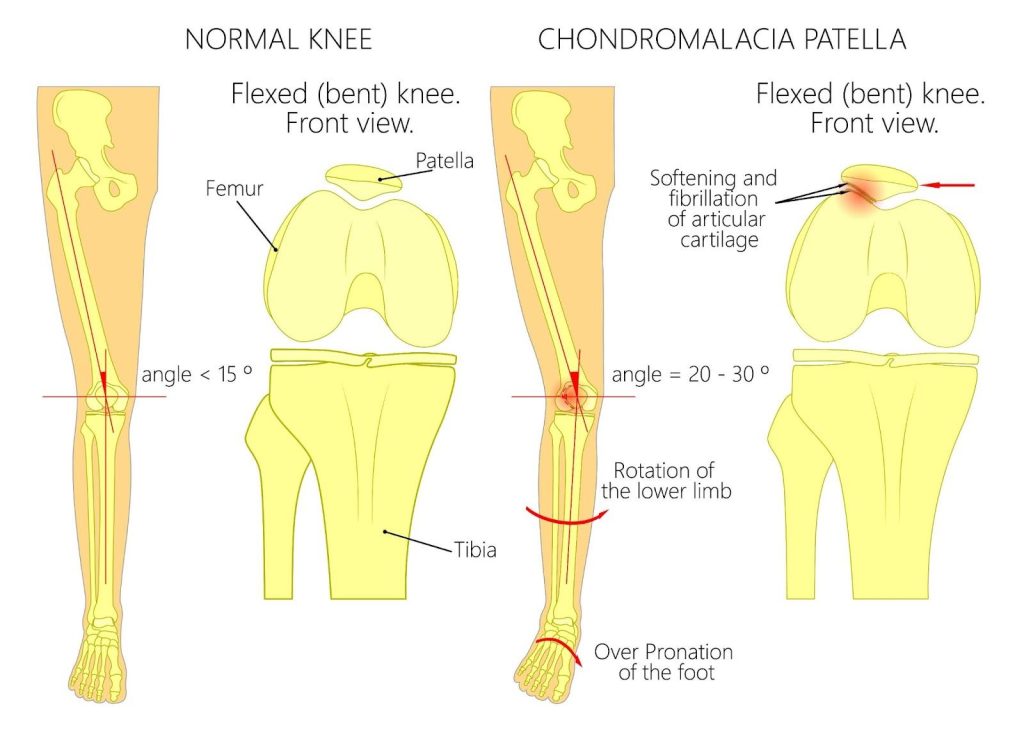
In a normal knee, the kneecap glides smoothly over cartilage, while in Chondromalacia Patellae, the softened cartilage under the kneecap causes friction and pain during movement.
Who is at risk of developing Chondromalacia Patellae in Singapore?
Chondromalacia Patellae can affect a wide range of individuals, particularly those involved in activities that place strain on their knees. In Singapore, specific lifestyle factors, sports activities, and anatomical traits can increase the risk of developing this condition.
Risk factors include for runner’s knee include:
Active lifestyle — athletes and individuals involved in high-impact sports like running, cycling, or soccer, which involve repetitive knee movements, are at higher risk.
Youth and adolescents — Chondromalacia Patellae is more common in younger individuals, particularly adolescents, due to growth spurts and developing joint structures.
Anatomical misalignment —people with structural imbalances, such as a high-riding kneecap (patella alta) or flat feet, may have abnormal patellar tracking, increasing wear on the cartilage.
Weak or imbalanced muscles — insufficient strength in the quadriceps and hamstrings can compromise knee stability and patellar alignment, leading to excessive strain on the kneecap.
Previous knee injuries —a history of knee trauma, such as fractures or dislocations, can make the cartilage more susceptible to damage.
Occupational demands — jobs that require frequent squatting, kneeling, or heavy lifting may predispose individuals to this condition.
Gender — women are at a slightly higher risk than men, likely due to anatomical differences in hip alignment that affect patellar tracking.
How is Chondromalacia Patellae diagnosed?
At Cove Orthopaedics, we understand how frustrating knee pain can be and are here to help you understand the exact cause. When you come in with symptoms of Chondromalacia Patellae, we take a comprehensive approach to assess your knee’s health and determine the best course of action.
Our diagnosis process typically includes:
Physical examination — we start by examining your knee’s alignment, range of motion, and any areas of tenderness or swelling. This helps us identify any movement irregularities that may be affecting your kneecap.
Imaging tests — X-rays allow us to rule out other possible causes of knee pain, such as fractures or arthritis. In some cases, we may recommend an MRI to get a closer look at the cartilage and soft tissues within your knee joint.
Clark’s test — this specific physical examination test helps evaluate the knee for Chondromalacia Patellae by assessing the patellar tracking and the presence of pain during the contraction of the quadriceps muscle.
Arthroscopy (if needed) —for more severe cases or when additional clarity is required, we may use a minimally invasive procedure to examine the cartilage directly. This involves inserting a small camera into the knee joint to gain detailed visuals of the cartilage surface.
With these methods, we ensure a precise diagnosis and work closely with you to create a tailored treatment plan that fits your lifestyle and needs.
What are the treatment options for Chondromalacia Patellae in Singapore?
At Cove Orthopaedics, we believe in providing personalised and effective treatment options for Chondromalacia Patellae, tailored to your recovery goals. Our approach emphasises relieving your pain, improving knee function, and helping you regain mobility without compromising on comfort.
Treatment options we offer include:
Activity modification — our healthcare team guides you on how to adjust your daily activities to reduce strain on your knee, helping you stay active without aggravating your symptoms.
Physical therapy — our experienced physiotherapists work with you on targeted exercises to strengthen the muscles around your knee, especially the quadriceps and hamstrings, which can improve patellar alignment and stability.
Medication —to manage pain and reduce inflammation, we may recommend nonsteroidal anti-inflammatory drugs (NSAIDs) or other suitable medications, always with your comfort and safety in mind.
Orthotic supports — in some cases, we may suggest customised knee braces or shoe inserts to help correct alignment issues and provide additional support to your knee during movement.
Injection therapy — for patients who need further relief, we offer injections, such as corticosteroids or hyaluronic acid, to reduce inflammation and enhance joint lubrication.
Minimally invasive surgery (if required) — if conservative treatments do not bring sufficient relief, we may consider arthroscopic surgery to smooth damaged cartilage or realign the patella for improved movement. Our surgical team will walk you through the process to ensure you feel comfortable and confident in your care.
At Cove Orthopaedics, we work closely with you at each step of your recovery journey, prioritising a treatment plan that aligns with your specific needs and goals for a pain-free, active life.
If you’re experiencing persistent knee pain and suspect Chondromalacia Patellae, schedule an appointment with Cove Orthopaedics for a thorough assessment and personalised treatment plan.
Frequently asked questions
In many cases, Chondromalacia Patellae can improve with conservative treatments such as rest, physical therapy, and activity modification. However, without appropriate management, symptoms may persist or worsen.
Surgery is typically considered only when non-surgical treatments fail to alleviate symptoms. Most individuals find relief through conservative measures like physical therapy and lifestyle adjustments.
Recovery time varies depending on the severity of the condition and adherence to treatment. With proper management, many people experience improvement within a few months.
Yes, but it’s important to modify activities to avoid aggravating the knee. Low-impact exercises such as swimming or cycling are often recommended. Consulting a healthcare professional can help tailor an appropriate exercise regimen.
Maintaining strong and balanced thigh muscles, using proper techniques during physical activities, and avoiding excessive stress on the knees can help prevent the development of Chondromalacia Patellae.
Excess body weight can increase stress on the knee joint, potentially exacerbating symptoms. Achieving and maintaining a healthy weight may help reduce discomfort.
No, Chondromalacia Patellae involves the softening and breakdown of cartilage under the kneecap, while arthritis refers to inflammation of the joints. However, if left untreated, Chondromalacia Patellae can lead to arthritis over time.
Yes, it’s possible for Chondromalacia Patellae to affect one or both knees, depending on factors like activity level, biomechanics, and overall joint health.
Without proper treatment, Chondromalacia Patellae can lead to chronic knee pain and may increase the risk of developing osteoarthritis in the affected joint.
Activities that place excessive stress on the knees, such as deep squats, lunges, and high-impact sports, should be avoided or modified to prevent aggravating the condition.
At Cove Orthopaedic Clinic, our utmost importance is in helping our patients maintain or regain the mobility that they deserve, all through excellent patient care right from the start.
Happy and satisfied patients are what keeps us going!
If you have further enquiries or would like to make an appointment at Cove Orthopaedic Clinic, simply fill in the form below or call us at +65 9631 7637.