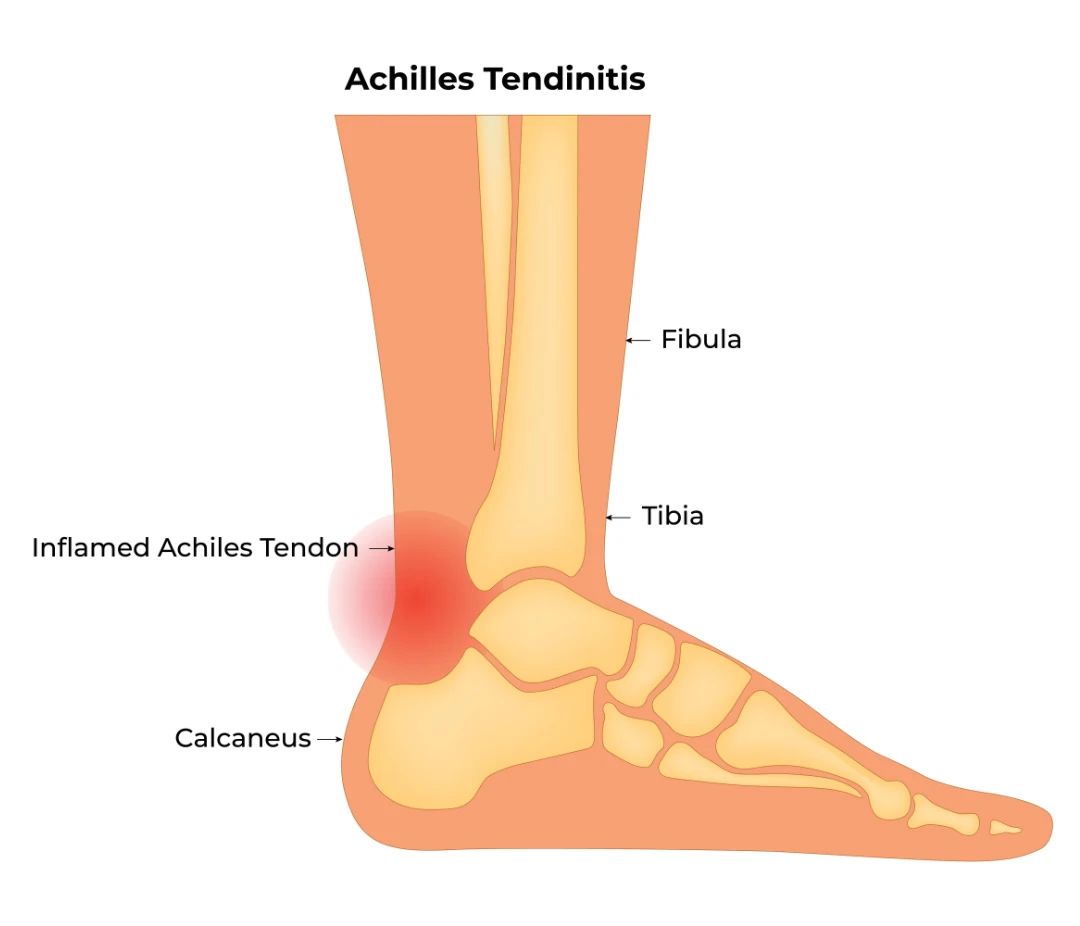
The Achilles tendon is an important part of the leg as it enables you to walk, run, jump, climb the stairs and even stand on your toes. It is the band of tissue that connects the calf muscles at the back of the lower leg and to the heel bone. Achilles tendinitis is thus characterised as an acutely inflamed swollen tendo. It is often a result of overuse combined with insufficient rest resulting in irritation and inflammation of the tendon. There are 2 types of Achilles tendinitis;
Insertional Achilles tendinitis: refers to inflammation that affects the lower part of the heel, specifically where the tendon connects with the heel bone. Bone spurs often form on the heel with insertional Achilles tendinitis. Although it commonly affects marathoners or long-distance runners, insertional Achilles tendinitis can still affect anyone, including those who lead a sedentary lifestyle.
Non-insertional Achilles tendinitis: non-insertional Achilles tendinitis refers to when the fibres in the middle of the tendon begin to disintegrate, swell and thicken. It typically affects those who lead a more active lifestyle.
Generally, Achilles tendinitis is caused by intense repetitive strain or pressure on the Achilles tendon which leads to swelling, inflammation and irritation. Certain behaviours and lifestyle choices can result in the development of Achilles tendinitis such as not warming up sufficiently before exercising, a sudden increase in physical activity without giving the body time to adjust and even wearing high heels too frequently or too long.
Achilles tendinitis is the result of overuse of the Achilles tendon, leading to inflammation and irritation that limits mobility and causing pain.
Additionally, the structure of the Achilles tendon gradually weakens as you age. This makes the Achilles tendons more prone to injuries, especially among those who exercise or participate in sports irregularly and those who increase the intensity of their exercise rapidly in a short period of time. Since it is impossible to refrain from using your Achilles tendon, this causes the body to have insufficient time to repair the injured tendons further increasing inflammation and irritation in the area.
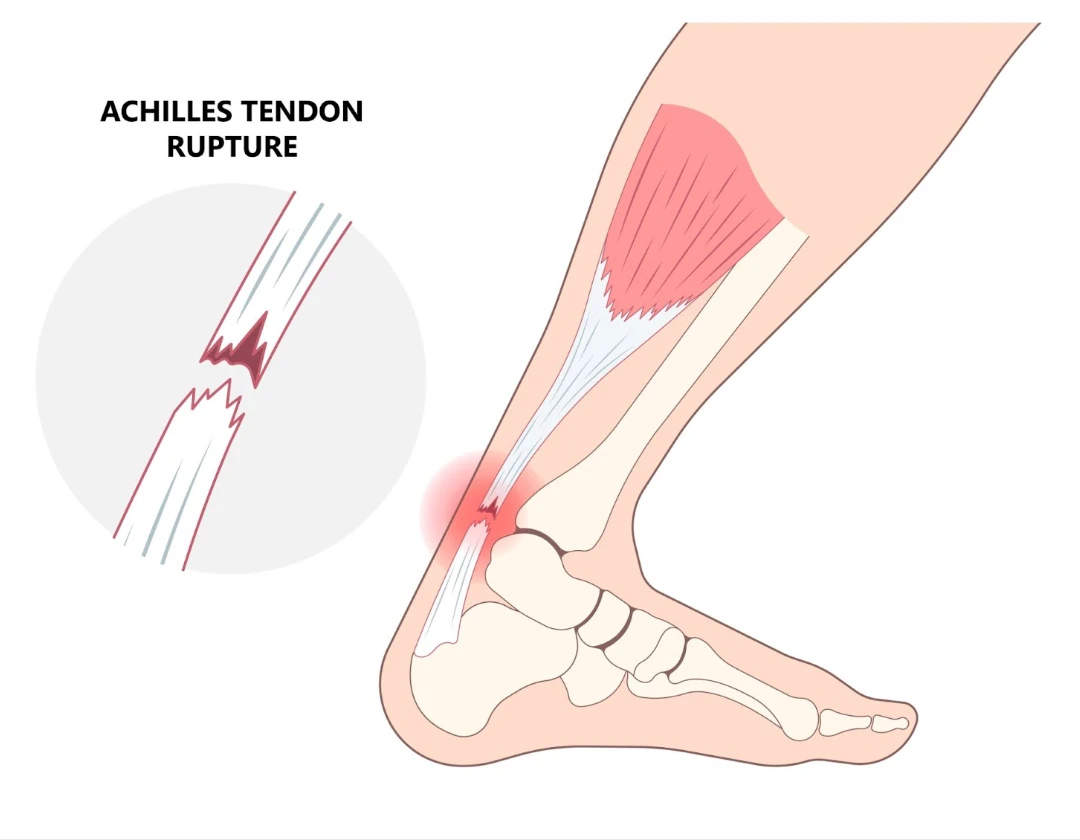
Achilles tendinitis can lead to a rupture if continuously strained.
What are the common symptoms?
You are likely suffering from Achilles tendinitis if you are experiencing the following symptoms:
Limited range of motion when stretching the foot.
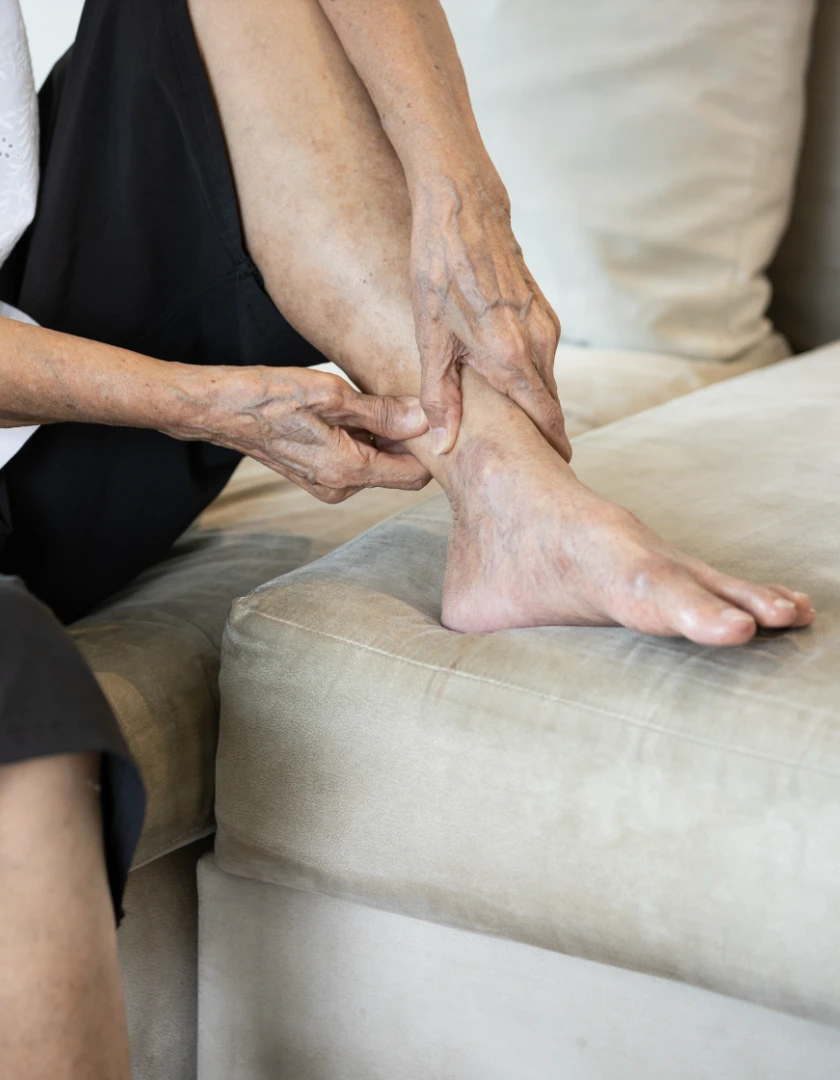
Pain along the Achilles tendon or the back of the heel that worsens with activity.
Pain behind the calf when touched or during any movements.
Pain or discomfort on the back of the heel, especially when wearing shoes.
Persistent swelling that worsens throughout the day with or without activity.
Severe pain after exercising.
Stiffness or pain along the Achilles tendon, particularly in the morning.
Warmth along the Achilles tendon or around the heel.
It is possible to mistake Achilles tendonitis with plantar fasciitis as both conditions do exhibit some similar symptoms. Additionally, if you suddenly experience a ‘pop’ in the back of your heel or calf it may be indicative of a ruptured Achilles tendon. That is why it is important to see an orthopaedic specialist if you experience any of the symptoms to prevent the worsening of the condition.
Who is at risk of developing Achilles tendinitis in Singapore?
You are susceptible to developing Achilles tendinitis if you have the following risk factors:
Athletes: your chances of having Achilles tendinitis are increased when you often play sports that involve quick starts and stops (such as tennis), running or dancing.
Age: you are at a greater risk of developing Achilles tendinitis as you get older because the structure of the Achilles tendons weakens with age, making you more prone to injuries.
Gender: Achilles tendon injuries are more common in men compared to women, as the larger calf muscles in men exert greater force on the tendon, thereby increasing the risk of rupture.
Feet structure: you are more likely to have Achilles tendinitis if you have a naturally flat arch (flat feet), as it puts more strain on the Achilles tendon.
Improper footwear: wearing worn-out or ill-fitted shoes, especially when engaging in any exercises or sports, will increase your risk of tendon injuries.
Obesity: if you are obese, then your risk of developing Achilles tendinitis increases as it puts more strain on the Achilles tendon.
Achilles tendinitis is a common foot injury that can affect anyone, however more commonly amongst athletes.
How is Achilles tendinitis diagnosed in Singapore?
Diagnosing Achilles tendinitis typically involves a combination of diagnostic methods such as;
Physical examination: performed to examine your Achilles tendon, to identify the presence of bone spurs and swelling, and to determine the severity of the pain and swelling. Additionally, an orthopaedic specialist may also examine the range of your motion and flexibility by asking you to stand on the balls of your feet.
Magnetic Resonance Imaging (MRI): an MRI is performed to help an orthopaedic specialist determine any ruptures and tissue degeneration.
Ultrasound: an ultrasound is typically performed to analyse the tendon movement, possible damages and identify any inflammation.
X-ray: an x-ray is performed to capture images of the foot and the leg bones, which will help orthopaedic specialists to detect any skeletal anomalies.
How is Achilles tendinitis treated in Singapore?
The primary goal of treating Achilles tendinitis is to reduce swelling and inflammation which will consequently alleviate pain. While there are several treatment options to consider, our specialists will recommend a combination of strategies for optimum results including:
The RICE Method: a conservative method prescribed to encourage healing before introducing any invasive medical intervention. The steps in this method include: -- Rest: you will need to refrain from engaging in any exercises or sports activities for a couple of days to allow your Achilles tendons to heal. In more severe cases, you may be advised to use crutches or wear a walking boot to relieve pressure on the Achilles tendons. -- Icepack: to decrease swelling and pain. -- Compression: using compressive elastic bandages or wrap tol to reduce tendon movements, subsequently reducing swelling. -- Elevation: before going to bed, it is advised to elevate the injured foot higher than your heart to reduce swelling.
Oral medication: anti-inflammatory medicines (NSAIDs) such as ibuprofen or naproxen will be recommended to help reduce inflammation and alleviate the pain. In more severe cases, analgesics may be considered.
Surgery: you may be recommended a surgical treatment to repair your Achilles tendon if the condition worsens and persists. Depending on the severity of your condition and the source of the pain, the surgical procedure typically entails: -- Gastrocnemius recession: lengthening your calf muscles. -- Debridement and repair: removing bone spurs and damaged tissues. -- Debridement with tendon transfer: strengthening the area by moving the Achilles tendon to the heel of the bone.
If you have been experiencing pain and are struggling with limited movements, then it is time to speak with our orthopaedic specialists. Get in touch with us to prevent the worsening of your condition today.
Frequently asked questions
If treatment is delayed, then you may risk facing the following complications:
Your Achilles tendon begins to disintegrate.
Your Achilles tendon ruptures and eventually separates from the heel bone.
It can lead to progressive knee pain.
Whilst a GP can prescribe medication to alleviate symptoms, an orthopaedic specialist is trained in diagnosing and treating Achilles tendonitis. By seeing a specialist, you will have access to more precise treatment plans that will improve your condition with the priority of regaining mobility.
The chances of recurrence are greatly reduced once the bone spurs are removed especially in cases of insertional Achilles tendinitis. Recurrence likelihood also reduces when patients are more cautious (warming up sufficiently) and root causes of inflammation are sufficiently addressed.
Yes, it is possible to prevent Achilles tendinitis. Here are some of the preventive measures that you can take:
Be sure to do the proper warm-up exercises and stretches before any exercise or sports.
Always ease into a new exercise routine or any sports activities. Remember to gradually increase the intensity and frequency of the exercise or activities as it will give your body time to adjust.
Remember to exercise on flat and even surfaces to reduce excessive tension on the Achilles tendons.
Whether you are exercising, playing sports or going out and about, opt for shoes that offer proper cushioning and effective arch support.
At Cove Orthopaedic Clinic, our utmost importance is in helping our patients maintain or regain the mobility that they deserve, all through excellent patient care right from the start.
Happy and satisfied patients are what keeps us going!
Consult Us Today
If you have further enquiries or would like to make an appointment at Cove Orthopaedic Clinic, simply fill in the form below or call us at +65 9631 7637 | +65 6475 7177