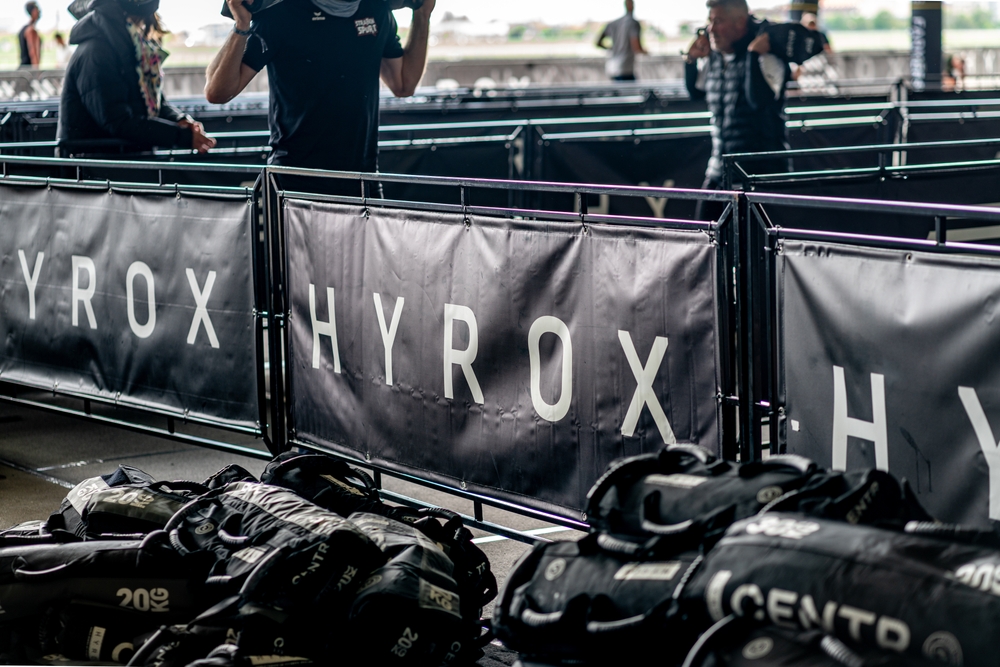
Global fitness competitions such as HYROX [1] are physically and mentally demanding. Following a format that includes running intervals combined with workouts such as rowing and burpees, HYROX is a test of endurance and strength. While training for HYROX is a powerful way to build full-body fitness and functional strength, it also requires focus, resilience, and discipline. The intense nature of the competition can put participants at risk of injuries, especially for those who are not prepared.
A proper training regime is essential for HYROX participants to ensure peak performance while preventing injuries such as muscle strains or joint issues. By training safely, you protect your body from unnecessary strain and long-term damage, allowing you to perform at your best without compromising your health.
Keep reading to learn more about safe training before the race and how to protect your bones, joints, and muscles from overuse and injuries.
Understanding HYROX
To train safely for HYROX, it’s best to familiarise yourself and understand the structure of the event. HYROX is a unique fitness race that combines endurance running with functional workout stations. The standard format includes eight one-kilometre runs, each followed by a specific challenge. Each of these events targets different muscle groups and requires cardiovascular fitness. To reach personal goals and perform well, athletes should develop strength, endurance, speed, agility, and mental toughness.
Here is a refresher on the functional workout stations and their physical demands:
Ski Erg: Mimics cross-country skiing using upper-body and core strength by pulling handles down in a rhythmic motion.
Sled Push: Pushing a heavily weighted sled over a set distance, using leg power, core stability, and overall strength.
Sled Pull: Pulling a weighted sled using a rope as you engage your back and arms.
Burpee Broad Jumps: Performing a burpee, then jumping over a designated distance to test endurance, power, and mental strength.
Rowing: Using a rowing machine over a specific distance, focusing on leg strength, back muscles, and coordination.
Farmer’s Carry: Carrying heavy kettlebells or dumbbells in each hand over a distance, focusing on grip strength, shoulders, and posture.
Sandbag Lunges: Walking lunges while carrying a sandbag on your shoulders, using leg strength, balance, and endurance.
Wall Balls: Throwing a medicine ball to a target on the wall after squatting, combining lower body strength with upper body coordination and strength.
How to Assess Your Fitness Level Before Training
Assessing your fitness level before starting any training program is essential for understanding for creating a plan that will help you improve safely. Evaluating your fitness level helps you identify your strengths and weaknesses so you can tailor your training program, set achievable goals, and track your progress. It also reduces the risk of injury, as you’ll know your limitations and avoid overtraining. Once you assess your fitness level, you can set goals that are specific, measurable, attainable, relevant, and time-bound (SMART) [2] while making sure they are aligned with your specific fitness levels.
Here’s how to evaluate your current fitness level and set realistic goals:
Cardio endurance: Cardio endurance refers to how well your heart and lungs work to supply oxygen to your muscles during sustained physical activity. To assess this, perform a simple test like a three-minute step test or a short run to test your aerobic capacity.
Muscular strength: Strength is your ability to exert force against resistance. Assessing this can be done with exercises like push-ups, squats, and planks to evaluate muscle endurance and strength.
Mobility: Mobility involves your ability to move freely without pain or restriction. To assess this, you can try simple movements like shoulder rolls, hip rotations, and touching your toes to evaluate your flexibility and range of motion.
Core stability: Your core supports your spine and facilitates many movements, crucial for posture and preventing injury. A simple test is performing a plank to see how long you can maintain a stable position.
A professional evaluation from a specialist, such as an orthopaedic surgeon, can help identify underlying issues you might not be aware of, such as joint restrictions or muscle imbalances. They can also ensure your technique is correct, reducing the risk of injury.
If you’re looking for a professional evaluation or guidance on your fitness journey in Singapore, reach out to our specialists atCove Orthopaedics to get personalised advice and training recommendations.
Key Components of HYROX Training
HYROX is an intense and multi-disciplinary fitness race that requires a balance of strength, endurance, speed, and agility. To perform well, you need to prepare your body in several key areas. Below are the essential components of HYROX training.
Endurance training HYROX tests your cardiovascular stamina through running and rowing intervals, making endurance a fundamental component of the race. To prepare safely for this and avoid injury, you should develop both aerobic and anaerobic endurance. To improve your endurance, focus on long, steady-state cardio sessions to increase your aerobic capacity. You can incorporate interval training, where you alternate between intense bursts and recovery, to build anaerobic endurance.
Strength training Strength is crucial to perform demanding physical tasks during a HYROX event, such as sled pushes, wall balls, and burpees. You’ll need strength and muscular endurance to complete the stations without burning out and damaging your muscles and joints. To improve strength training, focus on compound lifts like squats, deadlifts, and bench presses to develop total-body strength. Include functional movements that mimic the event’s exercises, such as kettlebell swings, to prepare for the demands of HYROX.
Mobility and flexibility HYROX requires a full range of motion for various exercises, so flexibility and mobility are essential to reduce the risk of injury and improve movement efficiency. To improve your mobility and flexibility, incorporate dynamic stretching before workouts and static stretching afterward. Pay particular attention to areas that are lacking in flexibility, such as ankles and hips.
Core stability A strong and stable core supports almost every movement in HYROX, particularly when transitioning between exercises and maintaining balance during intense tasks. A strong core also helps support your body to avoid injuries. To strengthen your core, include core exercises like planks, Russian twists, and leg raises in your routine to build endurance and strength.
Speed and agility The ability to move quickly and change directions efficiently is essential for many parts of the HYROX event, particularly when transitioning between stations or sprinting short distances. To avoid muscle strains and tears during these activities, improve your agility with drills such as lateral jumps and ladder drills. Work on your footwork, direction changes, and acceleration to improve speed.
Developing a HYROX Training Program Safely
To maximise your HYROX performance, it’s essential to structure your training program carefully, balancing strength, endurance, and recovery. A well-designed training programme will help prevent overtraining, reduce injury risk, and ensure that you’re progressing toward your fitness goals. Here are some tips to keep in mind when tailoring your training regime for HYROX.
Incorporating event-specific training The ideal way to prepare for HYROX is to practice the event-specific exercises, such as sled pushes, rowing, and wall balls. Mimicking the event’s structure will help you build the endurance and strength needed for each specific challenge, so there is less risk of injury and strain on race day. Incorporate these exercises regularly into your training sessions.
Combining HIIT with Strength Workouts HIIT workouts are key for HYROX training because they help you prepare for similar efforts during the race. Alternating HIIT with strength training will build both muscular endurance and aerobic capacity. For example, follow a strength training session with a 20-minute HIIT circuit to boost endurance while maintaining strength.
Cross-Training for Injury Prevention Cross-training is important to avoid overuse injuries and keep your body balanced. Incorporate activities like swimming, yoga, cycling, or other mobility-based workouts to reduce strain on the same muscle groups.
Injury Prevention and Safety Tips
Injury prevention is not just about avoiding pain, it’s about preserving long-term joint health and overall physical performance. Orthopaedic surgeons see firsthand how even minor mistakes in training can lead to chronic issues or acute injuries that require significant intervention. Whether you’re a recreational athlete or a fitness enthusiast, it’s important to understand the key aspects of safe movement, proper preparation, and recovery.
The following tips are designed to help you train smarter, stay active longer, and reduce your risk of injury.
Warm-ups and Cool-downs
Warm-ups prepare muscles, joints, and tendons for activity to reduce the risk of muscle strains and joint sprains. Cool-downs help return the body to its resting state and helps to remove lactic acid, minimising soreness and reducing the risk of stiffness and joint inflammation.
Stretching and Mobility Drills
Dynamic stretching before workouts enhances range of motion and joint lubrication, while static stretching post-activity improves flexibility and reduces injury risk. Mobility drills prevent degenerative wear and protect your joints.
Proper technique and form
Incorrect movement patterns place stress on ligaments, cartilage, and bone structures, which often leads to chronic issues like tendinitis, stress fractures, or impingement syndromes. Technique improvement, especially under professional supervision, can prevent long-term structural damage.
Warning signs of overtraining
Overuse injuries such as stress fractures, tendonitis, and bursitis are common in those who often ignore overtraining, such as early signs of fatigue, soreness, or joint discomfort. It’s important to take note of issues like persistent pain, sleep disturbances, and reduced performance. If you experience any of these, book a consultation with an orthopaedic specialist before these problems get worse.
Using the right gear
Proper footwear, braces, and ergonomic equipment align the body correctly and reduce biomechanical stress. Gear that doesn’t fit properly often leads to compensatory movement, which can overburden joints and soft tissue structures.
Mental preparation
Mental readiness reduces muscle tension and promotes better motor coordination. Mental fatigue can lead to poor form, rushed movements, and compromised coordination, which may trigger injuries like muscle strains, joint sprains, or improper lifting mechanics. Mentally prepared athletes are more likely to maintain proper technique under pressure and listen to their bodies when fatigue sets in, avoiding overexertion or injury.
Rest and recovery
Tissues like cartilage, muscle, and tendon need rest to repair. Without it, microtraumas [3] build up, raising the risk of long-term damage or serious injury. Rest also supports hormones essential for healing and regeneration.
Nutrition and Hydration for HYROX Training
While preparing safely for HYROX through event-specific workouts and endurance training is important, fueling your body with the right nutrients is just as critical. A good diet supports both endurance and strength by providing energy for training sessions and nutrients for muscle repair. Not eating properly before a HYROX event can lead to early fatigue, poor focus, and weakened performance. Low energy levels increase the risk of injury by compromising form, balance, and joint stability, especially during heavy or repetitive movements. It also slows recovery and muscle repair after the race.
Here are some tips for nutrition and hydration to keep in mind as you prepare for HYROX:
Nutrition for performance: Include a balanced intake of complex carbohydrates, lean proteins, and healthy fats. Carbs fuel your runs, while protein aids muscle recovery from strength work.
Hydration: Start your workouts well-hydrated. Sip water throughout, and consider electrolytes during longer sessions. After training, be sure to rehydrate to support recovery and joint health.
Diet: Eat energy-rich meals like oats, fruits, lean meats, whole grains, and vegetables. Post-workout snacks should combine protein and carbs, such as Greek yogurt or a smoothie with fruits and protein powder.
What to Expect on Race Day
On race day, try to arrive early to reduce stress and allow time for a proper warm-up. Bring essentials such as hydration, race gear, and any supports or braces if prescribed. Perform dynamic movements to activate joints and muscles. These are crucial for preventing strains or sprains during cold starts. Avoid static stretching before the race as it may reduce muscle readiness. Instead, focus on mobility drills and light aerobic activity to prepare your joints and connective tissues.
Make sure to have a pacing plan, as overexertion early in the race can lead to form breakdown, increasing injury risk, especially at stations involving repetitive or weighted movements. Maintain controlled breathing and pay attention to body mechanics throughout. If you feel your form slipping, especially during lifts or high-impact transitions, temporarily dial back intensity to avoid acute injuries like tendon strain or joint overload.
Conclusion
When preparing for HYROX, it’s important to focus on functional fitness by incorporating a balanced mix of endurance, strength, and high-intensity interval training (HIIT). Recovery also plays a vital role in your progress and allows your muscles to repair and grow stronger. Proper nutrition and hydration also significantly impact your performance.
It’s essential to listen to your body and progress steadily. Don’t push through pain and ignore warning signs, as it could lead to injury. Before ramping up your training, seek an evaluation from an orthopedic specialist, especially if you have any concerns or pre-existing conditions. Training smart, staying consistent, and enjoying the process are all key to achieving your HYROX goals while maintaining your health and fitness for the long run.
Frequently Asked Questions
Is Hyrox safe for beginners? Hyrox can be challenging for beginners because of the high-intensity nature, but it is safe with the right training. If you’re new to fitness or have any pre-existing injuries, consult with an orthopedic specialist before starting training.
How can I prevent injury while training for Hyrox? To prevent injuries, focus on proper technique and gradually increase the intensity of your workouts. Rest and recovery are also important to allow your body time to recover between intense sessions. Consider seeking an evaluation from an orthopedic specialist if you’re unsure about your current physical condition.
What should I do if I feel pain during my Hyrox workout? If you feel any pain or discomfort, stop immediately and assess the situation. Continuing to train through pain could lead to further injury. Take time to rest and seek professional advice.
How do I stay hydrated during a Hyrox competition? Hydration is essential to performance and safety. Drink water before, during, and after your workout to maintain fluid balance. Avoid drinking too much at once, as it can cause discomfort during the race.
Lu, Y., Yu, K., & Gan, X. (2022). Effects of a SMART Goal Setting and 12-Week Core Strength Training Intervention on Physical Fitness and Exercise Attitudes in Adolescents: A Randomized Controlled Trial. International journal of environmental research and public health, 19(13), 7715. Retrieved from: https://doi.org/10.3390/ijerph19137715
At Cove Orthopaedic Clinic, our utmost importance is in helping our patients maintain or regain the mobility that they deserve, all through excellent patient care right from the start.
Happy and satisfied patients are what keeps us going!
If you have further enquiries or would like to make an appointment at Cove Orthopaedic Clinic, simply fill in the form below or call us at +65 9631 7637.