Collarbone pain, swelling, deformity and difficulty moving the arm
Diagnosis
Clinical assessment with X-rays or CT scan if required
Treatment
Sling support, physiotherapy or surgery depending on fracture severity
Recovery
Usually 6-12 weeks, depending on the fracture and treatment
What is a collarbone fracture?
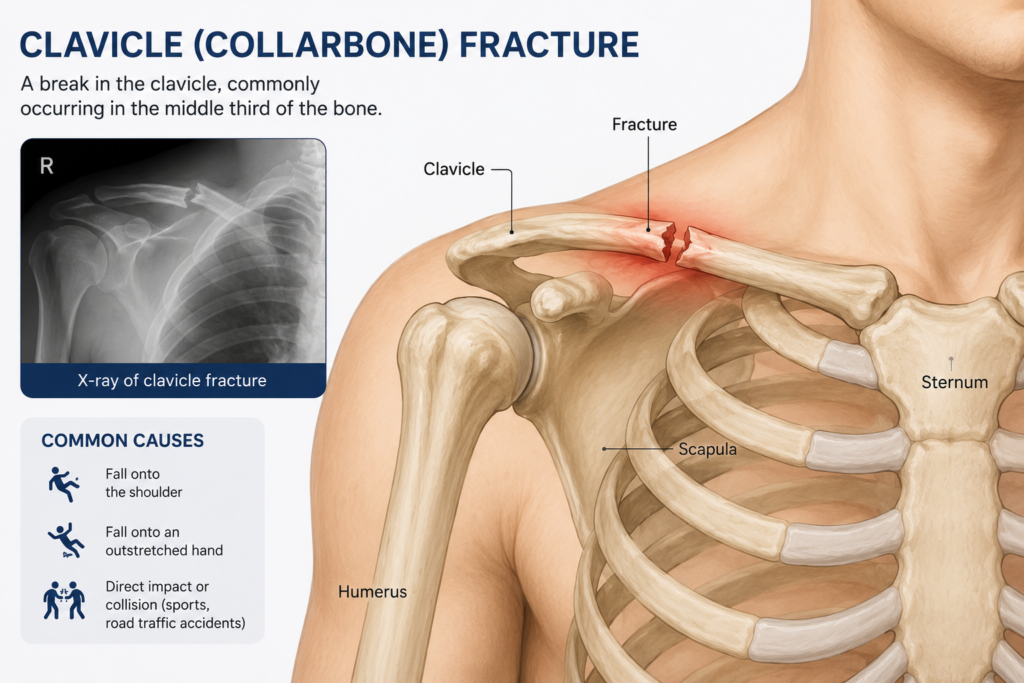
A collarbone (clavicle) fracture is a break in the bone connecting the chest to the shoulder, most commonly occurring in the middle section where the bone is more vulnerable.
A collarbone (clavicle) fracture is a break in the long, slender bone that connects the breastbone (sternum) to the shoulder. This bone supports the shoulder and helps maintain its alignment, so the arm can move smoothly during activities such as lifting, reaching and carrying. When the force applied to the bone exceeds its strength, it can crack or break, which may affect both the stability and function of the shoulder.
Singular fracture — the bone breaks in one clean line, without splitting into multiple pieces. This is generally less complex and may heal well with conservative treatment.
Comminuted fracture — the bone breaks into two or more fragments, often due to higher-impact force. This type of fracture can be more unstable and may require closer monitoring or surgical management.
Non-displaced fracture — the broken ends of the bone remain in their normal position and alignment. Healing is usually more straightforward, as the structure of the bone is preserved.
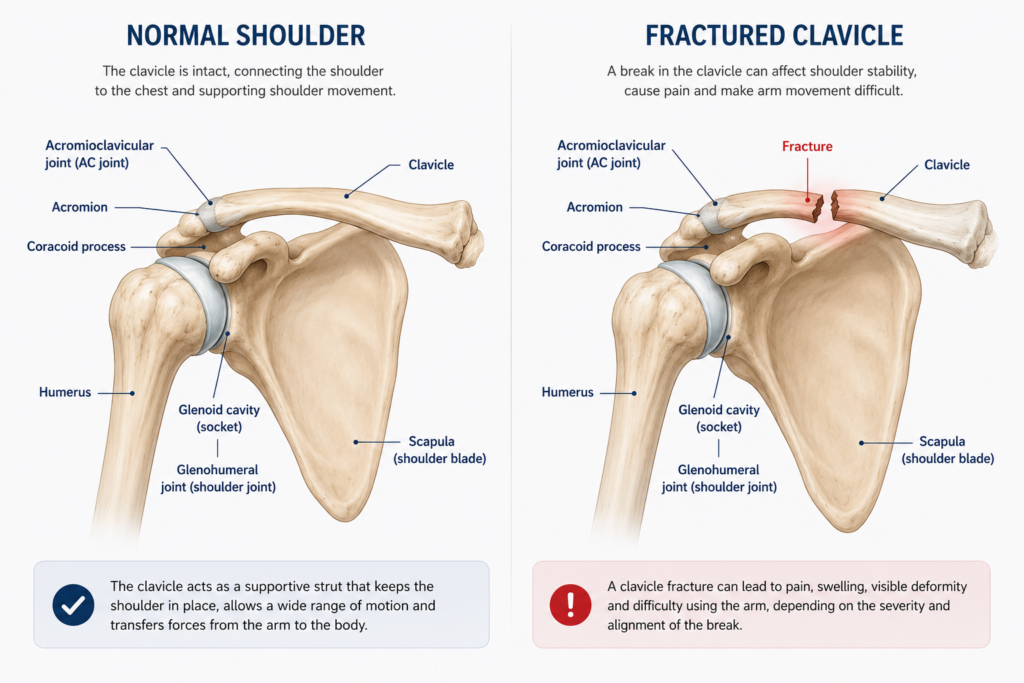
Displaced fracture — the bone fragments shift out of alignment, which may lead to visible deformity and greater functional limitation. These fractures are more likely to require intervention to restore proper alignment.
What is the collarbone and what does it do?
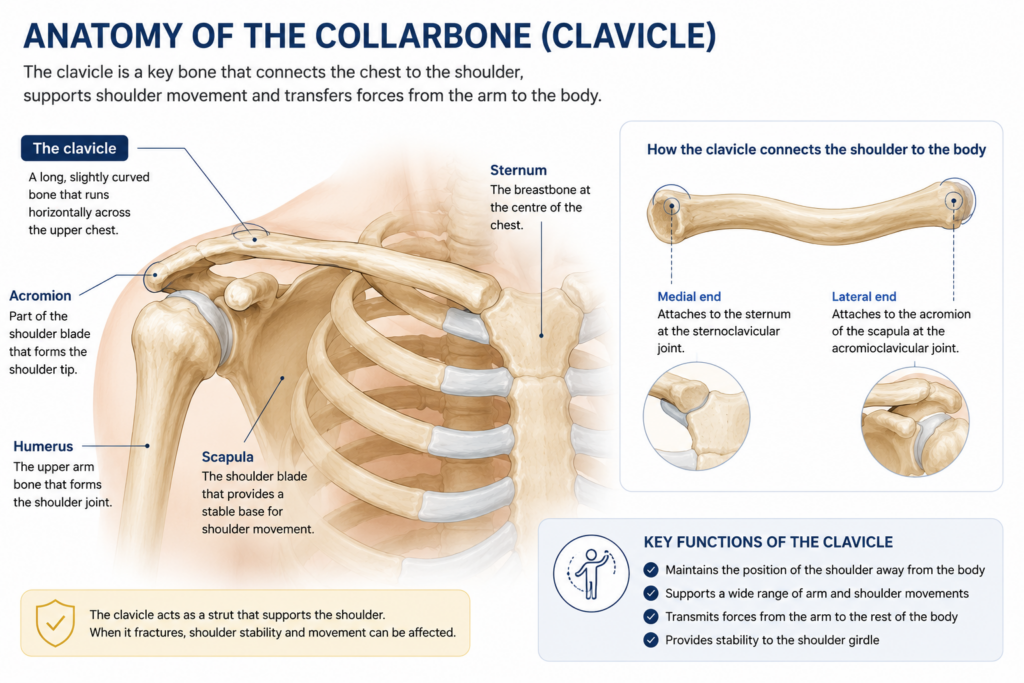
The clavicle connects the chest to the shoulder, supporting shoulder stability and arm movement.
The collarbone, or clavicle, is a long, slightly curved bone that runs horizontally across the upper chest. It connects the sternum at the centre of the chest to the acromion of the shoulder blade, forming an important link between the upper limb and the body. This positioning allows it to act as a supportive strut, helping to keep the shoulder in place while enabling a wide range of motion.
In addition to maintaining shoulder alignment, the clavicle plays an important role in stabilising the shoulder during movement. It helps position the arm away from the body, which allows for efficient lifting, reaching and overhead activities. Without this support, the shoulder would lose much of its functional range and control.
The clavicle also helps transfer forces generated by the arm to the rest of the body. During activities such as pushing, pulling or lifting, it acts as a pathway that distributes load, protecting surrounding structures and contributing to overall upper limb strength and coordination.
What causes a collarbone fracture?
When a clavicle fracture occurs, the collarbone breaks and may shift out of alignment, disrupting shoulder support and leading to pain, deformity and difficulty moving the arm.
Collarbone fractures usually occur when a sudden force is applied to the shoulder or upper body that exceeds the strength of the bone. The mechanism of injury often determines the pattern and severity of the fracture.
Fall onto the shoulder — this is one of the most common causes, particularly in sports or accidental falls. When a person lands directly on the outer part of the shoulder, the force is transmitted along the clavicle, which can cause it to bend and break, especially at its weakest point in the middle.
Fall onto an outstretched hand — during a fall, individuals often instinctively use their hand to break the impact. The force travels up the arm towards the shoulder, placing stress on the clavicle. Although the impact is not directly on the bone, this transmitted force can still be sufficient to cause a fracture.
Direct blow to the collarbone — a direct impact, such as during contact sports or collisions, can cause the bone to fracture at the point of contact. This type of injury may result in more localised damage and, in some cases, displacement of the bone fragments.
Road traffic accidents or high-impact trauma — high-energy events can generate significant force across the shoulder and chest. These injuries are often more severe and may involve complex fractures, displacement of the bone and associated injuries to surrounding structures.
What are the symptoms of a collarbone fracture?
The symptoms of a collarbone fracture usually appear immediately after injury and affect movement and comfort in the shoulder area.
Pain over the collarbone — pain is typically felt along the length of the bone and may worsen with movement of the arm or shoulder.
Swelling and bruising — the area may become swollen, and bruising can develop as bleeding occurs around the fracture site.
Visible deformity or bump — in some cases, there may be a noticeable bump or irregularity along the collarbone, especially if the bone ends are displaced.
Difficulty moving the arm — raising or using the arm can be painful and limited due to discomfort and instability.
Grinding or clicking sensation — movement of the shoulder may produce a grinding or clicking feeling if the bone fragments shift against each other.
In some cases, the symptoms of a collarbone fracture, such as shoulder pain and difficulty moving the arm, may overlap with other conditions like a dislocated shoulder or shoulder impingement, which is why a proper clinical assessment is important to determine the exact cause.
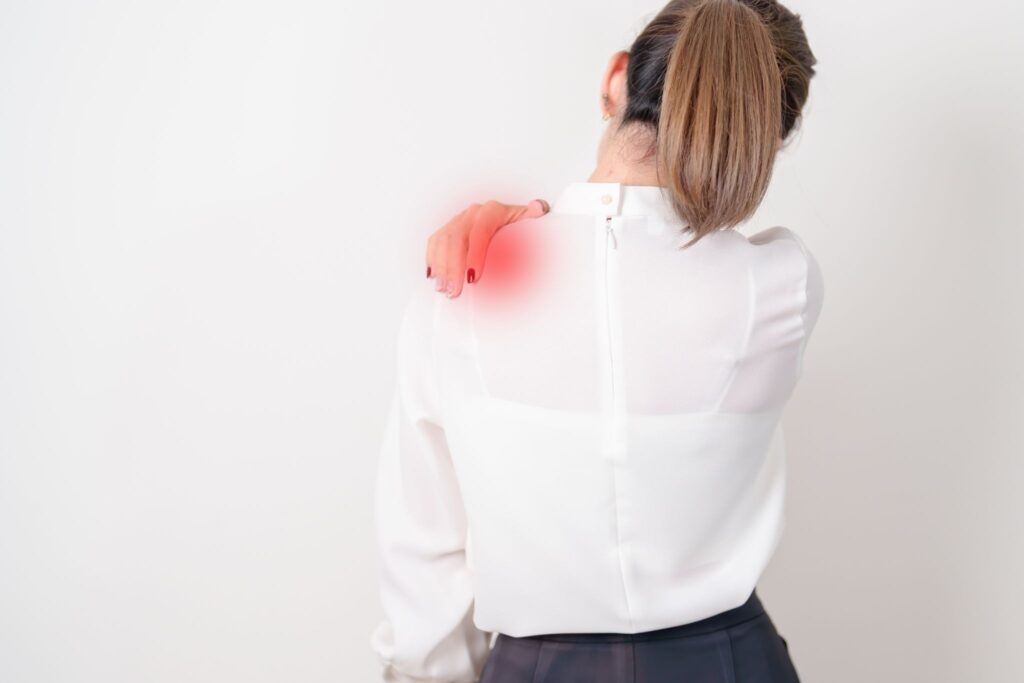
A collarbone fracture may cause localised pain over the collarbone, especially with movement or pressure on the area.
Can you move your arm with a collarbone fracture?
The ability to move the arm after a collarbone fracture depends on the severity of the injury. In mild or non-displaced fractures, movement is usually still possible, although it is often painful, particularly when lifting the arm or reaching overhead.
In moderate injuries, movement becomes more limited due to discomfort and reduced support from the fractured bone. In more severe or displaced fractures, there may be significant restriction, instability and difficulty using the arm for even simple activities, as the normal alignment and support of the shoulder are affected.
Who is most at risk of collarbone fractures in Singapore?
Collarbone fractures are more likely to occur in individuals who are exposed to falls, impact or higher levels of physical activity.
Athletes — sports such as cycling, football and other contact activities increase the risk of falls or direct blows to the shoulder.
Active individuals with fall risk — those who engage in regular physical activity, especially outdoors or at higher intensity, may be more prone to accidental falls.
Children and young adults — higher activity levels, sports participation and risk-taking behaviour increase the likelihood of injury in this group.
Older adults — reduced bone strength and a higher risk of falls make fractures more likely, even with relatively minor trauma.
How is a collarbone fracture diagnosed?
Diagnosis of a collarbone fracture begins with a clinical assessment and is supported by imaging when needed to confirm the injury and its severity.
Clinical assessment — the doctor takes a detailed history of how the injury occurred, such as a fall onto the shoulder, a collision during sports or a direct blow. The timing of pain, whether it was immediate, and how symptoms have progressed are considered.
Physical examination — the collarbone and shoulder area are examined for localised tenderness, swelling and bruising. The doctor looks for visible deformity, such as a bump or irregular contour along the clavicle, which may suggest displacement.
Imaging (if needed) — imaging plays an important role in confirming the diagnosis and determining the exact nature of the fracture. It helps assess the location of the break, the number of fragments and whether the bone remains aligned.
X-rays — these are usually sufficient to confirm a collarbone fracture. X-rays show the position of the bone fragments, which allows the doctor to determine whether the fracture is displaced or non-displaced and to assess the degree of shortening or angulation.
CT scan (if needed) — a CT scan provides a more detailed, three-dimensional view of the bone and may be used in more complex cases. It is particularly helpful when the fracture pattern is unclear on X-ray or when surgical planning is required, as it gives a clearer picture of fragment position and alignment.
What are the treatment options for collarbone fractures in Singapore?
Treatment depends on the type and severity of the fracture, with many cases managed conservatively and surgery reserved for more complex injuries.
Conservative (Non-Surgical) Treatment
Non-surgical treatment is commonly used for fractures where the bone remains well aligned or only minimally displaced. The aim is to allow the bone to heal naturally while maintaining comfort and preventing complications.
Arm sling support — a sling is used to support the arm and limit shoulder movement in the early stages. This helps reduce pain and allows the fractured bone to remain in a stable position during healing.
Pain management — pain relief measures are used to control discomfort, particularly in the first few weeks after injury. Effective pain control also allows better tolerance of movement as recovery progresses.
Activity modification — activities that place stress on the shoulder, such as lifting, pushing or overhead movements, are avoided during the healing phase. Gradual return to activity is guided by symptom improvement and clinical assessment.
Physiotherapy — once the initial healing phase has begun, physiotherapy is introduced to restore movement, strength and coordination. Exercises are progressed carefully to ensure the bone continues to heal while shoulder function improves.
Surgical Treatment
Surgery may be recommended in cases where the fracture is significantly displaced, shortened or involves multiple fragments, or when there is a risk that the bone may not heal properly without intervention.
The aim is to restore the normal shape and length of the clavicle, ensure stable bone healing and allow a return to full shoulder function. Surgical treatment may also reduce the risk of long-term complications such as malunion or persistent weakness.
What is recovery like after a collarbone fracture?
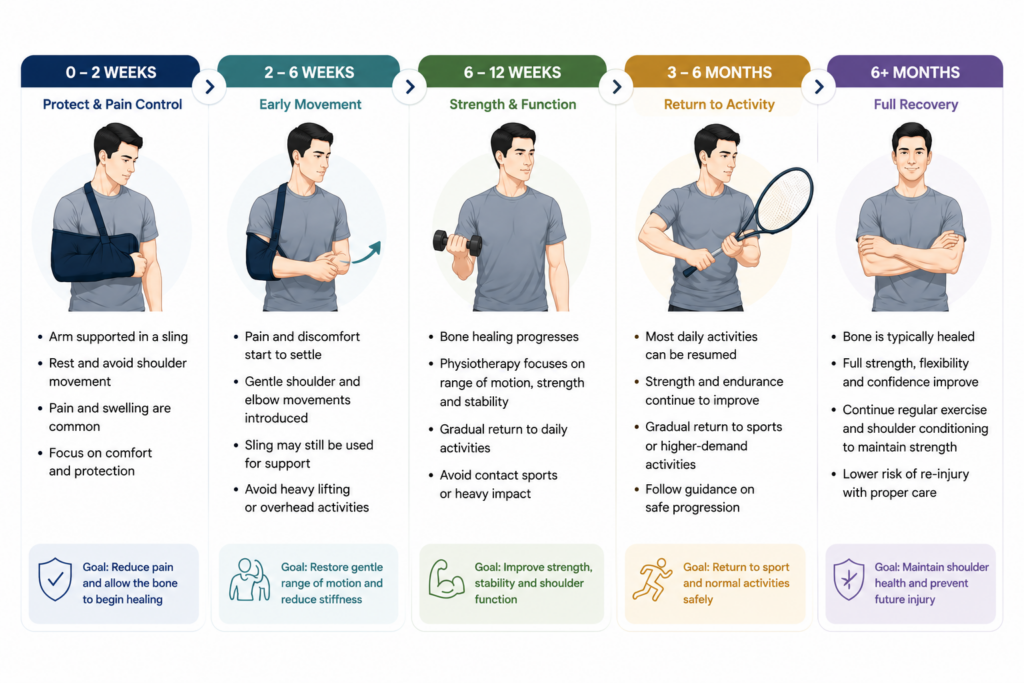
Recovery from a collarbone fracture is gradual, progressing from protecting the bone during healing to restoring shoulder movement, strength and normal function.
Recovery from a collarbone fracture takes place gradually and follows a structured progression, with each stage focused on healing the bone while restoring shoulder movement and strength. The exact timeline can vary depending on the severity of the fracture and the type of treatment, but most cases improve steadily when managed appropriately.
0–2 weeks — the arm is supported in a sling to reduce movement and allow the bone to begin healing. Pain and swelling are most noticeable during this stage, and activities involving the shoulder are kept to a minimum.
2–6 weeks — discomfort begins to settle, and gentle movement of the shoulder is introduced to prevent stiffness. The sling may still be used for support, but gradual use of the arm for light activities is encouraged within comfort limits.
6–12 weeks — healing progresses, and physiotherapy focuses on restoring range of motion and rebuilding strength. Exercises become more structured, helping improve stability and coordination of the shoulder.
12 weeks and beyond — most individuals can return to normal daily activities, with a gradual reintroduction of more demanding tasks or sports. Full recovery may take longer in more severe cases, and activity is guided by strength, comfort and clinical advice.
Avoiding early or excessive strain throughout recovery is important, as placing too much stress on the healing bone can delay progress or affect alignment.
What can happen if a collarbone fracture is left untreated?
If a collarbone fracture is not managed appropriately, the bone may not heal in the correct position, which can lead to ongoing issues. Poor healing may result in malunion, where the bone heals in an abnormal alignment, or nonunion, where the fracture fails to heal completely. These complications can affect both the appearance and function of the shoulder.
Persistent pain may develop, particularly during movement or when placing strain on the shoulder. Weakness and reduced support from the clavicle can also lead to difficulty with lifting, carrying or overhead activities. Over time, altered shoulder mechanics may place additional strain on surrounding structures, which can contribute to secondary conditions such as shoulder impingement or stiffness similar to a frozen shoulder.
How can collarbone fractures be prevented?
While not all collarbone fractures can be avoided, certain measures can help reduce the risk, particularly during physical activity.
Protective gear in sports — using appropriate equipment, such as padding or guards, can help reduce the impact of falls or collisions, especially in contact or high-risk sports.
Fall prevention strategies — maintaining awareness of surroundings, improving balance and using proper footwear can help reduce the likelihood of falls during daily activities or exercise.
Strength and conditioning — strengthening the shoulder and surrounding muscles improves stability and helps the body better absorb force during movement or impact.
Safe activity practices — using proper technique during sports and gradually increasing intensity can reduce unnecessary strain on the shoulder and lower the risk of injury.
Summary
A collarbone (clavicle) fracture is a break in the bone that connects the chest to the shoulder, most often caused by a fall or direct impact. It can lead to pain, swelling, visible deformity and difficulty moving the arm, depending on the severity of the injury. Fractures may range from simple cracks to more complex breaks with displacement, which can affect shoulder alignment and function.
Most collarbone fractures heal well with non-surgical treatment, including sling support, activity modification and physiotherapy. Surgical treatment may be required in cases where the bone is significantly displaced or unlikely to heal properly on its own. Recovery is gradual and requires a structured approach to restore movement, strength and stability, while avoiding early strain that may delay healing.
If you are experiencing collarbone pain, swelling or difficulty using your arm, schedule a consultation with Cove Orthopaedics for a detailed assessment and a personalised treatment plan.
Frequently asked questions
Yes, many collarbone fractures heal without surgery, especially if the bone remains well aligned. Support with a sling and proper rehabilitation are important. Healing is monitored to ensure the bone unites correctly.
Most fractures take about 6–12 weeks to heal, depending on severity. Pain usually improves earlier, but full strength and function take longer. Recovery timelines vary based on individual healing.
No, surgery is not needed in most cases. It is usually considered when the fracture is displaced, shortened or unlikely to heal well with conservative care. The decision depends on alignment and functional needs.
Movement is often possible but painful in mild cases. More severe fractures can significantly limit arm use. Activity should be guided by symptoms and medical advice.
Returning to sports depends on healing and strength. Light activity may resume earlier, but contact sports often require 8–12 weeks or more. Clearance is usually based on clinical assessment.
A bump may remain where the bone heals, especially in displaced fractures. It often becomes less noticeable over time. In many cases, it does not affect function.
Persistent pain, limited improvement in movement or ongoing discomfort may suggest delayed healing. Visible deformity or instability may also be present. Medical review is needed if recovery is not progressing.
Most heal without lasting issues. However, poor healing or misalignment can lead to weakness or discomfort. Early treatment helps reduce the risk of complications.
Physiotherapy helps restore movement, strength and coordination. It is usually introduced after the initial healing phase. A structured programme supports full recovery.
Yes, especially if the shoulder has not fully regained strength and stability. Returning to activity too early increases the risk. Proper rehabilitation helps reduce recurrence.
At Cove Orthopaedic Clinic, our utmost importance is in helping our patients maintain or regain the mobility that they deserve, all through excellent patient care right from the start.
Happy and satisfied patients are what keeps us going!
Consult Us Today
If you have further enquiries or would like to make an appointment at Cove Orthopaedic Clinic, simply fill in the form below or call us at +65 9631 7637 | +65 6475 7177