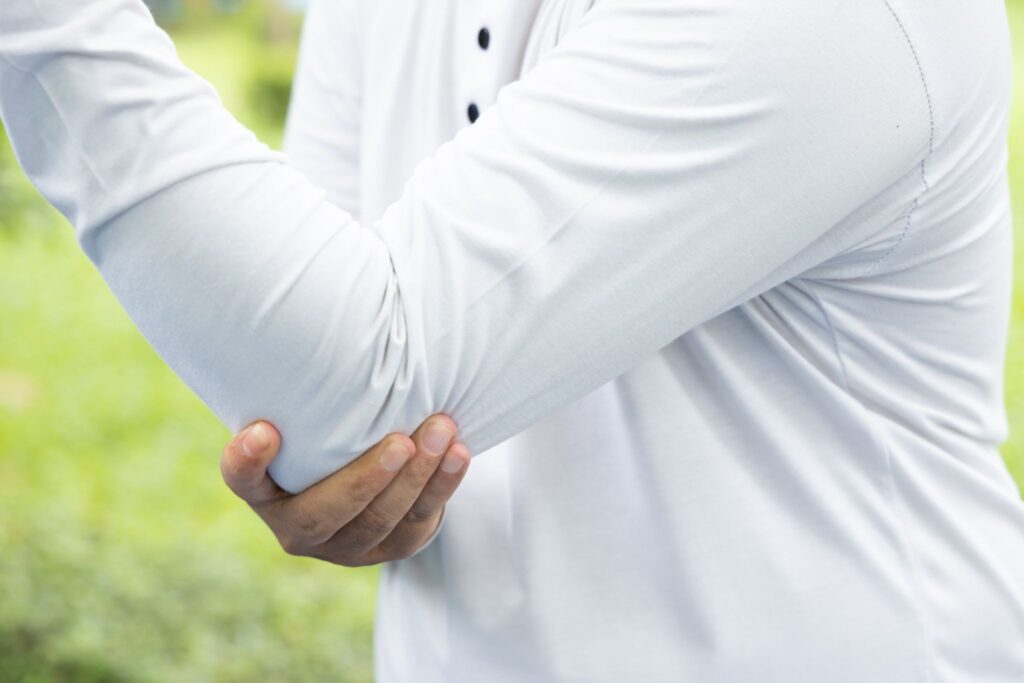
Golfer’s elbow is a condition caused by overuse of the forearm tendons, leading to pain and tenderness on the inner side of the elbow.
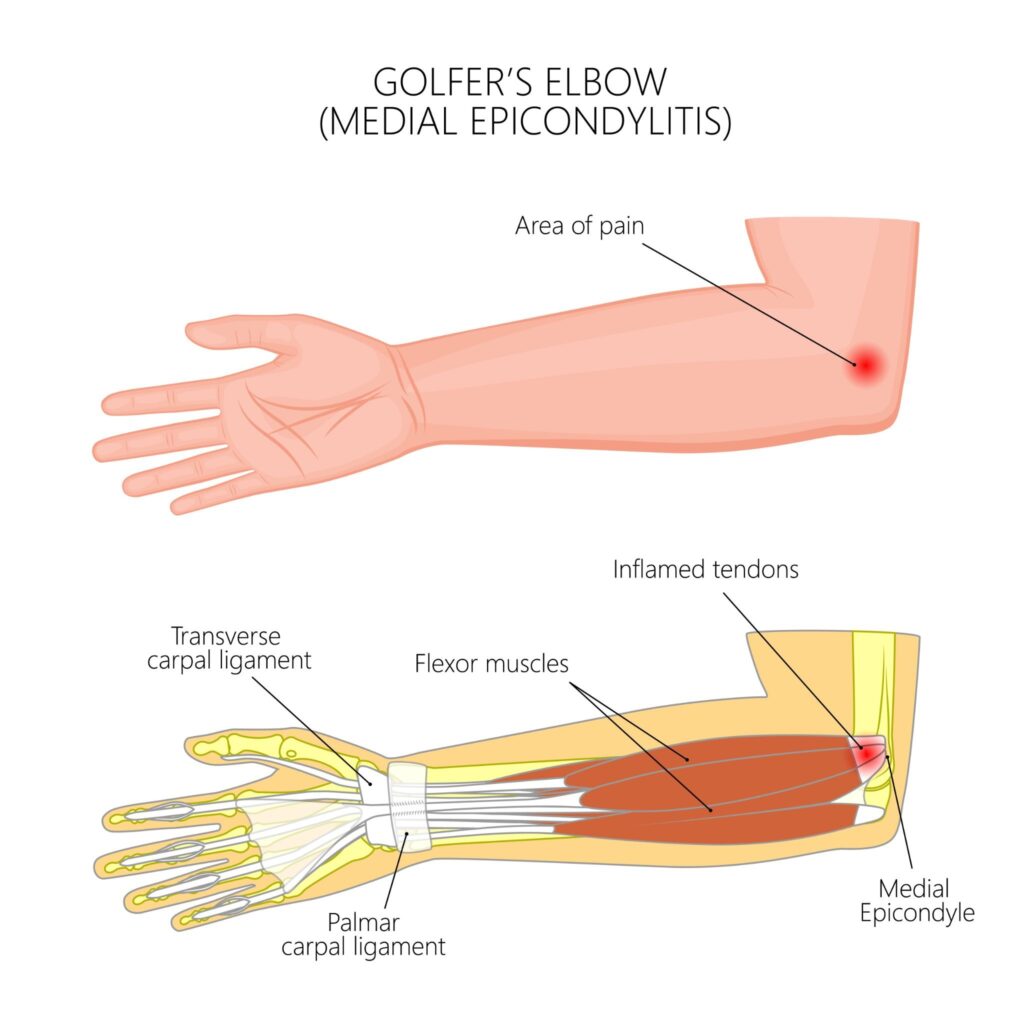
Golfer’s elbow, also known as medial epicondylitis, is a condition characterised by pain and inflammation on the inner side of the elbow. It occurs when the tendons that attach the forearm muscles to the medial epicondyle become irritated or damaged due to repeated stress. These tendons play an important role in wrist flexion and gripping movements, which is why symptoms often develop with repeated use of the hand and wrist.
Although it is commonly associated with golf, golfer’s elbow can affect anyone who performs repetitive forearm activities. The pain is typically felt along the inner elbow and may extend down the forearm, especially during activities that involve gripping, lifting or wrist movement.
What causes golfer’s elbow?
Golfer’s elbow develops due to repeated stress placed on the tendons that attach to the inner elbow, leading to irritation and small areas of damage over time.
Sports-related activities — activities such as golf, tennis or throwing sports involve repeated use of the forearm muscles. Improper technique or excessive training can increase strain on the inner elbow.
Occupational causes — jobs that require repetitive hand use, such as manual work, lifting or tool handling, can contribute to tendon overload and irritation.
Poor technique or overuse — incorrect movement patterns or a sudden increase in activity intensity can place additional stress on the tendons, making them more susceptible to injury.
Repetitive strain from activities involving wrist flexion and gripping can lead to inflammation of the tendons at the inner elbow, resulting in golfer’s elbow.
What are the symptoms of golfer’s elbow?
Symptoms of golfer’s elbow typically develop gradually and are often linked to repetitive use of the forearm.
Pain with gripping or wrist movement — actions such as holding objects, lifting or bending the wrist can trigger or aggravate pain.
Weak grip strength — the ability to grip objects firmly may be reduced due to pain and tendon involvement.
Stiffness — the elbow may feel stiff, particularly after periods of rest or inactivity.
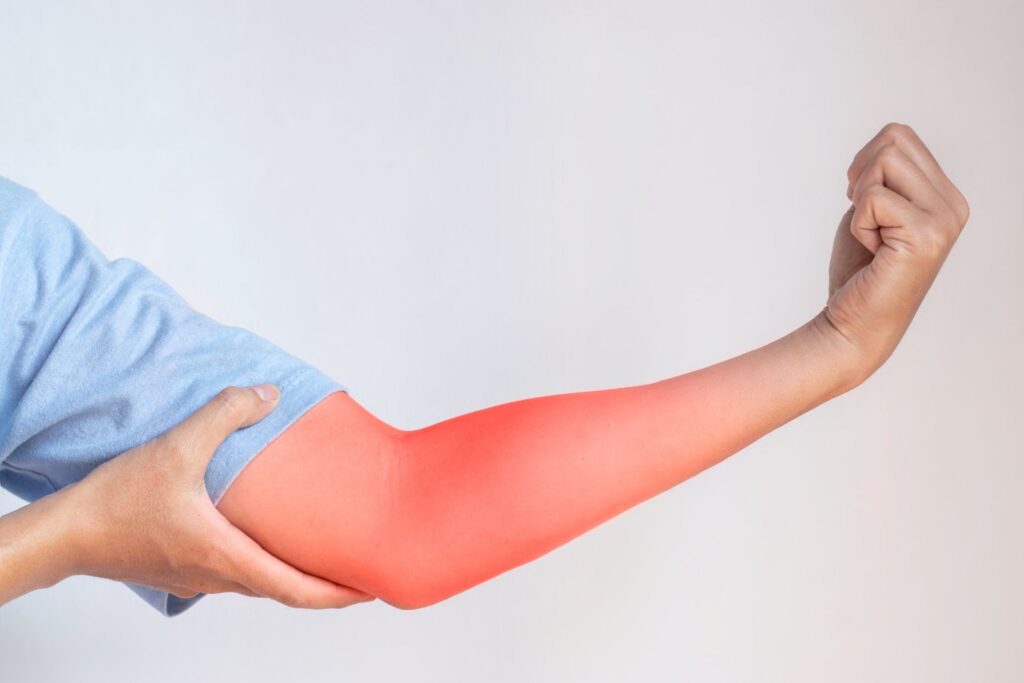
Pain radiating down the forearm — in some cases, discomfort may extend along the inner forearm, especially during repetitive use.
Golfer’s elbow may cause pain on the inner side of the elbow, especially during gripping or wrist movements.
How is golfer’s elbow different from tennis elbow?
Golfer’s elbow and tennis elbow are both conditions caused by overuse of the forearm muscles, but they affect different sides of the elbow and involve different tendon groups. Golfer’s elbow, or medial epicondylitis, affects the tendons on the inner side of the elbow, typically due to repeated wrist flexion and gripping activities. In contrast, tennis elbow, or lateral epicondylitis, affects the tendons on the outer side of the elbow and is commonly associated with repetitive wrist extension and lifting movements.
Although the underlying mechanism is similar, involving repetitive strain and micro-injury to the tendons, the location of pain and the type of movements that trigger symptoms help distinguish the two conditions. Identifying the correct condition is important, as treatment approaches may be similar but need to be targeted to the specific tendon group involved.
Feature
Golfer’s Elbow
Tennis Elbow
Location of pain
Inner side of the elbow
Outer side of the elbow
Medical term
Medial epicondylitis
Lateral epicondylitis
Tendons involved
Wrist flexor tendons
Wrist extensor tendons
Common cause
Repetitive gripping and wrist flexion
Repetitive lifting and wrist extension
Pain trigger
Gripping, wrist bending
Lifting, wrist straightening
Pain spread
Inner forearm
Outer forearm
When should you see a doctor for golfer’s elbow?
Medical evaluation is recommended when symptoms persist or begin to interfere with normal function. Ongoing pain on the inner side of the elbow, especially if it does not improve with rest, should be assessed to prevent further tendon damage.
Difficulty gripping objects, reduced hand strength or pain that affects daily tasks such as lifting or carrying should not be ignored. Early evaluation helps confirm the diagnosis and allows for appropriate treatment to support recovery and prevent progression.
Who is most at risk of golfer’s elbow in Singapore?
Golfer’s elbow is more likely to occur in individuals who place repeated strain on the forearm muscles and tendons.
Athletes — sports such as golf and racquet sports involve repetitive wrist and forearm movements, which can place continuous stress on the tendons at the inner elbow.
Manual workers — jobs that involve repetitive lifting, gripping or tool use can overload the forearm muscles over time, increasing the risk of injury.
Office workers — prolonged or repetitive use of the hands and wrists, such as typing or mouse use, can contribute to tendon strain, particularly when ergonomics are suboptimal.
Middle-aged individuals — age-related changes in tendon strength and flexibility, combined with repeated use, can make the tendons more susceptible to injury.
How is golfer’s elbow diagnosed?
Diagnosis of golfer’s elbow begins with a clinical assessment and may be supported by imaging when needed to confirm the condition and assess its severity.
Clinical assessment — the doctor takes a detailed history of symptoms, including when the pain started, what activities trigger it and how it affects daily function. This helps identify patterns consistent with tendon overuse.
Physical examination — the inner side of the elbow is examined for tenderness, particularly over the medial epicondyle. Resistance testing is performed, where specific wrist and forearm movements are used to reproduce pain and assess tendon involvement.
Imaging (if needed)
Ultrasound — this can identify tendon thickening, degeneration or small tears, and is useful for assessing changes in the affected tendons.
MRI — MRI provides a more detailed view of the soft tissues and is used to evaluate the extent of tendon damage, especially in more persistent or severe cases.
What are the treatment options for golfer’s elbow in Singapore?
Treatment depends on the severity of symptoms, with most cases responding well to conservative measures. Surgery is considered only in more persistent cases.
Conservative (Non-Surgical) Treatment
Rest and activity modification — reducing or avoiding activities that aggravate symptoms allows the affected tendons time to heal and prevents further irritation.
Physiotherapy — a structured programme focuses on improving flexibility, strength and movement patterns of the forearm muscles, helping reduce strain on the tendons.
Bracing or support — elbow braces or straps may be used to reduce load on the affected tendons during activity, improving comfort and supporting recovery.
NSAIDs — anti-inflammatory medications can help manage pain and reduce inflammation, particularly in the early stages.
Strengthening exercises — gradual strengthening of the forearm muscles helps improve tendon resilience and reduces the risk of recurrence.
Surgical Treatment
Surgery may be considered when symptoms persist despite appropriate conservative treatment or when there is significant tendon damage.
Tendon debridement or repair — this involves removing damaged tendon tissue or repairing the affected area to restore function. The goal is to reduce pain and improve strength in cases where non-surgical measures are insufficient.
What is recovery like after golfer’s elbow treatment?
Recovery from golfer’s elbow is typically gradual and depends on the severity of the condition and the treatment approach. In the early stages, reducing strain on the tendon allows symptoms to settle, followed by a structured rehabilitation programme to restore strength and flexibility.
Physiotherapy plays a key role in recovery, guiding progressive exercises to improve tendon capacity and function. The timeline varies between individuals, but consistent rehabilitation and a gradual return to activity are important to achieve a stable and lasting recovery.
How can golfer’s elbow be prevented?
Preventing golfer’s elbow involves reducing strain on the forearm tendons and maintaining good muscle balance.
Proper technique — using correct technique during sports or repetitive activities helps minimise unnecessary stress on the tendons.
Strengthening forearm muscles — regular strengthening improves the ability of the muscles and tendons to handle load, which helps reduce the risk of injury.
Avoiding overuse — limiting repetitive strain and allowing adequate rest between activities helps prevent tendon irritation.
Ergonomic adjustments — ensuring proper posture and equipment setup, particularly during work or daily tasks, can reduce stress on the elbow and forearm.
What can happen if golfer’s elbow is left untreated?
If golfer’s elbow is not managed appropriately, the condition may progress from mild irritation to more persistent tendon damage. Continued strain on the affected tendons can lead to ongoing pain, reduced strength and increasing difficulty with everyday activities such as gripping or lifting objects.
Over time, untreated symptoms may affect movement patterns, as the body compensates for pain, which can place additional stress on other joints. This can delay recovery and increase the risk of long-term tendon degeneration. Early treatment helps prevent these complications and supports a more effective recovery.
Is it safe to lift weights with golfer’s elbow?
Lifting weights with golfer’s elbow is generally not recommended in the early stages, especially if it causes pain. Activities that involve gripping or wrist flexion can place additional stress on the already irritated tendons, potentially worsening the condition and delaying healing.
As symptoms improve, a gradual return to weight training may be possible under guidance, with modifications to reduce strain on the elbow. This may include adjusting technique, reducing load or focusing on alternative exercises. A structured rehabilitation plan helps ensure a safe return to activity while minimising the risk of reinjury.
Summary
Golfer’s elbow is a condition that affects the tendons on the inner side of the elbow, usually as a result of repeated strain from activities involving gripping or wrist movement. The condition tends to develop gradually, with symptoms such as localised pain, reduced grip strength and discomfort during everyday tasks. Although it is often associated with sports, it can also occur in individuals who perform repetitive hand or forearm activities in daily life or at work.
With early recognition and appropriate management, most cases can be treated effectively without surgery. Treatment typically focuses on reducing strain on the affected tendons, followed by a structured rehabilitation programme to restore strength, flexibility and function. Recovery requires a gradual and consistent approach, as returning too quickly to high-demand activities may prolong symptoms.
If you are experiencing persistent inner elbow pain or difficulty with gripping movements, schedule a consultation with Dr Sean Ng for a detailed assessment and a personalised treatment plan.
Frequently Asked Questions (FAQs)
Can golfer’s elbow go away on its own?
Mild cases may improve with rest and reduced activity, but proper rehabilitation is often needed to restore strength and prevent recurrence. Without treatment, symptoms may persist or worsen over time.
How long does golfer’s elbow take to heal?
Recovery varies depending on severity, but it may take several weeks to months. Consistent physiotherapy and gradual return to activity help support recovery.
Is golfer’s elbow only caused by golf?
No, it is not limited to golfers. Any activity involving repetitive wrist flexion or gripping, including work-related tasks, can lead to this condition.
Can I continue exercising with golfer’s elbow?
Strenuous activities that aggravate symptoms should be avoided initially. Modified exercises may be introduced gradually as symptoms improve under guidance.
Do I need surgery for golfer’s elbow?
Most cases are treated without surgery. Surgical intervention is considered only when symptoms persist despite appropriate conservative treatment.
Can golfer’s elbow recur after recovery?
Yes, recurrence is possible if underlying factors such as overuse or poor technique are not addressed. Ongoing strengthening and proper activity management can help reduce risk.
Can golfer’s elbow affect daily activities?
Yes, it can make tasks such as lifting, gripping or even typing uncomfortable. Early management helps prevent symptoms from interfering with daily function
At Cove Orthopaedic Clinic, our utmost importance is in helping our patients maintain or regain the mobility that they deserve, all through excellent patient care right from the start.
Happy and satisfied patients are what keeps us going!
Consult Us Today
If you have further enquiries or would like to make an appointment at Cove Orthopaedic Clinic, simply fill in the form below or call us at +65 9631 7637 | +65 6475 7177