The term “sportsman’s groin” refers to painful conditions affecting the groin region in athletes.
Pain in the lower abdomen, groin, or upper medial thigh is usually chronic. The condition is known by several different names, and its exact cause can vary from person to person.
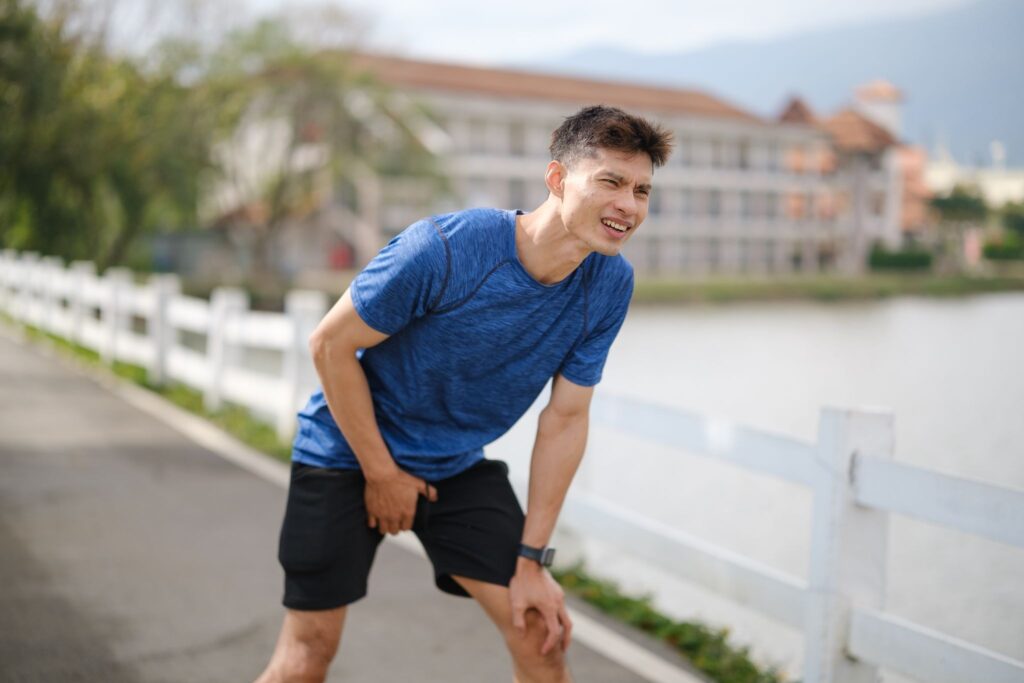
Sportsman's groin commonly causes pain in the groin or lower abdominal region during activities such as running, sprinting, twisting or kicking.
At a glance:
Condition
Sportsman’s groin (athletic pubalgia)
Symptoms
Groin pain during running, kicking or twisting
Common causes
Repetitive strain, muscle imbalance, sudden direction changes
Who is at risk?
Footballers, runners, hockey players and active individuals
Diagnosis
Clinical examination with MRI or ultrasound if required
Treatment
Physiotherapy, rehabilitation, surgery in selected cases
Sportsman's groin, also known as athletic pubalgia and commonly referred to as a sports hernia, is a condition characterised by chronic groin pain caused by injury or strain to the soft tissues of the lower abdomen and upper thigh. It commonly affects individuals who participate in sports involving repetitive twisting, kicking, sprinting or sudden changes in direction.
Despite being commonly referred to as a “sports hernia,” sportsman’s groin is not a true hernia. Instead, it involves weakness or injury to the muscles, tendons or ligaments in the groin area. The condition can affect performance and daily movement, particularly when the underlying cause is not addressed early.
What structures are involved in sportsman's groin?
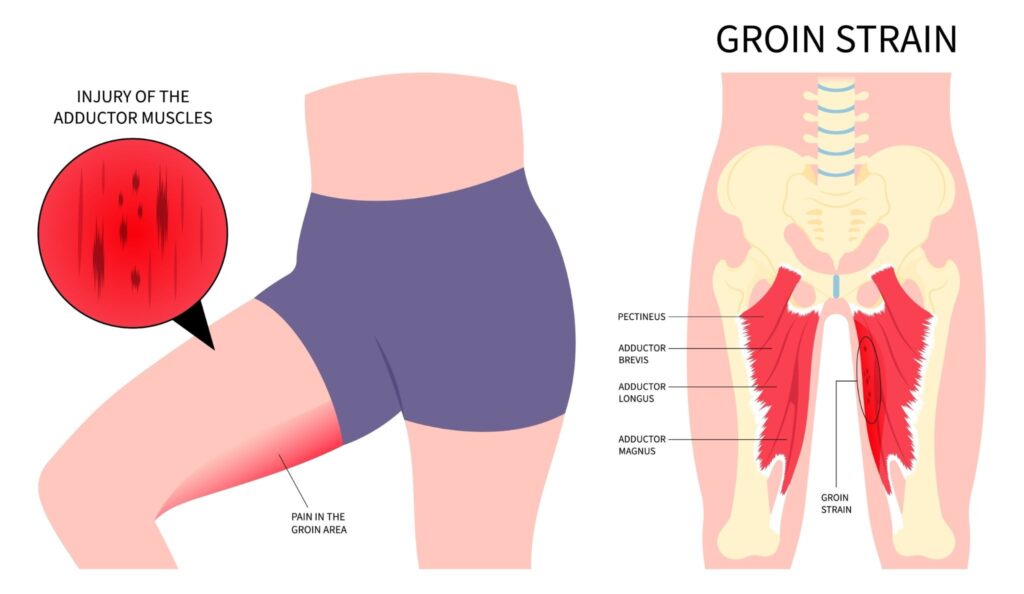
Sportsman’s groin involves strain or injury to the adductor muscles and lower abdominal tissues, leading to pain in the groin region, especially during movement.
Sportsman’s groin involves several structures that work together to stabilise the lower abdomen and hip region.
Abdominal wall muscles — these muscles attach to the pelvis and play a key role in core stability. Strain or weakness in this area can contribute to groin pain.
Adductor muscles — located in the inner thigh, these muscles are responsible for bringing the leg inward. They are frequently involved in sportsman’s groin due to the high forces placed on them during movement.
Inguinal canal region — this area of the lower abdominal wall can develop weakness or strain, contributing to pain and instability in the groin region.
Pubic symphysis — this joint at the front of the pelvis serves as an attachment point for several abdominal and adductor muscles. Repetitive stress across this region is commonly associated with sportsman's groin.
What causes a sportsman’s groin?
A sportsman’s groin typically develops due to repeated stress on the muscles and tendons around the groin.
Repetitive strain — activities involving twisting, turning and kicking movements place ongoing stress on the groin structures, leading to gradual irritation and injury.
Muscle imbalance — when the adductor muscles are stronger than the abdominal muscles, uneven forces are placed across the pelvis. This imbalance increases strain on the supporting tissues.
Sudden changes in direction — high-intensity sports that involve rapid acceleration, deceleration and directional changes can place excessive load on the groin.
Overuse or poor conditioning — inadequate conditioning, lack of flexibility or insufficient recovery between activities can reduce the ability of the tissues to handle stress, increasing the risk of injury.
Is a sportsman’s groin a serious condition?
Sportsman’s groin is not usually a life-threatening condition, but it can become significant if it is not managed properly. The pain often develops gradually and may initially seem mild, which can lead individuals to continue their usual activities. Over time, repeated strain on the affected tissues can worsen the injury, which makes symptoms more persistent and harder to treat.
If left unaddressed, a sportsman’s groin can affect performance, limit movement and interfere with daily activities. Early recognition and appropriate management help prevent progression and support recovery, particularly in individuals who remain physically active.
What are the symptoms of sportsman’s groin?
Symptoms of a sportsman's groin often develop gradually and are typically related to physical activity.
Groin pain (gradual onset) — pain usually begins as a mild discomfort in the groin and may worsen over time with continued activity.
Pain during activity — activities such as running, kicking or sudden movements can trigger or aggravate symptoms.
Pain with twisting or sprinting — movements that involve rotation or rapid acceleration place increased stress on the groin and often reproduce pain.
Tenderness in the groin — the affected area may feel sore to touch, particularly over the lower abdomen or inner thigh.
Reduced performance — ongoing discomfort and weakness can affect physical performance and limit participation in sports or exercise.
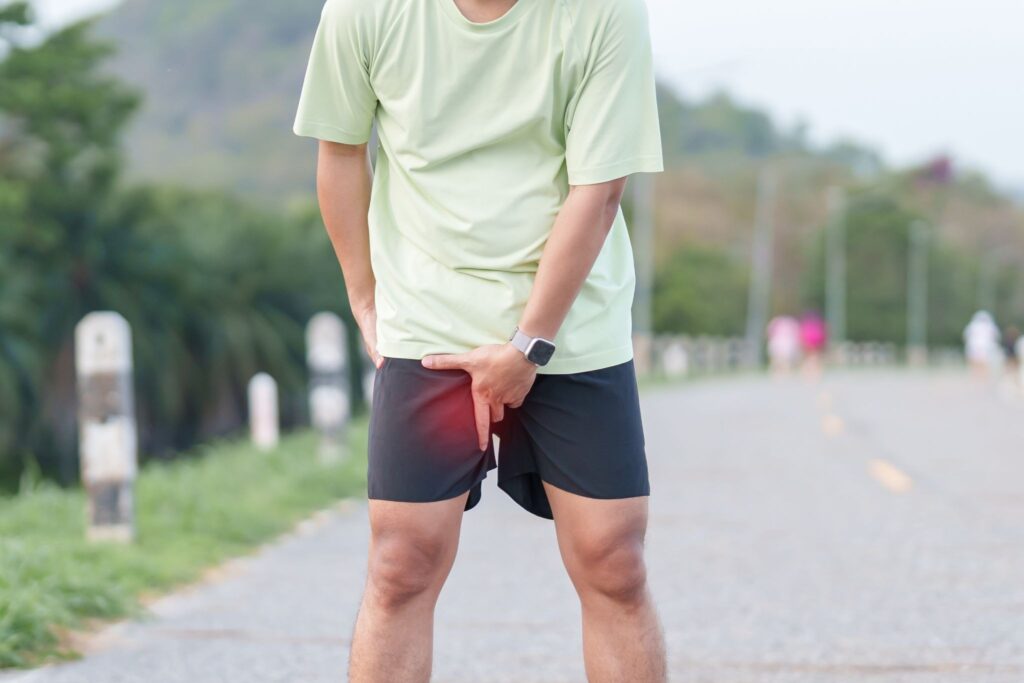
Sportsman’s groin may cause groin pain during activity, particularly with movements such as running, twisting or kicking.
Sportsman's groin vs inguinal hernia
A groin hernia typically presents as a discomfort or aching sensation in the lower abdomen or groin, which may become more noticeable during activities such as lifting, coughing or prolonged standing. Some individuals may also notice a visible or palpable bulge in the groin area, which can change in size with movement or position.
Unlike a sportsman’s groin, a true hernia involves a protrusion of tissue through a weakness in the abdominal wall. The discomfort may vary from mild to more pronounced, and in some cases, it may be associated with a feeling of heaviness or pressure in the groin region. Proper assessment is important to distinguish between these conditions.
When should you see a doctor for sportsman’s groin?
It is advisable to seek medical assessment if you experience any of the following:
Persistent groin pain that does not improve with rest or activity modification
Pain that worsens over time despite reducing or avoiding sporting activities
Difficulty walking or moving comfortably due to groin pain or stiffness
Symptoms that affect sports performance or interfere with everyday activities
Recurring groin pain that returns after resuming exercise or sport
Uncertainty about the cause of your symptoms, particularly to distinguish sportsman's groin from conditions such as a groin hernia, hip injury or muscle strain
Who is most at risk of sportsman’s groin in Singapore?
A sportsman’s groin is more likely to develop in individuals who place repeated or high levels of stress on the groin and lower abdominal region.
Athletes — sports such as football, hockey and rugby involve frequent sprinting, kicking and sudden directional changes. These movements place significant strain on the groin muscles and abdominal wall, increasing the risk of injury.
Active individuals — regular participation in physical activity, particularly without adequate conditioning or recovery, can expose the groin structures to repeated stress over time.
Individuals with muscle imbalance — when there is an imbalance between the strength of the abdominal muscles and the adductors, uneven forces are applied across the pelvis. This increases the likelihood of strain and injury.
People with repetitive groin strain — activities that involve repeated twisting, turning or forceful movements of the hip can gradually overload the tissues, leading to chronic groin pain.
How is a sportsman’s groin diagnosed?
Diagnosis begins with a clinical assessment and may be supported by imaging to confirm the extent and source of the injury.
Clinical assessment — our doctor takes a detailed history of symptoms, including how the pain started, the type of activity involved and factors that aggravate or relieve the discomfort. This helps identify patterns consistent with a sportsman’s groin.
Physical examination — the groin region is examined for tenderness, particularly along the lower abdominal wall and inner thigh. Resistance testing is performed to assess pain during muscle activation, helping to identify the structures involved.
Imaging (if needed)
MRI — MRI provides detailed imaging of the soft tissues, which helps with the assessment of muscle, tendon and ligament injury, as well as any associated changes.
Ultrasound — Ultrasound may be used dynamically to assess how the structures move during activity and to identify areas of strain or weakness.
What are the treatment options for sportsman’s groin in Singapore?
Most cases of a sportsman’s groin can be resolved with conservative treatment options, such as:
Rest and activity modification — reducing or avoiding activities that trigger pain allows the injured tissues to recover. A gradual return to activity is important to prevent recurrence.
Physiotherapy — a structured rehabilitation programme focuses on improving strength, flexibility and coordination of the muscles around the groin and lower abdomen.
Strengthening and core stability — targeted exercises help restore balance between the abdominal and adductor muscles, improving stability and reducing strain on the affected area.
Pain management — measures such as medication or supportive therapies may be used to control discomfort.
Surgical Treatment
Surgery may be considered in cases where symptoms persist despite appropriate conservative care or when there is significant weakness in the abdominal wall.
Repair of weakened tissues — this procedure involves reinforcing the affected area to restore strength and stability. It helps reduce pain and improve function in individuals with ongoing symptoms.
Reinforcement of the abdominal wall — surgical techniques are used to strengthen the abdominal wall and address areas of weakness, which helps support long-term recovery and return to activity.
What is recovery like after sportsman’s groin treatment?
Recovery from a sportsman’s groin is gradual and depends on the severity of the condition and the type of treatment required. In the early stages, the focus is on allowing the affected tissues to settle by reducing strain and managing pain. As symptoms improve, rehabilitation progresses towards restoring strength and control in the muscles around the groin and lower abdomen.
Physiotherapy plays a central role throughout recovery, guiding a structured programme that improves coordination and stability. Strengthening exercises are introduced progressively to correct muscle imbalance and support safe return to activity. The timeline for returning to sports varies between individuals, and advancing too quickly may delay recovery, making a gradual and guided approach important.
How can a sportsman’s groin be prevented?
The risk of developing a sportsman’s groin can be reduced by maintaining good strength, flexibility and movement patterns around the pelvis, hips and groin. Preventive measures include:
Core strengthening — improving the strength and stability of the abdominal muscles helps support the pelvis and reduces strain on the groin during movement.
Balanced muscle development — maintaining balanced strength between the abdominal and adductor muscles helps prevent uneven forces across the pelvis.
Proper warm-up — warming up before training or competition prepares the muscles for activity, improves flexibility and reduces excessive strain during sudden movements.
Good training technique — using appropriate movement mechanics during high-intensity activities helps minimise unnecessary stress on the groin.
Gradual progression of activity — increasing training intensity and duration progressively allows the muscles and tendons to adapt safely, reducing the risk of overuse injuries.
Adequate recovery — allowing sufficient rest between training sessions gives the muscles and soft tissues time to recover, helping prevent repetitive strain.
Sportsman’s groin treatment in Singapore
Sportsman's groin is a soft tissue injury affecting the muscles and connective tissues of the lower abdomen and groin. Although commonly referred to as a "sports hernia", it is not a true hernia but a condition caused by repetitive strain that can worsen over time if left untreated.
Most cases respond well to conservative treatment, including activity modification, physiotherapy and progressive strengthening to restore muscle balance and stability. Surgery is typically reserved for individuals with persistent symptoms that do not improve with non-surgical treatment.
If you are experiencing ongoing groin pain during sport or everyday activities, schedule a consultation with Cove Orthopaedics for a comprehensive assessment and a personalised treatment plan.
Conditions We Treat
Hip
Head
Hand & Wrist
Foot & Ankle
Elbow
Frequently asked questions
No, a sportsman’s groin is not a true hernia. It involves strain or weakness in the muscles and soft tissues of the groin rather than a visible protrusion of tissue. A hernia, on the other hand, occurs when internal tissue pushes through a weakness in the abdominal wall and may present as a bulge.
Mild cases may improve with rest and avoidance of aggravating activities. However, without proper rehabilitation, the underlying muscle imbalance may persist. Structured physiotherapy is usually needed to restore strength and reduce the risk of recurrence.
Recovery depends on the severity of the condition and how early it is managed. Some individuals improve within a few weeks, while others may take several months to fully recover. Adherence to a rehabilitation programme plays a key role in the timeline.
Continuing high-intensity sports can place further strain on the injured tissues and worsen symptoms. It is generally recommended to modify or pause activities until pain is controlled. A gradual return to sport is advised once strength and stability are restored.
Most cases are successfully managed with conservative treatment, including physiotherapy and strengthening. Surgery is usually considered only when symptoms persist despite appropriate rehabilitation. It aims to address areas of weakness and restore stability.
Yes, recurrence is possible, particularly if contributing factors such as muscle imbalance or training errors are not corrected. Ongoing strengthening and proper conditioning can help reduce the risk of symptoms returning.
The condition is most commonly caused by repetitive strain from activities involving twisting, turning and sudden changes in direction. Muscle imbalance between the abdominal and adductor muscles further increases stress on the groin. Over time, this leads to irritation and injury of the soft tissues.
In more advanced cases, pain may not be limited to sports and can affect everyday movements. Activities such as walking, standing for long periods or getting in and out of a car may become uncomfortable. Early management helps prevent this progression.
At Cove Orthopaedic Clinic, our utmost importance is in helping our patients maintain or regain the mobility that they deserve, all through excellent patient care right from the start.
Happy and satisfied patients are what keeps us going!
Consult Us Today
If you have further enquiries or would like to make an appointment at Cove Orthopaedic Clinic, simply fill in the form below or call us at +65 9631 7637 | +65 6475 7177