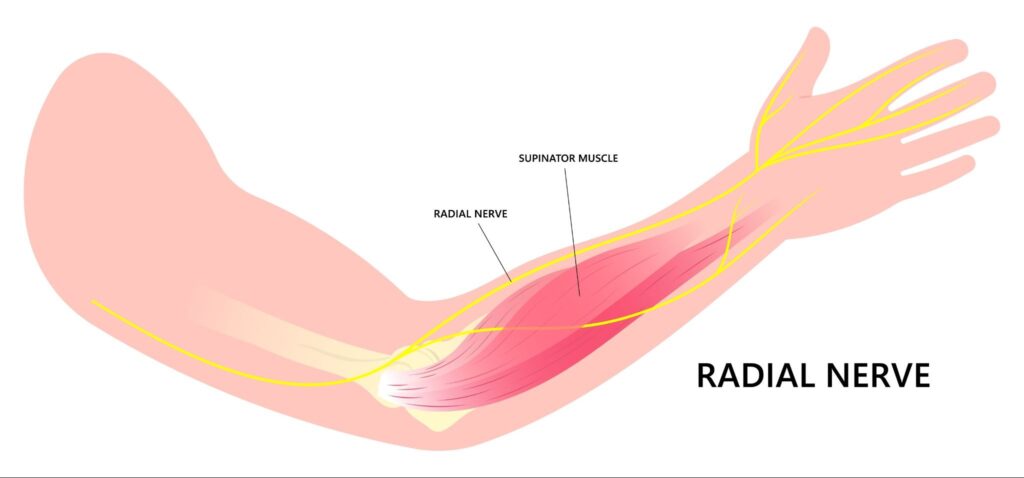
The radial nerve runs along the back of the arm into the forearm and hand, controlling wrist and finger extension and providing sensation to the back of the hand.
Radial nerve impingement refers to compression or irritation of the radial nerve, which can disrupt normal nerve function and lead to pain, weakness or altered sensation in the arm. The radial nerve is one of the main nerves of the upper limb and plays an important role in controlling movement and sensation along the outer aspect of the arm and hand.
When this nerve is compressed along its course, signals between the brain and the muscles or skin can be affected. This may result in symptoms such as discomfort along the forearm, difficulty extending the wrist or fingers or numbness over the back of the hand. The nature and severity of symptoms often depend on the location and degree of compression.
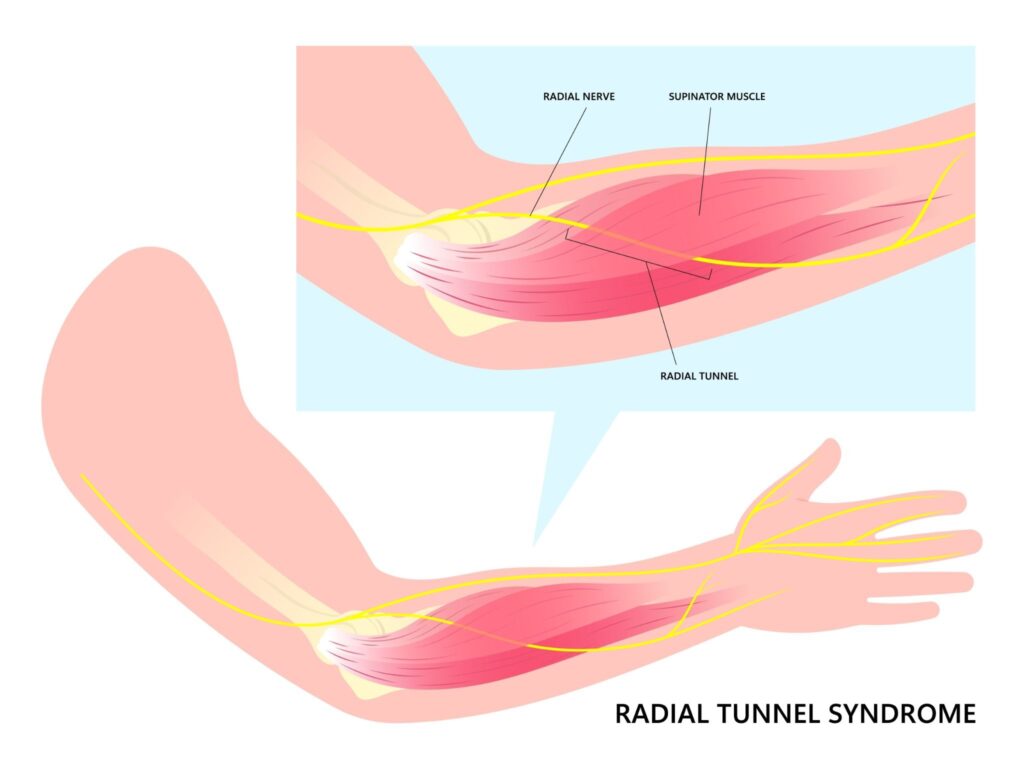
Radial nerve impingement occurs when the nerve is compressed along its course, often in the radial tunnel near the forearm, leading to pain and weakness in the arm and hand.
What is the radial nerve and what does it do?
The radial nerve is a major nerve of the upper limb that originates from the brachial plexus and travels down the back of the upper arm. It passes along the humerus, then continues through the forearm before reaching the hand. Along this pathway, it branches into smaller nerves that supply different muscles and areas of skin.
Its primary function is to control the muscles responsible for extending the wrist, fingers and part of the elbow, which helps ensure coordinated movement of the arm and hand. It also provides sensation to the back of the forearm and hand, particularly over the thumb side. Because of its long and superficial course in certain areas, the radial nerve is vulnerable to compression or injury.
What causes radial nerve impingement?
Radial nerve impingement can occur due to a variety of factors that place pressure on the nerve along its pathway.
Repetitive strain or overuse — repeated arm or wrist movements, particularly in occupational or sporting activities, can lead to irritation and gradual compression of the nerve.
External compression — prolonged pressure on the arm, such as sleeping in an awkward position or leaning heavily on the arm for extended periods, can temporarily or persistently compress the nerve.
Entrapment syndromes — conditions such as radial tunnel syndrome or compression of the posterior interosseous nerve can cause focal entrapment, resulting in pain or weakness along the nerve distribution.
Mass or swelling — structures such as cysts, inflammation or soft tissue swelling can exert pressure on the nerve, interfering with its normal function.
What are the symptoms of radial nerve impingement?
The symptoms of radial nerve impingement depend on the location and severity of the compression but often involve both movement and sensation.
Pain along the outer forearm — discomfort may be felt along the outer aspect of the forearm and can worsen with activity or repeated use.
Weakness in wrist or finger extension — difficulty lifting the wrist or straightening the fingers may occur due to impaired nerve signals to the muscles.
Difficulty gripping — reduced strength in the hand can affect the ability to hold or grasp objects securely.
Numbness or tingling on the back of the hand — altered sensation, particularly over the thumb side of the back of the hand, may be present.
“Wrist drop” in severe cases — in more significant compression or injury, the wrist may be unable to lift, resulting in a characteristic drooping position.
Radial nerve impingement may cause pain along the outer forearm, which often worsens with movement or repetitive use of the arm.
What does radial nerve impingement feel like?
Radial nerve impingement often presents as a combination of discomfort and altered nerve function along the outer forearm and back of the hand. Individuals may experience a dull, aching pain that worsens with movement or repeated use, along with weakness when trying to lift the wrist or straighten the fingers.
In some cases, there may be numbness or a tingling sensation over the back of the hand, particularly near the thumb. When the compression is more severe, the ability to extend the wrist may be affected, leading to a noticeable loss of control in hand positioning.
When should you see a doctor for radial nerve impingement?
Medical evaluation is recommended when symptoms persist or affect normal function. Ongoing pain, weakness or difficulty lifting the wrist or fingers may indicate nerve involvement that requires assessment.
Symptoms that worsen over time or spread along the arm should not be ignored. In addition, any history of trauma, such as a fall or direct injury to the arm, should prompt early evaluation to rule out underlying nerve damage and guide appropriate treatment.
Who is most at risk of radial nerve impingement in Singapore?
Radial nerve impingement can affect a wide range of individuals, but certain activities and occupational factors can increase the likelihood of developing the condition.
Office workers — repetitive use of the arm and wrist during prolonged computer work can place strain on the forearm muscles and contribute to nerve irritation over time.
Athletes — sports that involve repetitive arm movements, such as racquet sports or weightlifting, can increase stress along the nerve pathway and raise the risk of compression.
Manual workers — jobs that require frequent lifting, gripping or use of vibrating tools can place sustained pressure on the arm, making nerve irritation more likely.
Individuals with previous arm injuries — prior fractures or trauma, particularly involving the upper arm, may alter the surrounding structures and increase the risk of nerve compression.
How is radial nerve impingement diagnosed?
Diagnosis of radial nerve impingement begins with a clinical assessment and may include further tests to identify where the nerve is compressed and how severely it is affected.
Clinical assessment — our surgeon takes a detailed history to understand the onset, pattern and progression of symptoms, including any contributing activities or previous injuries.
Physical examination — strength testing is performed to assess the ability to extend the wrist and fingers, along with evaluation of sensation and overall nerve function.
Imaging (if needed)
X-rays — used to identify fractures or structural abnormalities, particularly if there is a history of trauma.
MRI — provides detailed imaging of soft tissues and may help identify causes such as swelling, masses or compression along the nerve pathway.
Nerve conduction studies / EMG — these tests measure how well electrical signals travel through the nerve and muscles, which helps confirm nerve dysfunction and determine the severity of compression.
Can radial nerve impingement go away on its own?
In many cases, the radial nerve is capable of recovering without surgical intervention, particularly when the compression is mild or temporary. Reducing pressure on the nerve and allowing the surrounding tissues to settle can help restore normal function over time.
Recovery depends on the extent of irritation or injury, and early management plays an important role in preventing prolonged compression. However, more significant nerve damage or ongoing pressure may require medical treatment to support recovery.
What are the treatment options for radial nerve impingement in Singapore?
Treatment depends on the cause and severity of the compression, with many cases improving with non-surgical management.
Rest and activity modification — reducing activities that aggravate symptoms allows the nerve to recover and prevents further irritation.
Splinting (wrist support) — a wrist splint may be used to support the hand and maintain a functional position, particularly in cases of weakness.
Physiotherapy — targeted exercises help improve strength, flexibility and nerve mobility, supporting recovery and reducing recurrence.
Nerve gliding exercises — specific exercises are used to promote smooth movement of the nerve within its surrounding tissues, helping to relieve compression.
Nerve decompression surgery — Surgery may be considered when symptoms are persistent or when there is significant nerve compression that does not respond to conservative care. This procedure involves releasing structures that are pressing on the radial nerve, which can help it function more freely and reduce symptoms over time.
How long does it take for radial nerve injury to heal?
The recovery timeline for radial nerve injury varies depending on the severity and underlying cause. Mild compression may improve over a few weeks with appropriate rest and treatment, while more significant nerve involvement can take several months to recover.
Nerve healing is generally gradual, as nerve fibres regenerate slowly over time. Consistent management, including physiotherapy and activity modification, supports recovery, although the exact duration differs between individuals based on the extent of the injury and response to treatment.
Can radial nerve impingement lead to permanent damage?
Radial nerve impingement can lead to long-term or permanent damage if the compression is severe or left untreated for an extended period. Prolonged pressure on the nerve may disrupt its ability to transmit signals effectively, resulting in persistent weakness, loss of movement or ongoing sensory changes. The risk of permanent damage increases when there is significant injury, such as trauma or sustained compression that is not relieved.
Early recognition and appropriate treatment are important in preventing long-term complications. In many cases, symptoms improve once the source of compression is addressed. However, delayed treatment or repeated episodes of compression may reduce the chances of full recovery, making timely medical evaluation essential.
Summary
Radial nerve impingement occurs when the radial nerve is compressed along its course in the arm, leading to pain, weakness and changes in sensation. The condition can arise from repetitive strain, prolonged pressure, injury or specific entrapment syndromes, and its presentation varies depending on the location and severity of compression.
While many cases are mild and improve with conservative treatment, persistent or progressive symptoms may indicate more significant nerve involvement that requires further evaluation. Early diagnosis plays an important role in preventing long-term complications, as timely treatment can relieve pressure on the nerve and support recovery.
Most individuals respond well to non-surgical management, although surgical intervention may be needed in selected cases. If you are experiencing arm pain, weakness or numbness that affects your daily activities, schedule a consultation with Dr Sean Ng for a detailed assessment and a personalised treatment plan.
Frequently Asked Questions (FAQs)
Is radial nerve impingement the same as tennis elbow?
No, radial nerve impingement and tennis elbow are different conditions. They may cause similar pain around the elbow, but one involves nerve compression while the other involves tendon irritation.
Can radial nerve impingement affect grip strength?
Yes, radial nerve impingement can reduce grip strength due to weakness in the muscles that help stabilise the wrist and fingers.
Does radial nerve impingement always cause numbness?
Not always. Some individuals experience pain or weakness without noticeable numbness, depending on which part of the nerve is affected.
Can radial nerve impingement worsen over time?
Yes, symptoms can gradually worsen if the underlying cause is not addressed, especially with continued strain or compression.
Is radial nerve impingement related to posture?
Poor posture, particularly prolonged positioning of the arm or wrist, can contribute to nerve compression and increase the risk of symptoms.
Can radial nerve impingement occur suddenly?
Yes, it can occur suddenly, especially after trauma or prolonged compression, such as sleeping in an awkward position.
Can radial nerve impingement affect both arms?
It is usually unilateral, but both arms can be affected if there are repeated or similar stress factors on both sides.
Do I need imaging for radial nerve impingement?
Imaging is not always required but may be used when the diagnosis is unclear or to identify underlying causes such as injury or compression.
Can radial nerve impingement come back after treatment?
Yes, recurrence can occur if the underlying cause, such as repetitive strain or poor ergonomics, is not addressed.
Is surgery always required for radial nerve impingement?
No, most cases are managed without surgery. Surgical treatment is considered only when symptoms are persistent or severe.
Can exercise help radial nerve impingement?
Yes, specific exercises, including nerve gliding and strengthening, can support recovery and reduce the risk of recurrence when performed correctly.
At Cove Orthopaedic Clinic, our utmost importance is in helping our patients maintain or regain the mobility that they deserve, all through excellent patient care right from the start.
Happy and satisfied patients are what keeps us going!
Consult Us Today
If you have further enquiries or would like to make an appointment at Cove Orthopaedic Clinic, simply fill in the form below or call us at +65 9631 7637 | +65 6475 7177