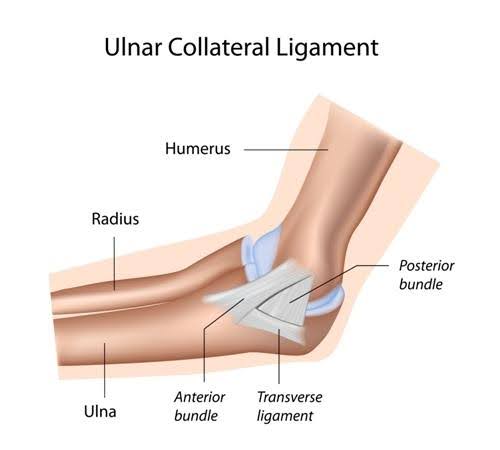
Collateral ligament injuries of the elbow occur when the stabilising ligaments on either side of the joint are overstretched, partially torn or completely ruptured. The ligaments involved are:
The ulnar collateral ligament (UCL), which is located on the inner side of the joint.
The radial collateral ligament (RCL), which is located on the outer side of the joint.
These ligaments play a crucial role in maintaining elbow stability, and controlling movements. As such, damage to these ligaments can lead to pain, instability, and difficulty with arm function. These injuries are common among athletes, particularly in sports involving repetitive throwing motions, as well as in individuals who experience trauma, such as a fall onto an outstretched arm.
Collateral ligament injuries of the elbow occur when the stabilising ligaments on either side of the joint are overstretched, partially torn or completely ruptured. The ligaments involved are:
The ulnar collateral ligament (UCL), which is located on the inner side of the joint.
The radial collateral ligament (RCL), which is located on the outer side of the joint.
These ligaments play a crucial role in maintaining elbow stability, and controlling movements. As such, damage to these ligaments can lead to pain, instability, and difficulty with arm function. These injuries are common among athletes, particularly in sports involving repetitive throwing motions, as well as in individuals who experience trauma, such as a fall onto an outstretched arm.
What causes Collateral Ligament Injuries?
Acute trauma or repetitive strain are the common causes of collateral ligament injuries. This is due to the fact that both conditions place excessive stress on the ligaments that are responsible for stabilising the elbow joint.
Repetitive Stress
Athletes who engage in overhead arm motions, such as baseball pitching, javelin throwing, and racquet sports require repeated forceful movements that can weaken the UCL over time. Similarly, weightlifters, and gymnasts place significant strain on the RCL due to the heavy loads, and high-impact landings involved in their activities.
Trauma or Impact Injuries
Trauma or impact injuries are another major cause of collateral ligament damage. A direct blow to the elbow, such as in contact sports or accidents, or a fall onto an outstretched hand can force the joint into an unnatural position, overstretching or tearing the ligaments.
Sudden Twisting Movements
In some cases, sudden twisting movements can lead to ligament strain. This is common in sports like wrestling, where forceful rotations of the forearm or elbow can place excessive stress on the joint’s stabilising structures.
Hyperextension Injuries
Additionally, hyperextension injuries, where the elbow is forced beyond its normal range of motion, can result in significant ligament damage. This often occurs in high-impact activities, such as gymnastics, martial arts or certain sports where a player falls with an extended arm, causing the ligaments to overstretch or tear.
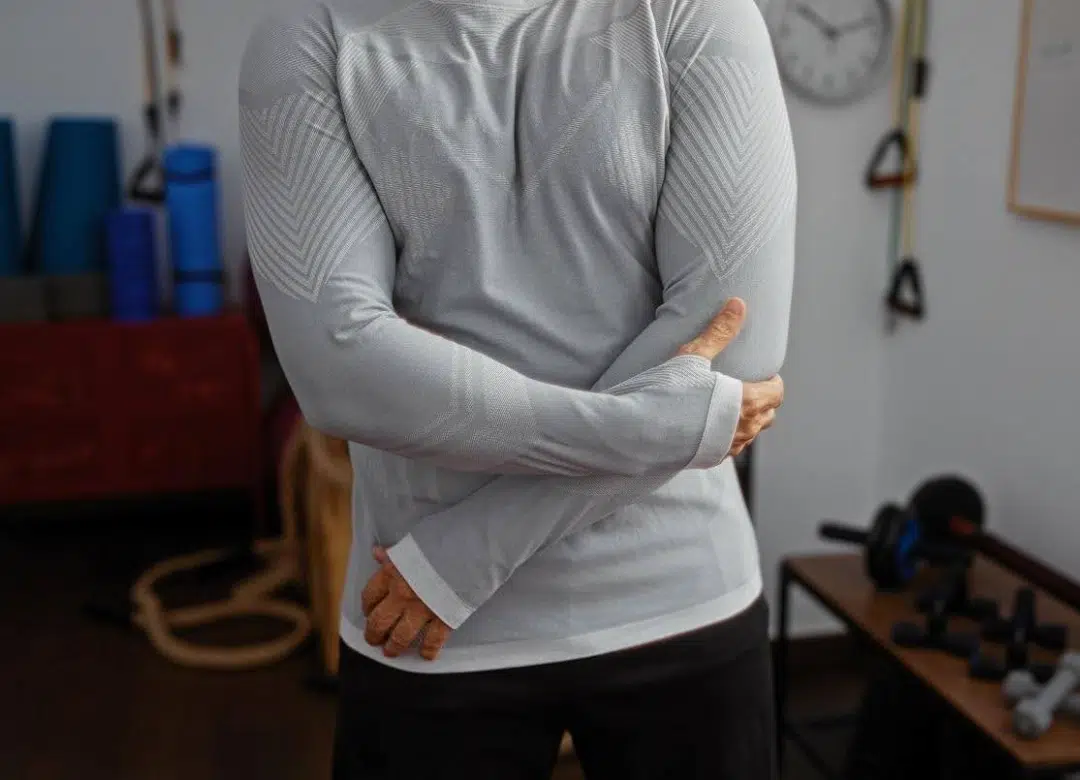
Pain on the sides of the elbow, that worsens with movement, is one of the common signs of collateral ligament injuries.
What are the symptoms of Collateral Ligament Injuries?
Symptoms vary depending on the severity of the injury but commonly include:
Clicking or popping sensations in the elbow during movement.
Decreased range of motion or stiffness in the elbow joint.
Elbow instability or a feeling of looseness, particularly during activities that involve gripping or throwing.
Pain on the inner (UCL) or outer (RCL) side of the elbow that worsens with movement.
Swelling, and tenderness around the affected ligament.
Weakness in the arm, especially when lifting or applying force.
Who is at risk of Collateral Ligament Injuries?
There are certain risk factors that make an individual more susceptible to collateral ligament injuries. These risk factors include:
Athletes in throwing sports– baseball pitchers, cricketers, javelin throwers, and quarterbacks are at high risk of UCL injuries due to repetitive stress on the ligament.
Racquet and overhead sports players– tennis, badminton, and volleyball players frequently strain their elbow ligaments during intense play.
Individuals with previous elbow injuries– a history of elbow dislocations or ligament strains may predispose a person to recurrent ligament damage.
Manual labourers– jobs that involve repetitive lifting, gripping or twisting motions, such as construction work and plumbing, can contribute to ligament wear over time.
There are certain risk factors that make an individual more susceptible to collateral ligament injuries.
How are Collateral Ligament Injuries diagnosed in Singapore?
A precise diagnosis is essential for determining the severity of the injury, and guiding an effective treatment plan.
Clinical Examination
The diagnostic process begins with a thorough clinical evaluation. The specialist will assess the patient’s pain levels, joint stability, range of motion, and overall elbow function. Since collateral ligament injuries often affect joint stability, specific physical tests are used to identify ligament involvement.
Two key tests commonly used to assess collateral ligament integrity include:
Valgus Stress Test (for UCL injuries) – the patient’s arm is positioned at a slight bend while the doctor applies gentle outward pressure to the elbow. If pain or excessive joint movements are present, it suggests instability due to UCL damage.
Varus Stress Test (for RCL injuries) – the doctor applies inward pressure to the elbow to assess the stability of the RCL. If pain or excessive laxity are present, it may indicate ligament injury.
Our Orthopaedic Specialist will also check for tenderness along the inner (medial) or outer (lateral) side of the elbow to determine ligament damage. Similarly, you will also be examined for signs of swelling or weakness to examine the extent of the damage.
Imaging Tests
In the event further evaluation is needed, imaging studies will be performed. These studies play a crucial role in confirming the diagnosis, and determining the extent of the ligament injury.
Magnetic Resonance Imaging (MRI) – MRI scans provide a detailed visualisation of the elbow’s soft tissues, including the collateral ligaments. They are particularly useful for detecting partial tears, complete ruptures or degenerative changes in the ligaments.
Ultrasound – this imaging technique allows for real-time assessment of ligament integrity, showing signs of inflammation, thickening or structural damage. An ultrasound is often used in dynamic assessments, where ligament stability can be evaluated during movement.
X-rays – while x-rays do not show soft tissue injuries, they help rule out associated bone fractures, joint misalignment or bone spurs that may contribute to elbow instability. X-rays are particularly useful if the injury resulted from a fall or direct trauma.
Collateral ligament injuries are categorised into three different grades, which indicates the severity of the injury.
How are Collateral Ligament Injuries categorised?
Our orthopaedic specialist will classify collateral ligament injuries according to 3 grades. This will aid them in outlining a comprehensive treatment plan that ensures the ligaments heal effectively. Collateral ligament injuries are classed based on their severity:
Grade 1 (Mild Sprain) – the ligament is overstretched but remains intact. There may be slight pain, and tenderness with minimal impact on function.
Grade 2 (Partial Tear) – the ligament has sustained some tearing, resulting in noticeable pain, weakness, and mild joint instability.
Grade 3 (Complete Tear/Rupture) – the ligament is completely torn, leading to significant pain, swelling, and joint instability. In severe cases, elbow dislocation may occur.
How is Collateral Ligament Injuries treated in Singapore?
The approach to treating collateral ligament injuries varies based on the severity of the damage, and the patient’s functional needs. The primary goals of treatment are to alleviate pain, restore joint stability, and prevent long-term complications such as chronic instability or reduced mobility. Regardless of the severity of the injury, a structured rehabilitation plan is essential in all cases to ensure a safe return to daily activities, and sports.
Conservative Treatments
For mild to moderate collateral ligament injuries, non-surgical management can be effective in promoting healing, and restoring elbow stability. Some of the treatments include:
Bracing or taping – wearing an elbow brace or using kinesiology tape can provide support, and stability during movement. Braces help offload stress from the ligaments, preventing further strain, while taping techniques can enhance proprioception, and encourage proper joint alignment.
Ice therapy – applying ice packs to the elbow for 15 – 20 minutes at a time can help reduce swelling, and pain, especially in the initial stages of injury. Ice therapy is particularly useful after physical activity or if the elbow feels inflamed.
Medications – non-steroidal anti-inflammatory drugs (NSAIDs), such as ibuprofen or naproxen, may be prescribed to manage pain, and inflammation, particularly in the early stages of the injury. However, prolonged use should be monitored to avoid potential side effects.
Rest and activity modification – avoiding activities that aggravate the injury is essential for recovery. Patients may need to modify their movements in sports or daily activities to reduce strain on the elbow ligaments. For athletes, working with a coach or therapist to correct improper techniques can help prevent further damage.
Physical Therapy
Rehabilitation plays a crucial role in recovery. A comprehensive rehabilitation programme helps to strengthen the muscles around the elbow, and restore normal function. The programme may include:
Eccentric loading exercises, which help promote controlled elongation of the ligament, and enhance its healing capacity.
Mobility exercises to maintain range of motion, and prevent stiffness from developing.
Strengthening exercises targeting the forearm, and shoulder muscles to provide better support for the elbow joint.
Shockwave Therapy
This non-invasive treatment stimulates tissue repair by enhancing blood circulation, and cellular activity in the affected area. Shockwave therapy may be recommended for persistent ligament injuries that do not respond well to traditional treatments.
Injection Therapy
In cases where pain, and inflammation persist despite conservative treatment, injection therapies may be considered.
Platelet-Rich Plasma (PRP) therapy – PRP therapy involves extracting a small sample of the patient’s blood, concentrating the platelets, and injecting them into the injured ligament. Platelets contain growth factors that promote tissue repair, and accelerate healing. This treatment is particularly beneficial for chronic ligament injuries or partial tears.
Corticosteroid Injections – corticosteroid injections may be used for temporary pain relief, and to reduce inflammation. However, they are used cautiously, as repeated injections can weaken the ligament over time and potentially delay healing.
Surgical Treatment
For severe cases, surgery may be required. This is essential when the ligament is completely torn or if conservative treatments fail to restore function and stability.
Arthroscopic surgery – in some cases, minimally invasive arthroscopic techniques may be used to assess ligament damage, remove loose tissue, and repair partial tears. Arthroscopic surgery typically involves smaller incisions, leading to reduced recovery times, and minimal scarring.
Ligament repair – for partial tears, the damaged ligament can be sutured back together to encourage healing. This is typically done when the ligament is still intact but has weakened due to injury.
Ligament reconstruction (Tommy John Surgery) – for severe UCL injuries, reconstruction surgery may be necessary. This involves replacing the damaged ligament with a graft from the patient’s own tendon or a donor tendon. The new graft acts as a substitute ligament, restoring stability, and function to the elbow.
This procedure is commonly performed in athletes, particularly baseball pitchers, to help them return to high-level sports performance.
Conclusion
If collateral ligament injuries are left unaddressed, it can lead to persistent pain, joint instability, and difficulty with everyday tasks or sports performance.
At Cove Orthopaedic Clinic, our clinical team offers comprehensive diagnosis and personalised treatment plans to help patients recover strength, stability, and confidence in their elbow function. If you are experiencing ongoing elbow pain or weakness, schedule a consultation with us today for a detailed diagnosis and personalised treatment plan.
Seeing an orthopaedic specialist will ensure your elbow recovers optimally, and effectively.
Frequently asked questions
Collateral ligament injuries in the elbow can cause pain, instability, and reduced strength, making everyday activities such as lifting, gripping or pushing objects more difficult. Athletes may experience decreased performance, particularly in sports that require repetitive arm movements, such as tennis, baseball or weightlifting. If it is left untreated, the condition may worsen over time. This will lead to chronic discomfort, joint weakness, and limited range of motion, ultimately affecting overall quality of life.
Whether you can continue playing sports depends on the severity of the injury. Mild cases may allow for modified activity with the use of braces, and proper rehabilitation, while moderate to severe injuries often require rest, and structured treatment to prevent further damage. Continuing sports without proper care can lead to worsening pain, instability, and potential long-term complications, such as ligament rupture or chronic joint dysfunction.
Delaying treatment can lead to progressive ligament damage, persistent pain, and decreased elbow stability. Over time, compensatory movements may develop, placing strain on surrounding muscles, and joints, increasing the risk of additional injuries.
In severe cases, untreated ligament injuries can result in chronic instability, reduced strength, and the need for surgical intervention to restore function. That is why seeking timely medical attention is important. It allows for early intervention, reducing recovery time, and preventing complications.
Mild collateral ligament injuries may improve with rest, activity modification, and conservative treatments such as physical therapy and bracing. However, moderate to severe injuries, especially those involving partial or complete ligament tears, often require structured rehabilitation or even surgery for full recovery.
Additionally, ignoring symptoms can lead to chronic pain, and instability, prolonging the healing process, and increasing the risk of long-term complications. That is why it is best to consult with a specialist, as they can ensure proper diagnosis, and an appropriate treatment plan.
Preventing collateral ligament injuries involve strengthening the elbow, improving flexibility, and using proper technique in sports and daily activities. Some of the key preventive measures include:
Avoiding overuse by incorporating rest periods between intense training sessions.
Proper technique in sports, and weightlifting to minimise stress on the elbow.
Strengthening exercises for the forearm, shoulder, and core to enhance joint stability.
Stretching, and mobility routines to improve flexibility and reduce strain on the ligaments.
Using protective gear, such as elbow braces, when engaging in high-impact activities.
Recovery time varies depending on the severity of the injury, and the chosen treatment plan.
Mild injuries may heal within a few weeks with rest, bracing, and physical therapy.
Moderate injuries typically take several months with structured rehabilitation.
Severe cases or those requiring surgery can take six months to a year for full recovery.
Yes, collateral ligament injuries can recur, particularly if rehabilitation is incomplete, return to activity is too soon, or the underlying causes, such as poor technique or overuse, are not addressed.
Additionally, strengthening exercises, proper warm-ups, and gradual progression in sports or training help prevent re-injury. In severe cases, surgical intervention provides long-term stability, but adherence to post-treatment care, and rehabilitation is essential to minimise the risk of recurrence.
At Cove Orthopaedic Clinic, our utmost importance is in helping our patients maintain or regain the mobility that they deserve, all through excellent patient care right from the start.
Happy and satisfied patients are what keeps us going!
If you have further enquiries or would like to make an appointment at Cove Orthopaedic Clinic, simply fill in the form below or call us at +65 9631 7637.