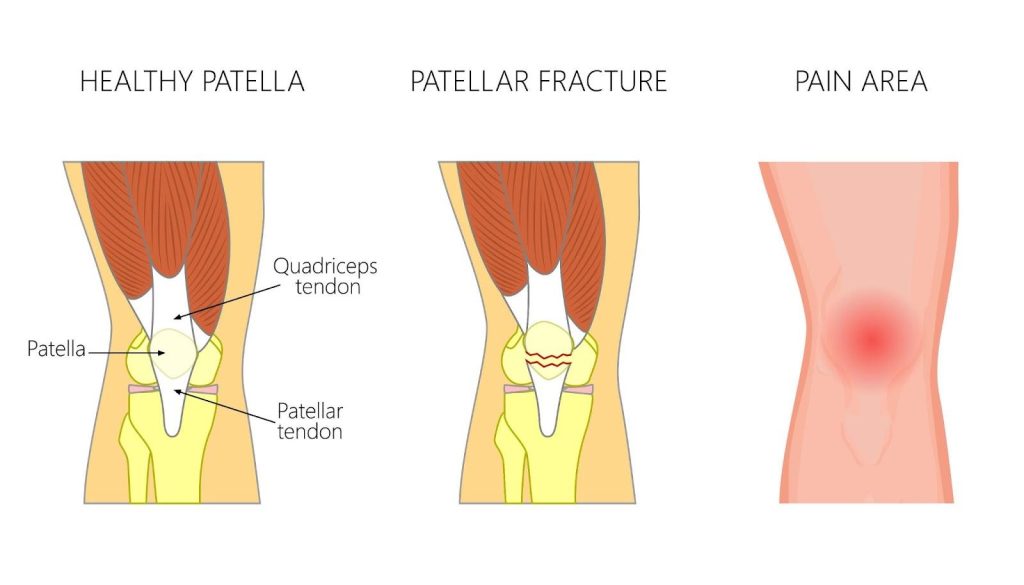
A patella fracture refers to a break in the kneecap, a small, triangular bone located at the front of the knee joint.
The patella plays a vital role in the functioning of the knee by protecting the joint and improving the leverage of the quadriceps muscles, which are responsible for straightening the leg. It connects the thigh muscle to the shinbone, making it a key component in activities such as walking, running, and jumping.
Fractures of the patella can occur due to direct trauma or high-impact forces, such as falls onto a bent knee, sports-related injuries, or car accidents. The severity of the fracture can vary, ranging from hairline cracks to complete shattering of the bone. Patella fractures can also vary in type, which can impact both the severity of the injury and the required treatment approach. The main types include:
Stable Fracture —in stable fractures, the broken pieces of bone remain aligned and are only slightly separated. These fractures may heal well with non-surgical treatments such as casting or bracing.
Displaced Fracture — in a displaced fracture, the bone fragments are misaligned or separated. Surgical intervention is typically required to reposition and stabilise the bone pieces.
Comminuted Fracture —this type occurs when the patella is shattered into multiple pieces. Due to the complexity of the break, comminuted fractures often require extensive surgical reconstruction.
Open Fracture —in an open fracture, the broken bone pierces the skin, increasing the risk of infection and requiring immediate medical treatment. Open fractures are severe and often involve both surgical repair and careful wound management.
Depending on the nature and extent of the break, patella fractures can significantly disrupt knee movement, causing pain, swelling, and difficulty in performing even simple tasks like walking or bending the knee.
A patella fracture is a break in the kneecap bone, often caused by direct trauma or intense muscle contraction, impacting knee stability and movement.
What causes a patella fracture?
A patella fracture occurs when a significant force is applied to the kneecap, overwhelming the bone’s ability to absorb impact. The most common mechanism involves direct trauma, where a sharp, focused impact to the front of the knee leads to a break in the patella. This type of direct force often results from falls where the knee strikes a hard surface, collisions in sports, or accidents where the knee is forcibly hit, such as in motor vehicle crashes.
In addition to direct trauma, a patella fracture can also result from indirect mechanisms, where intense force is applied through muscle contraction rather than an external blow. This scenario usually happens when the quadriceps muscle, located in the front of the thigh, suddenly contracts with extreme force while the knee is bent.
The strong contraction can place excessive stress on the patella, causing it to crack or break. This indirect mechanism is less common but can be seen in activities where there is an abrupt demand on the quadriceps, such as jumping or quickly straightening the leg against resistance.
What are the symptoms of a patella fracture?
A patella fracture, or broken kneecap, is a painful injury that can significantly impact mobility and knee function. Here are common symptoms associated with a patella fracture:
Severe pain in the front of the knee that intensifies with movement
Swelling around the knee joint
Bruising and tenderness directly over the kneecap
Inability to straighten the knee or keep the leg extended
Difficulty walking or bearing weight on the injured leg
Visible deformity in the shape or alignment of the kneecap (in some cases)
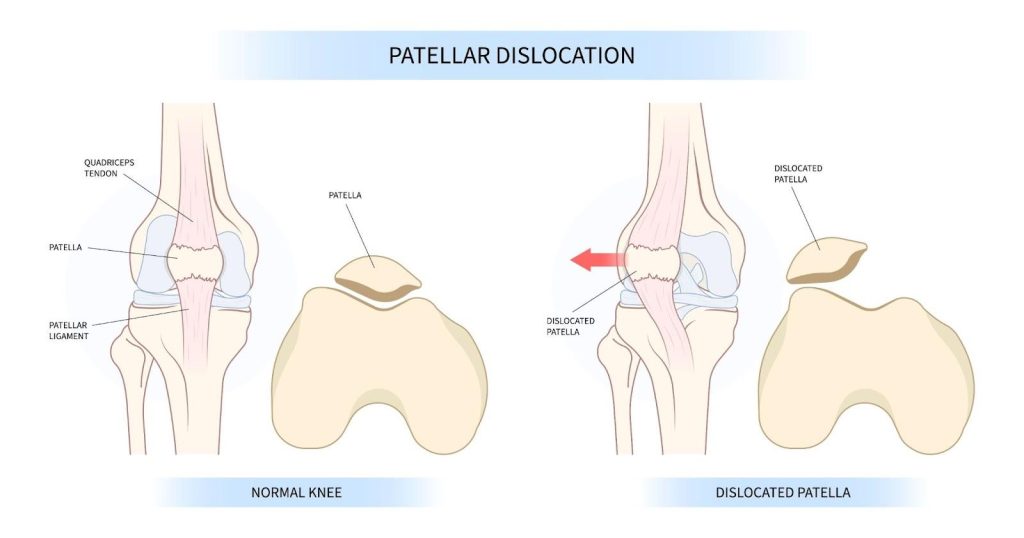
A severe patella fracture can lead to patellar dislocation, as the broken fragments may disrupt the alignment of the kneecap, causing it to shift out of place.
Who is at risk of a patella fracture in Singapore?
Patella fractures, or broken kneecaps, can happen to anyone, but certain factors may increase the risk, especially in a dynamic city like Singapore where activity levels vary widely. Here are some common risk factors:
Occupation — Occupations involving manual labour that place pressure on the knees, such as construction work.
Previous injuries — Previous knee injuries which can weaken the kneecap over time.
High-traffic environments — High-traffic environments where accidents are more likely, increasing the risk of direct trauma to the knee.
Understanding these risk factors can help individuals take precautions, especially if they’re actively involved in sports or physically demanding jobs.
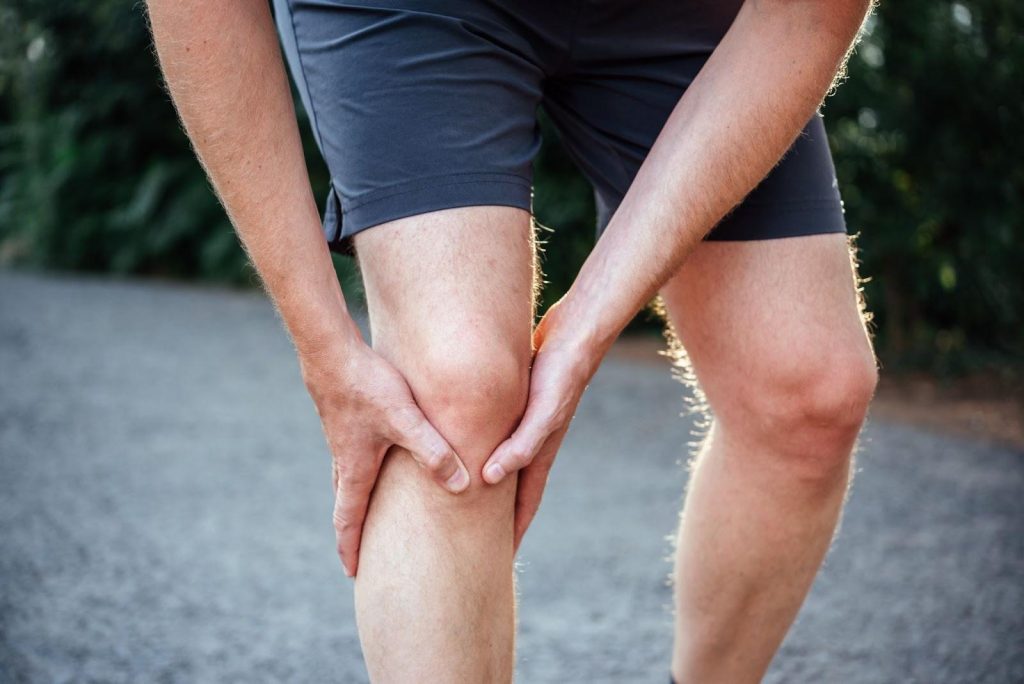
Participation in high-impact sports increases the risk of a patellar fracture due to the intense forces and potential for direct trauma to the knee.
How is a patella fracture diagnosed?
At Cove Orthopaedics, we take a comprehensive approach to diagnosing patella fractures, ensuring that each patient receives an accurate and personalised assessment. Here’s how we go about it:
Physical examination —our healthcare professionalbegins with a detailed evaluation of the knee, checking for pain, swelling, bruising, and any signs of instability or deformity.
X-rays — X-ray imaging is a crucial step, helping us to identify the exact location and severity of the fracture.
CT scans — in more complex cases, we may recommend a CT scan to get a detailed view of the fracture pattern and any displacement, which aids in precise treatment planning.
MRI — if we suspect additional soft tissue injuries, an MRI provides a closer look at the ligaments, tendons, and cartilage around the kneecap.
With these diagnostic tools, we ensure that each patient receives a clear diagnosis, which allows us to create a tailored treatment plan for the best possible recovery.
What are the treatment options for a patella fracture in Singapore?
At Cove Orthopaedics, we offer a range of treatment options for patella fractures, customised to each patient’s needs to promote a strong and lasting recovery. Here’s how we approach treatment:
Non-surgical treatment — for less severe fractures, we may recommend immobilising the knee with a cast or brace to allow natural healing. This approach is usually paired with a personalised physical therapy plan to restore strength and mobility gradually.
Surgical repair — for complex or displaced fractures, surgery may be necessary to realign and stabilise the kneecap. Our surgical techniques focus on minimising disruption to surrounding tissue and may include the use of screws, wires, or plates to securely hold the bone together.
Physical therapy — rehabilitation is a key component of recovery. We work closely with patients to design a physical therapy regimen that gradually strengthens the knee, restores range of motion, and helps prevent future complications.
Pain management — throughout treatment, we provide pain management strategies tailored to each patient, ensuring comfort during recovery.
At Cove Orthopaedics, our goal is to provide the most effective treatment plan for every individual, supporting a smooth recovery and return to daily activities.
If you are experiencing symptoms of a patella fracture or have concerns about your knee health, schedule an appointment with Cove Orthopaedics for a comprehensive evaluation and personalised treatment plan.
Frequently asked questions
Recovery time varies depending on the severity of the fracture and the treatment approach. Generally, patients can expect to return to normal activities within 3 to 6 months. Severe fractures may require a longer recovery period.
Walking with a fractured patella is often difficult and painful. Depending on the fracture’s severity, the doctor may recommend using crutches or a walker to avoid putting weight on the affected leg during the initial healing phase.
Yes, physical therapy is typically recommended to restore knee function, improve range of motion, and strengthen the surrounding muscles after a patella fracture. A tailored rehabilitation program can aid in a more complete recovery.
Potential complications include chronic knee pain, stiffness, muscle weakness, and an increased risk of developing post-traumatic arthritis in the knee joint. Adhering to your treatment and rehabilitation plan can help minimise these risks.
Returning to sports or strenuous activities should be guided by your healthcare provider. It typically occurs after full healing and rehabilitation, which may take several months. Gradual reintroduction to activities is essential to prevent re-injury.
While not all patella fractures can be prevented, wearing appropriate protective gear during high-risk activities, maintaining strong thigh muscles, and practising good balance can reduce the risk. Additionally, taking measures to prevent falls, such as removing home hazards and using assistive devices if needed, can be beneficial.
If you suspect a patella fracture, seek immediate medical attention. Avoid putting weight on the affected leg, apply ice to reduce swelling, and keep the knee elevated until you can be evaluated by a healthcare professional.
At Cove Orthopaedic Clinic, our utmost importance is in helping our patients maintain or regain the mobility that they deserve, all through excellent patient care right from the start.
Happy and satisfied patients are what keeps us going!
If you have further enquiries or would like to make an appointment at Cove Orthopaedic Clinic, simply fill in the form below or call us at +65 9631 7637.