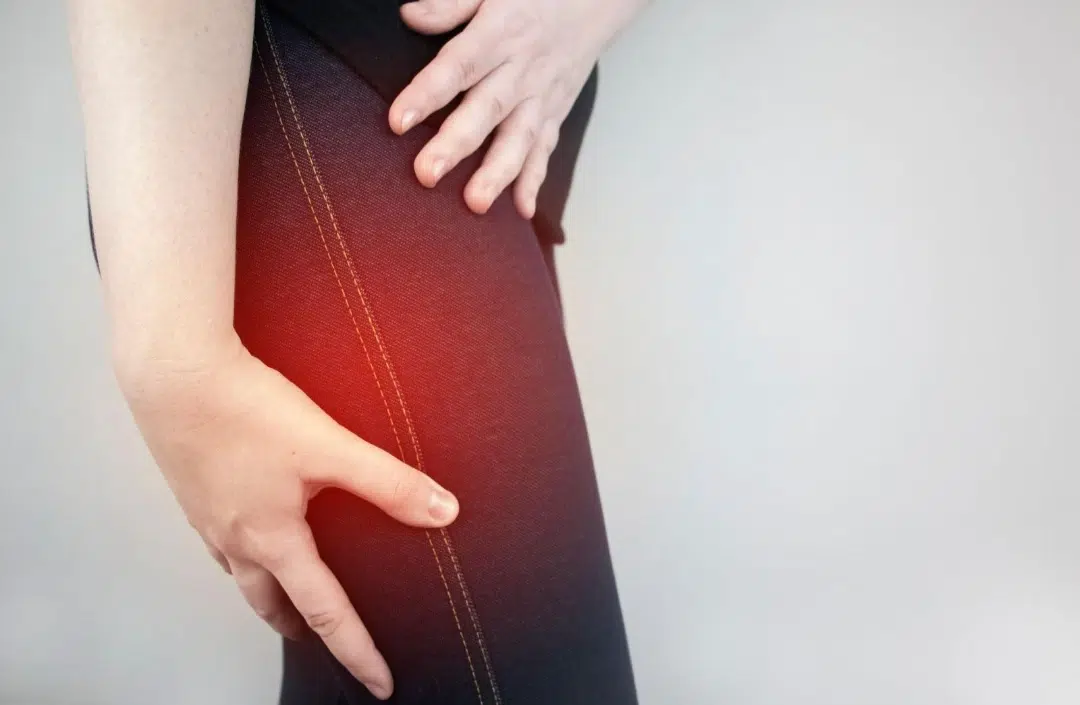
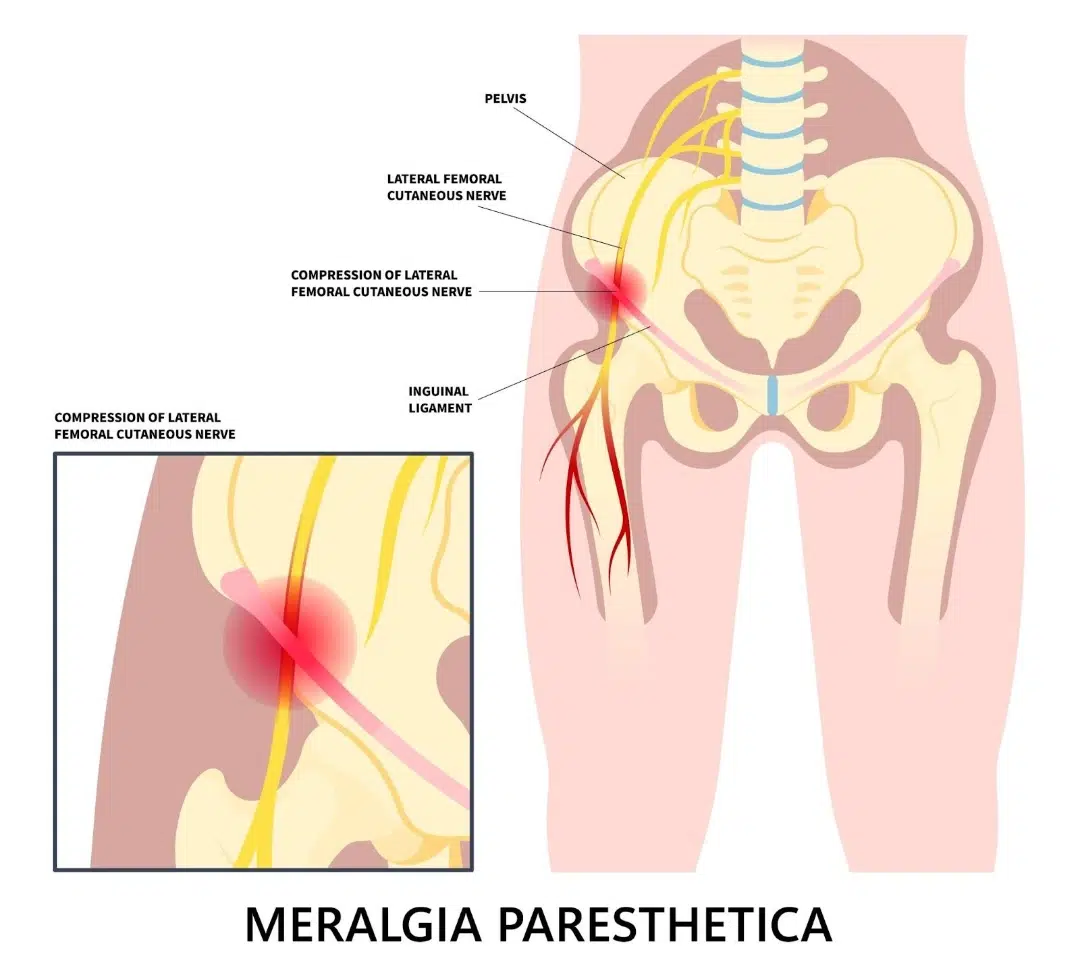
Meralgia paraesthetica is a condition caused by compression of the lateral femoral cutaneous nerve, a sensory nerve that supplies feeling to the outer thigh.
This entrapment leads to symptoms such as burning pain, tingling, numbness, or heightened sensitivity over the skin of the thigh. Unlike some other nerve-related conditions, meralgia paraesthetica does not affect muscle strength, as the nerve involved is purely sensory.
The condition often develops when the nerve becomes pinched as it passes through the pelvis and into the upper thigh. Common contributing factors include wearing tight clothing or belts, obesity, pregnancy, or prolonged standing and walking. In some cases, prior injury or scar tissue may also be responsible.
Although meralgia paraesthetica is not usually dangerous, the symptoms can be uncomfortable and may interfere with daily activities. Fortunately, many cases improve with lifestyle adjustments and conservative treatment, while more persistent cases may require medical intervention.
Meralgia paraesthetica can cause burning pain or discomfort over the outer thigh, which often worsens with standing or walking.
What causes meralgia paraesthetica?
Bicep tendinopathy is a common condition that is often due to wear and tear or repetitive strain.
Tight clothing or accessories — belts, corsets, or trousers that fit tightly around the waist can increase pressure on the nerve.
Obesity or weight gain — excess body weight can put added strain on the pelvis and nerve pathway.
Pregnancy — the growing uterus and changes in posture during pregnancy may lead to nerve compression.
Prolonged standing or walking — activities that place repeated stress on the hips and pelvis can trigger symptoms.
Trauma or injury — direct injury to the pelvis, scar tissue from previous surgery, or falls can damage or entrap the nerve.
Medical conditions — diabetes and other metabolic disorders can make nerves more vulnerable to compression.
In many cases, the condition results from a combination of these factors rather than a single cause.
What are the signs and symptoms of meralgia paraesthetica?
The main feature of meralgia paraesthetica is altered sensation on the outer part of the thigh. Because the lateral femoral cutaneous nerve is a sensory nerve, the symptoms affect feeling but not muscle strength. Common symptoms include:
Burning pain or discomfort over the outer thigh, which may worsen with standing or walking.
Tingling or “pins and needles” sensation in the same area.
Numbness or reduced feeling on the skin of the thigh.
Increased sensitivity to touch, where even light pressure from clothing may cause irritation or discomfort.
Symptoms on one side only, most often affecting a single thigh.
Symptoms usually develop gradually and can vary in severity. In some people, they may come and go, while in others they may persist and interfere with daily activities.
Who is at risk of meralgia paraesthetica in Singapore?
Meralgia paraesthetica can affect anyone, but certain factors increase the likelihood of developing the condition. People most at risk include:
Those who are overweight or obese — extra body weight places added pressure on the pelvis and nerve pathway.
Individuals with occupations or lifestyles involving prolonged standing or walking — activities that place continuous stress on the hips and thighs can aggravate the nerve.
How is meralgia paraesthetica diagnosed?
Diagnosing meralgia paraesthetica usually involves a careful assessment of symptoms and examination of the thigh. Because its signs can resemble other conditions, doctors use a combination of clinical evaluation and, where needed, specialised tests to confirm the diagnosis.
Medical history — diagnosis begins with a detailed discussion of symptoms, including when they started, what makes them worse and how they affect daily activities. The pattern of altered sensation over the outer thigh without muscle weakness is a key sign.
Physical examination — the doctor will check for numbness, tingling, or tenderness on the outer thigh. Pressing over the area where the lateral femoral cutaneous nerve passes near the pelvis may reproduce symptoms.
Imaging tests — x-rays or MRI scans are not always required but may be used to rule out other conditions, such as hip or spinal problems, that can cause similar symptoms.
Nerve studies — nerve conduction tests or electromyography (EMG) may be performed in selected cases to confirm involvement of the lateral femoral cutaneous nerve and exclude other nerve disorders.
A precise diagnosis ensures that treatment targets the underlying nerve compression rather than unrelated causes of thigh pain.
What are the complications of meralgia paraesthetica?
Meralgia paraesthetica is not life-threatening, but if left untreated or poorly managed, it can lead to ongoing discomfort and reduced quality of life. Possible complications include:
Chronic pain — persistent burning or tingling pain in the thigh may interfere with walking, standing, or daily activities.
Sleep disturbance — ongoing discomfort, especially at night, can disrupt rest and lead to fatigue.
Reduced mobility — pain and altered sensation may cause people to limit activity, potentially leading to stiffness, weight gain, or muscle weakness over time.
Emotional impact — long-standing nerve pain can contribute to anxiety, frustration, or low mood, particularly when symptoms restrict normal lifestyle.
Side effects of treatment — some medications for nerve pain may cause drowsiness or dizziness, while injections or surgery carry risks such as infection, bleeding, or nerve damage.
While most patients recover with conservative management, recognising complications early helps ensure appropriate adjustments in treatment and better long-term outcomes.
What are the treatment options for meralgia paraesthetica?
Treatment for meralgia paraesthetica focuses on relieving pressure on the lateral femoral cutaneous nerve and reducing symptoms. Many cases improve with simple lifestyle measures, while persistent or severe cases may require medical intervention.
Conservative treatment
For most patients, the first step in managing meralgia paraesthetica is simple lifestyle modification and supportive care.
Lifestyle adjustments — wearing looser clothing, avoiding tight belts, and reducing prolonged standing or walking can ease pressure on the nerve.
Weight management — losing excess weight can relieve strain on the pelvis and nerve pathway.
Activity modification — avoiding activities that worsen symptoms, such as repetitive hip movements, may provide relief.
Pain relief — non-steroidal anti-inflammatory drugs (NSAIDs) or simple analgesics may be recommended for short-term symptom control.
Medical and interventional treatment
If symptoms persist despite lifestyle changes, doctors may recommend targeted therapies to reduce nerve irritation and control pain.
Physiotherapy — specific stretching and strengthening exercises may help improve posture and reduce nerve compression.
Nerve block injections — local anaesthetic and corticosteroid injections around the nerve can provide temporary or long-lasting relief in more severe cases.
Medications for nerve pain — drugs such as gabapentin or pregabalin may be considered if symptoms are persistent and painful.
Surgical treatment
Surgery is considered only when conservative and interventional treatments have failed to provide relief. Surgical options include decompression of the nerve or, in rare cases, neurectomy (removal of part of the nerve). These procedures are usually reserved for patients with severe and long-standing symptoms.
Recovery and Prognosis of Meralgia Paraesthetica
The outlook for meralgia paraesthetica is generally favourable, especially when the underlying cause of nerve compression is identified and addressed. Most patients experience gradual improvement with conservative treatment.
Recovery time — mild cases may resolve within weeks to months, particularly when lifestyle adjustments such as weight loss or looser clothing are adopted.
Non-surgical outcomes — the majority of patients respond well to non-surgical measures, with symptoms easing once pressure on the nerve is reduced.
Surgical outcomes — in rare cases where surgery is required, many patients gain significant relief, although some may continue to have altered sensation in the thigh.
Long-term outlook — while most people recover fully, a small number may develop chronic symptoms or recurrent flare-ups, particularly if risk factors such as obesity or diabetes remain uncontrolled.
With appropriate treatment and follow-up, most patients are able to return to normal activities and maintain a good quality of life.
Summary
Meralgia paraesthetica is a condition caused by compression of the lateral femoral cutaneous nerve, leading to burning pain, tingling, numbness, or altered sensation in the outer thigh. It is most often linked to factors such as tight clothing, obesity, pregnancy, or prolonged activity and while not dangerous, the symptoms can be distressing and limit daily life.
Thankfully, with the right treatment, prognosis is generally good, with many people experiencing significant improvement once the underlying cause is addressed.
If you are experiencing persistent thigh pain, tingling, or numbness that may suggest meralgia paraesthetica, schedule a consultation with us for comprehensive diagnosis, personalised treatment and long-term relief.
Conditions We Treat
Hip
Head
Hand & Wrist
Foot & Ankle
Elbow
Frequently asked questions
No, meralgia paraesthetica is not life-threatening. However, it can cause long-term discomfort if untreated and may affect daily activities and quality of life.
Yes, in many cases symptoms improve once pressure on the nerve is relieved, such as by wearing looser clothing or losing weight.
It usually affects only one thigh, but in rare cases, both thighs may be involved if the nerve is compressed on both sides.
High-impact activities or repetitive hip movements may aggravate symptoms. Low-impact exercises such as swimming or cycling are usually better tolerated.
Although thigh symptoms may resemble sciatica, meralgia paraesthetica is caused by nerve compression at the pelvis, not the spine.
In most women, symptoms improve after delivery once the pressure on the nerve is relieved, though some may take weeks to months to fully recover.
Permanent damage is rare. Most patients recover with conservative treatment, although some may have ongoing numbness or altered sensation.
Maintaining a healthy weight, wearing loose clothing and avoiding prolonged standing or walking can help reduce the risk.
You may first consult a general practitioner. If symptoms persist, referral to an orthopaedic specialist or neurologist may be recommended.
Yes, diabetes can increase the risk of nerve-related problems and may make symptoms more persistent if not well controlled.
At Cove Orthopaedic Clinic, our utmost importance is in helping our patients maintain or regain the mobility that they deserve, all through excellent patient care right from the start.
Happy and satisfied patients are what keeps us going!
If you have further enquiries or would like to make an appointment at Cove Orthopaedic Clinic, simply fill in the form below or call us at +65 9631 7637.