Biceps tendinopathy is a condition caused by overuse, repetitive strain or degenerative changes affecting the biceps tendon. The biceps brachii muscle, located at the front of the upper arm, has a long head tendon and a short head tendon that attaches to the shoulder and elbow.
When excessive stress is placed on these tendons, they may develop microtears, inflammation, and degeneration, leading to pain, stiffness, and reduced arm function.
This condition commonly affects athletes, manual labourers, and individuals involved in repetitive overhead or pulling movements. Sports such as weightlifting, swimming, tennis, and baseball, as well as occupations that require frequent lifting or tool use, can place significant strain on the biceps tendon.
Biceps tendinopathy develops gradually due to repetitive stress, mechanical overload, and poor recovery. Unlike acute injuries that occur suddenly, tendinopathy results from ongoing wear, and tear on the biceps tendon, leading to progressive degeneration.
Improper Technique
Incorrect movement patterns during sports, exercise or daily activities can place excessive strain on the biceps tendon, leading to injury over time. This is particularly common in weightlifting, where improper bench pressing, bicep curls or overhead pressing can overload the tendon. Using excessive weight with poor form, such as flaring the elbows during presses or pulling exercises, can create unbalanced tension on the biceps tendon, thereby increasing the risk of microtears.
In racket sports like tennis or badminton, incorrect swinging mechanics or excessive wrist flicking can overload the biceps tendon, especially when generating power for serves or smashes. Similarly, baseball pitchers, and swimmers who use improper arm positioning during throwing or strokes can subject the biceps tendon to excessive stress, leading to gradual wear, and tear.
Beyond sports, manual labour tasks such as lifting heavy objects with poor posture, repetitive pulling motions or overhead reaching can strain the tendon. Over time, these improper techniques contribute to tendon inflammation, and degeneration.
Overuse and Poor Recovery
Biceps tendinopathy often results from excessive tendon loading without sufficient rest, and recovery. The biceps tendon is highly active during various upper limb movements, including lifting, pulling, and stabilising the shoulder. When individuals engage in frequent, high-intensity training or perform repetitive lifting without allowing the tendon to recover, small tendon fibres break down faster than they can repair, leading to chronic irritation, and weakening. Additionally, individuals returning to strenuous activity too soon after experiencing mild tendon discomfort may worsen the damage, as the tendon is unable to fully heal before being stressed again.
Repetitive Movements
Engaging in repetitive arm motions that involve constant elbow flexion, shoulder elevation, and forearm rotation can contribute to biceps tendinopathy. Occupational tasks such as prolonged lifting, tool handling, or repetitive pulling and pushing place continuous strain on the biceps tendon, leading to overuse injuries.
Sports that require high-frequency arm movements, such as swimming (freestyle, butterfly), baseball (pitching, throwing), and climbing, can overload the biceps tendon. Similarly, long hours of typing, using a computer mouse, or even carrying heavy bags can contribute to repetitive strain on the tendon, particularly when poor ergonomics are involved.
These repetitive actions trigger microtraumas within the tendon fibres, initiating a cycle of inflammation, pain, and tendon weakening.
What are the symptoms of Biceps Tendinopathy?
Some of the commons symptoms of biceps tendinopathy are:
Clicking or catching sensation– some individuals may experience a snapping or clicking feeling in the shoulder or elbow due to tendon irritation.
Pain and tenderness– localised pain in the front of the shoulder or upper arm, especially when lifting, pulling or rotating the forearm.
Pain during activity– discomfort intensifies with repetitive arm movements, particularly when reaching overhead, pulling or performing resistance exercises.
Persistent pain at rest– in more advanced cases, pain may persist even when the arm is at rest or during sleep.
Stiffness and weakness – reduced strength in the biceps muscle, leading to difficulty in lifting objects, performing curls or carrying bags.
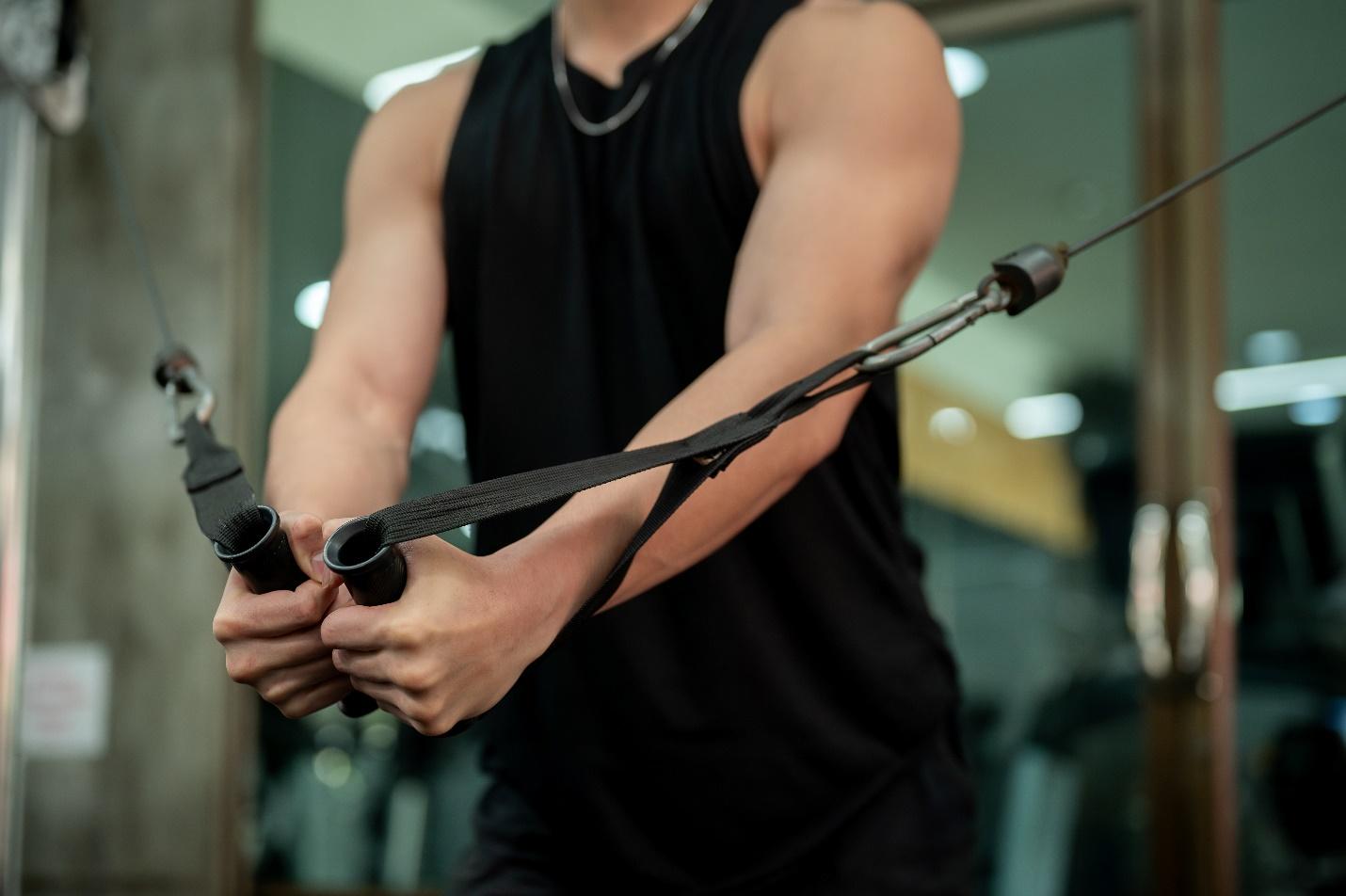
One of the symptoms of biceps tendinopathy is pain when performing resistance exercises.
What are the risk factors associated with Biceps Tendinopathy?
Certain factors can increase the likelihood of developing biceps tendinopathy, such as:
Age – people over the age of 40 are more susceptible to biceps tendinopathy as tendons naturally lose elasticity, and strength with age, making them more prone to degeneration.
Arthritis – people with arthritis have a higher risk of developing biceps tendinopathy due to joint inflammation, and degenerative changes that weaken the surrounding tendons.
Athletes – athletes involved in repetitive overhead movements, such as weightlifters, swimmers, and baseball players, are at greater risk because these activities place excessive strain on the biceps tendon over time.
Inadequate recovery – people who do not allow adequate rest and recovery between physical activities are at a higher risk since overuse without proper healing time leads to chronic tendon damage.
Manual labourers – individuals with physically demanding jobs, such as construction workers, mechanics, and painters, are more likely to develop biceps tendinopathy due to repetitive lifting, and overhead work.
Muscle weakness – those with poor shoulder, and arm strength are at increased risk since weak supporting muscles force the biceps tendon to bear more load, leading to strain, and microtears.
Poor posture – individuals with poor posture, particularly forward shoulder positioning, are more likely to experience biceps tendon strain as improper alignment places undue stress on the tendon.
Smoking – smokers are more prone to tendon injuries as smoking reduces blood flow to the tendons, impairing their ability to heal, and recover from stress.
What happens when Biceps Tendinopathy is left untreated?
Without proper treatment, biceps tendinopathy can lead to chronic pain, and weakness, significantly affecting arm function, and daily activities. Over time, persistent discomfort may make simple tasks such as lifting objects, reaching overhead or even carrying groceries difficult. As the condition progresses, muscle weakness may develop, further limiting mobility, and reducing overall strength in the affected arm.
In severe cases, prolonged tendon degeneration may result in a partial or complete tendon rupture, requiring surgical intervention. A ruptured biceps tendon can cause sudden sharp pain, noticeable bruising, and a visible deformity in the arm, often referred to as a "Popeye muscle" due to the retracted biceps. Once the tendon is torn, it can no longer function properly, leading to a significant loss of strength, and difficulty in performing lifting or pulling motions.
Additionally, untreated biceps tendinopathy can contribute to shoulder impingement or instability. The biceps tendon plays a crucial role in shoulder stability, and ongoing strain or degeneration may lead to abnormal movement patterns in the shoulder joint. This can result in increased friction, inflammation, and a higher risk of developing conditions such as rotator cuff tendinitis or shoulder instability, further complicating recovery.
How is Biceps Tendinopathy diagnosed in Singapore?
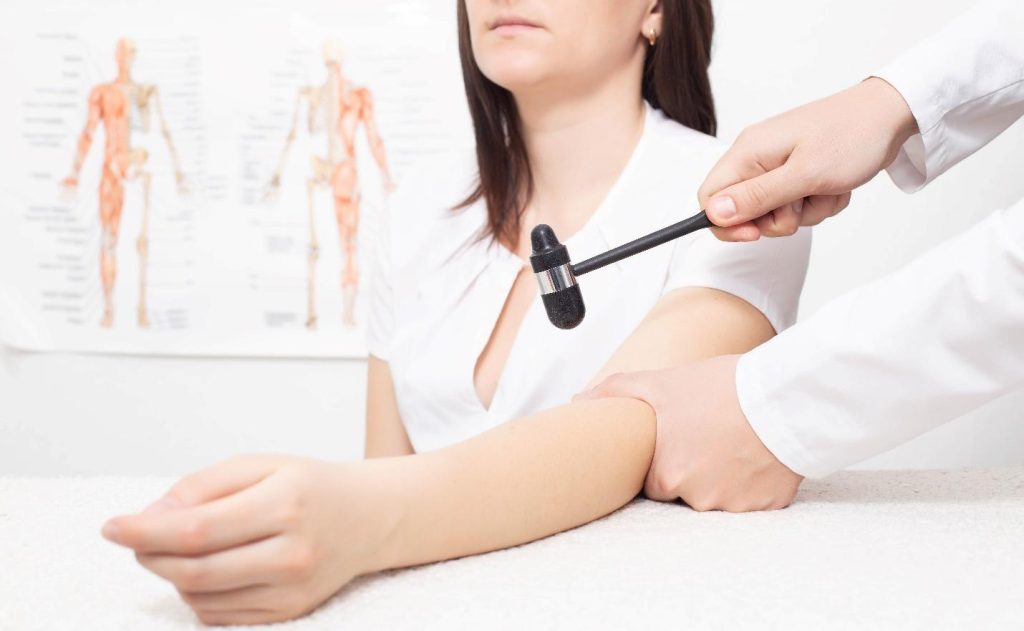
An orthopaedic specialist will perform a physical examination to assess reflex, range of motion, pain levels, and muscle strength.
Clinical Examination
The clinical examination is the first step in diagnosing biceps tendinopathy. The orthopaedic specialist will assess pain levels, muscle strength, and range of motion, carefully evaluating how the biceps tendon responds to movement, and pressure. Two key clinical tests are commonly used:
Speed’s test – the patient extends their arm forward with the palm facing up while the doctor applies gentle downward resistance. Pain or discomfort along the front of the shoulder or upper arm suggests biceps tendon involvement.
Yergason’s test – the patient bends their elbow at 90 degrees while the doctor resists an outward rotation of the forearm. Pain or instability in the biceps region may indicate tendon irritation or inflammation.
Imaging Tests
In cases where further evaluation is needed, imaging studies play a crucial role in confirming the diagnosis, and assessing the extent of tendon damage:
Magnetic Resonance Imaging (MRI) – MRI scans are used in more severe or persistent cases to provide detailed visualisation of tendon integrity. This identifies partial tears or significant degenerative changes that may require advanced intervention.
Ultrasound – ultrasound provides real-time imaging to detect tendon inflammation, thickening or degeneration, offering a clear view of structural changes in the biceps tendon.
X-rays – x-rays help rule out bone abnormalities, such as arthritis or fractures, that may contribute to shoulder or arm pain.
How is Biceps Tendinopathy treated in Singapore?
Treatment for biceps tendinopathy typically focuses on reducing pain, promoting tendon healing, and restoring arm function. Depending on the severity of the condition, treatment options may range from conservative management to advanced interventions.
Conservative Treatments
Most cases of biceps tendinopathy respond well to non-surgical approaches, which aim to relieve symptoms, and improve tendon health. These treatments include:
Activity modification– adjusting movement patterns to avoid excessive strain on the biceps tendon. This may include modifying lifting techniques, reducing repetitive overhead motions, and incorporating rest periods during activities.
Bracing or taping– a shoulder or elbow brace provides additional support, while kinesiology taping can help alleviate strain on the tendon during activities.
Medications – non-steroidal anti-inflammatory drugs (NSAIDs) may be used for short-term pain relief, and inflammation control.
Injection Therapy
For patients who do not respond to conservative treatments, targeted injection therapies may be recommended:
Corticosteroid injections– while effective for temporary pain relief, corticosteroid injections are used cautiously as repeated use may weaken the tendon, and increase the risk of rupture.
Platelet-Rich Plasma (PRP) therapy– PRP injections use growth factors derived from the patient’s own blood to accelerate tendon healing, and reduce inflammation.
Therapeutic Therapy
On top of conservative treatments or injection therapy, our orthopaedic specialist may also recommend therapeutic therapies to facilitate recovery:
Ice therapy– applying cold packs for 15 – 20 minutes at a time helps reduce inflammation, and pain, particularly after physical exertion.
Physical therapy– a structured rehabilitation programme is essential for long-term recovery:
Eccentric strengthening exercises help stimulate tendon remodelling by gradually loading the affected tendon.
Stretching, and mobility training reduce muscle tension and improve flexibility, preventing further strain on the biceps tendon.
Shockwave therapy– a non-invasive treatment that delivers acoustic waves to the affected tendon, promoting healing by increasing blood flow, and stimulating tissue repair.
Surgical Treatment (For Severe Cases)
Surgical intervention is considered when tendon damage is extensive or if a partial or complete tendon rupture occurs. The surgical approach may involve:
Tendon debridement– tendon debridement is a surgical procedure performed to remove damaged, degenerated or scarred tendon tissue that is interfering with healing. By carefully excising the diseased portion of the tendon, the procedure stimulates natural healing, and reduces irritation. In some cases, the surgeon may also smooth out surrounding structures, such as bony spurs, to prevent further tendon impingement.
Tendon repair or reattachment – if the biceps tendon has partially or completely torn, surgical repair or reattachment is necessary to restore arm strength, and function. In this procedure, the surgeon re-secures the torn tendon to the bone, typically using sutures or specialised anchors. This allows the tendon to properly heal, and regain its ability to withstand tension, and movement.
Summary
Biceps tendinopathy can significantly impact arm function, strength, and daily activities if left untreated. It is important to understand that early intervention is key to preventing chronic pain, and further tendon damage.
At Cove Orthopaedic Clinic, our orthopaedic specialists provide personalised treatment plans tailored to each patient's condition, ensuring the best possible recovery outcomes.
With that said, if you are experiencing persistent arm or shoulder pain, schedule a consultation with us for a personalised treatment plan to restore pain-free movement and regain your strength.
Seeking timely medical treatment can help prevent further complications, which can reduce quality of life significantly.
Frequently asked questions
Biceps tendinopathy, and general muscle ache may feel similar initially, but there are key differences in their characteristics.
Biceps tendinopathy typically presents as persistent pain along the front of the shoulder or upper arm, which worsens with repetitive lifting, overhead movements or certain arm positions. The pain is often sharp or aching and may be accompanied by stiffness, weakness or tenderness along the tendon.
In contrast, muscle ache (also known as delayed onset muscle soreness or DOMS) usually occurs after intense activity, affecting a broader area. Additionally, it tends to improve within a few days with rest, and gentle stretching. However, if the pain is localised, persistent, and aggravated by movement, it may indicate biceps tendinopathy rather than a simple muscle strain.
Recovery time for biceps tendinopathy varies depending on the severity of the condition, treatment adherence, and individual healing capacity.
Mild to moderate cases often improve within a few weeks to a few months with activity modification, physical therapy, and proper rehabilitation exercises.
More severe or chronic cases may take several months to fully heal, especially if the tendon has undergone significant degeneration.
If conservative treatments are not effective, advanced therapies such as PRP injections or shockwave therapy may be recommended to promote faster healing. Although, surgical intervention is rarely required, it may extend recovery time to several months post-operation.
Massage therapy can be beneficial in relieving muscle tension, and improving circulation, but it should be approached with caution in cases of biceps tendinopathy. Deep tissue or aggressive massage directly on the inflamed tendon may worsen symptoms, and lead to further irritation.
However, gentle massage targeting the surrounding muscles, such as the shoulders and upper arms, can help relieve tension, and reduce strain on the biceps tendon. Be that as it may, it is best to consult our orthopaedic specialist before incorporating massage into a treatment plan to ensure it is done safely, and effectively.
Yes, biceps tendinopathy can recur if the underlying causes are not addressed. Factors such as poor movement mechanics, repetitive overuse, inadequate rehabilitation or returning to high-impact activities too soon can lead to a recurrence.
While it may not always be possible to completely prevent biceps tendinopathy, certain measures can significantly reduce the risk:
Allowing time for tendons to recover between activities and avoid overuse.
Avoiding sudden increases in intensity or duration of physical activity to prevent excessive tendon stress.
Ensuring correct form when lifting weights, performing sports movements or engaging in repetitive tasks.
Modifying work or sports-related movements to minimise repetitive stress on the tendon.
Strengthening the shoulder and arm muscles while maintaining flexibility reduces tendon strain.
The terms tendonitis, and tendinopathy are often used interchangeably, but they refer to different stages of tendon injury.
Elbow tendonitis refers to the acute inflammation of a tendon due to sudden overuse or repetitive strain. It is usually characterised by swelling, redness, and sharp pain in the affected area. With proper rest and treatment, tendonitis can resolve relatively quickly.
Elbow tendinopathy is a chronic condition resulting from long-term tendon degeneration due to repeated stress without adequate healing. Unlike tendonitis, tendinopathy is typically not associated with significant inflammation but involves structural changes in the tendon, leading to persistent pain, stiffness, and weakness.
At Cove Orthopaedic Clinic, our utmost importance is in helping our patients maintain or regain the mobility that they deserve, all through excellent patient care right from the start.
Happy and satisfied patients are what keeps us going!
Consult Us Today
If you have further enquiries or would like to make an appointment at Cove Orthopaedic Clinic, simply fill in the form below or call us at +65 9631 7637 | +65 6475 7177