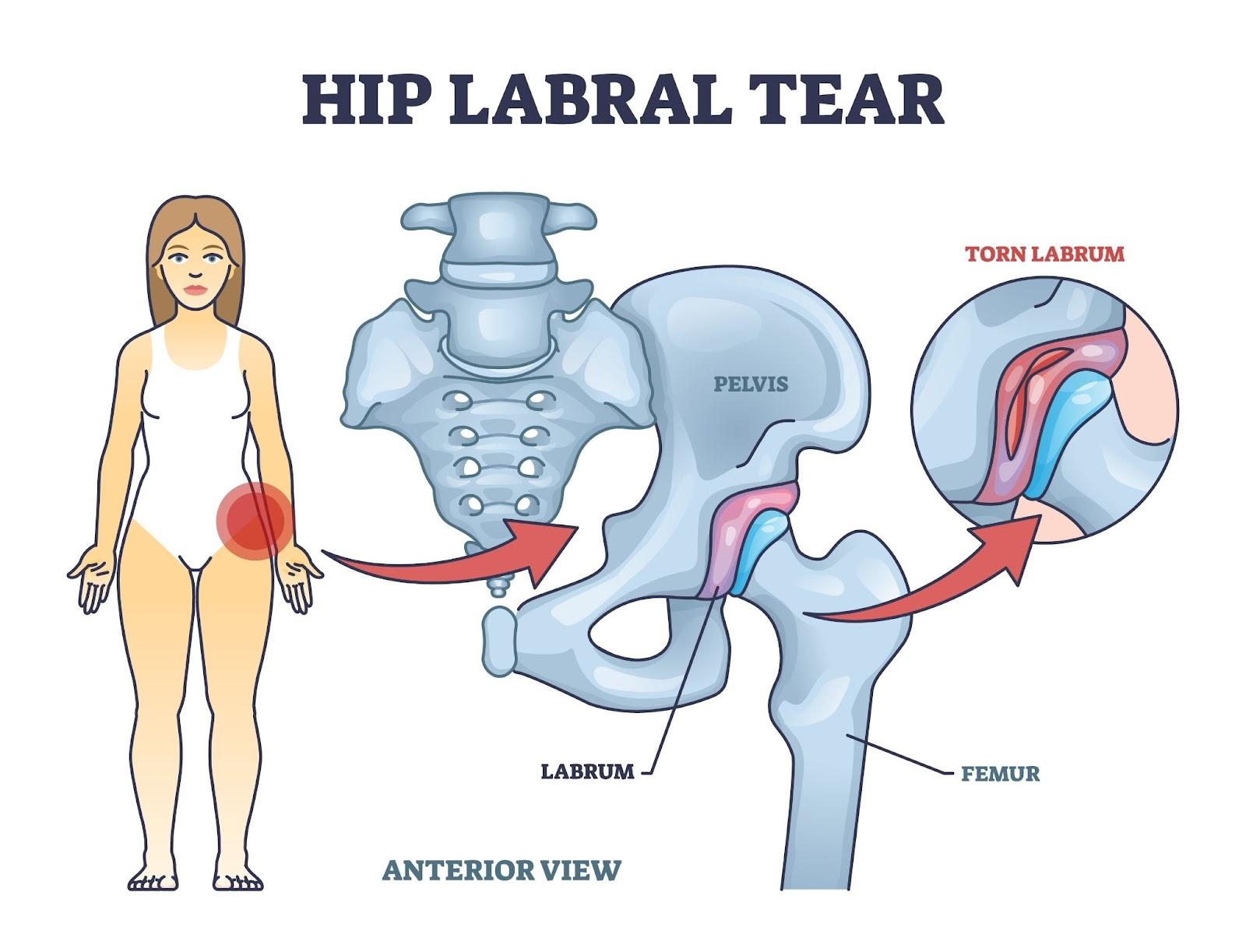
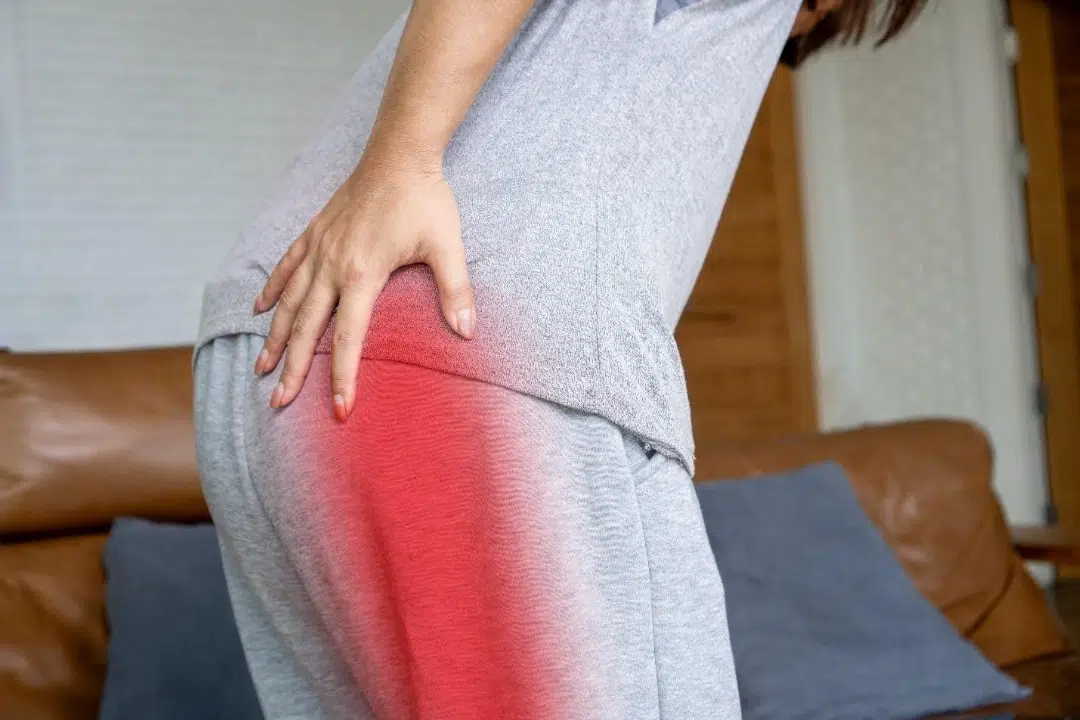
A hip labral tear refers to damage to the labrum, a ring of cartilage that lines the rim of the hip socket (acetabulum).
This cartilage acts as a cushion and stabiliser, helping to seal the joint and support smooth, fluid movement between the ball of the thigh bone (femoral head) and the socket.
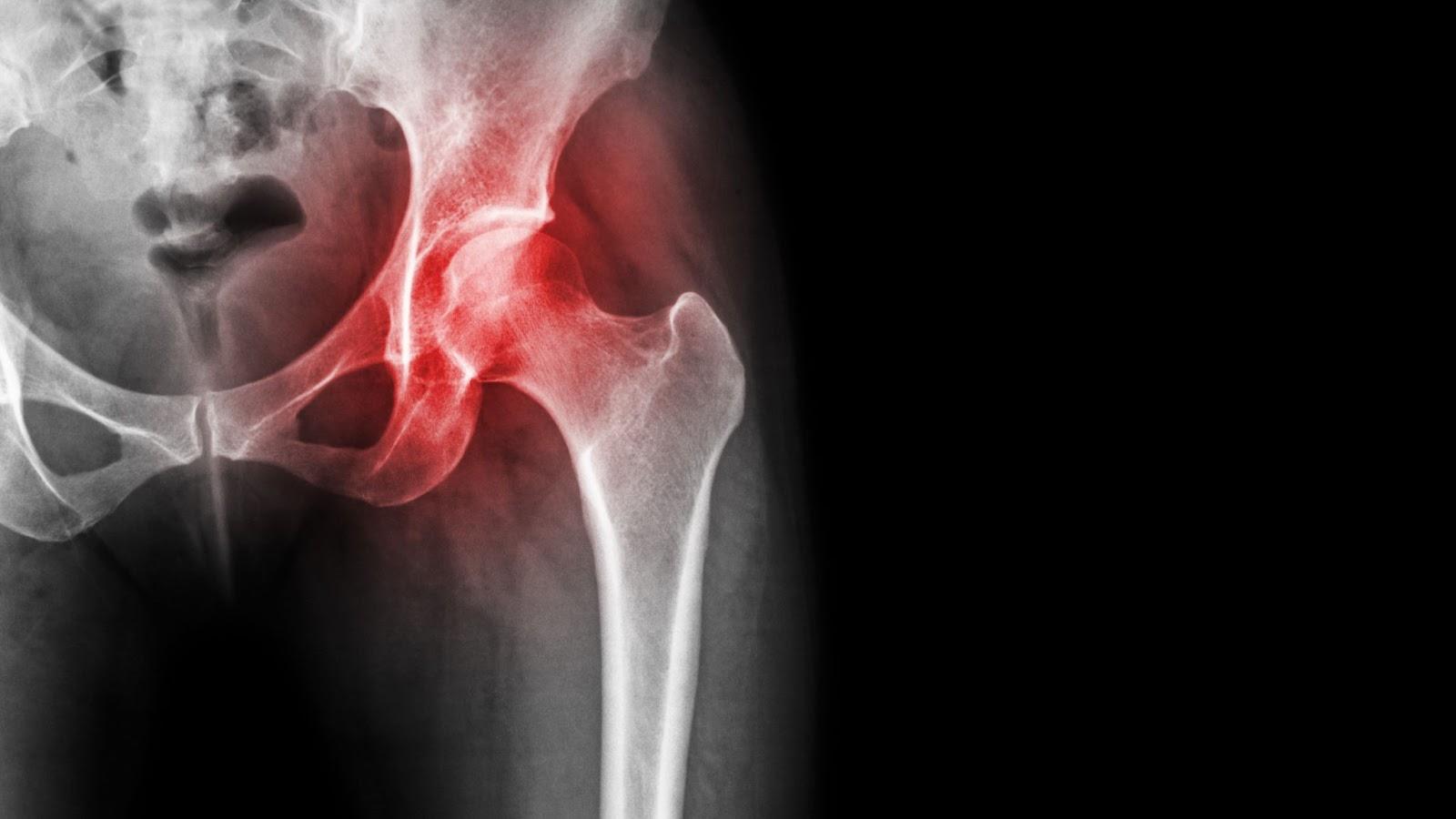
X-rays may be used to assess the hip joint, which can help identify structural issues contributing to a labral tear.
When the labrum is torn, either due to trauma, repetitive stress, or structural abnormalities, it can cause pain, a clicking sensation, stiffness, and instability in the hip. In some cases, people may experience discomfort only during certain movements such as twisting, pivoting, or prolonged sitting, making the condition difficult to identify without proper evaluation.
Labral tears are increasingly recognised in both active individuals and those with underlying anatomical variations like femoroacetabular impingement (FAI). Left untreated, they may contribute to joint degeneration and the early onset of osteoarthritis in the hip.
This condition affects people across various age groups, though it is especially common in athletes, dancers, and individuals engaged in high-impact or repetitive hip movements. Early diagnosis and targeted treatment can help reduce symptoms, prevent further joint damage, and restore mobility.
What causes a hip labral tear?
A hip labral tear can result from a variety of causes, often depending on a person’s age, activity level, and underlying hip structure. In many cases, the tear develops gradually due to repeated stress on the joint, while in others, it may be the result of a sudden injury.
Common causes include:
Femoroacetabular impingement (FAI) — one of the most frequent contributors, FAI occurs when the shape of the hip bones causes abnormal contact between the femoral head and the socket. Over time, this friction can damage the labrum.
Repetitive motion and overuse — sports that involve frequent twisting, pivoting, or impact (such as football, hockey, or ballet) place repeated stress on the hip joint, increasing the risk of labral tears.
Trauma or injury — a direct impact to the hip, such as from a fall, car accident, or sports collision, can cause an acute labral tear.
Structural abnormalities — some individuals are born with anatomical variations in their hip joint that place extra strain on the labrum during movement, making it more susceptible to injury.
Degenerative changes — with age and wear-and-tear, the cartilage in the hip joint can naturally deteriorate. This degeneration may include the labrum, especially in individuals with underlying joint conditions like osteoarthritis.
Capsular laxity or hip instability — loose or weakened ligaments around the hip joint can allow excessive movement, putting extra pressure on the labrum and leading to tearing over time.
A hip labral tear is an injury to the cartilage rim (labrum) around the hip socket that can cause pain, clicking, and restricted movement.
What are the symptoms of a hip labral tear?
The symptoms of a hip labral tear can vary widely depending on the location and extent of the tear. Some individuals experience significant discomfort, while others may not realise they have a tear until it is discovered during imaging for a different issue.
Common signs and symptoms include:
Deep, persistent hip or groin pain — a dull ache or sharp pain felt deep in the front of the hip or groin, which may often worsen by prolonged sitting, walking, or physical activity.
Clicking, locking, or catching sensations — many patients report mechanical symptoms such as a clicking sound or the feeling that the hip is locking or catching during movement.
Stiffness and reduced range of motion — the hip may feel tight or limited, particularly when trying to rotate or bend the leg.
Instability or the feeling of the hip ‘giving way’ — some people describe a sensation of instability, especially during weight-bearing activities or sudden changes in direction.
Pain during specific activities — sports, climbing stairs, or pivoting movements often aggravate symptoms. The discomfort may be intermittent at first but can become more constant over time.
Discomfort when lying on the affected side — night-time pain is common, particularly when sleeping on the injured hip.
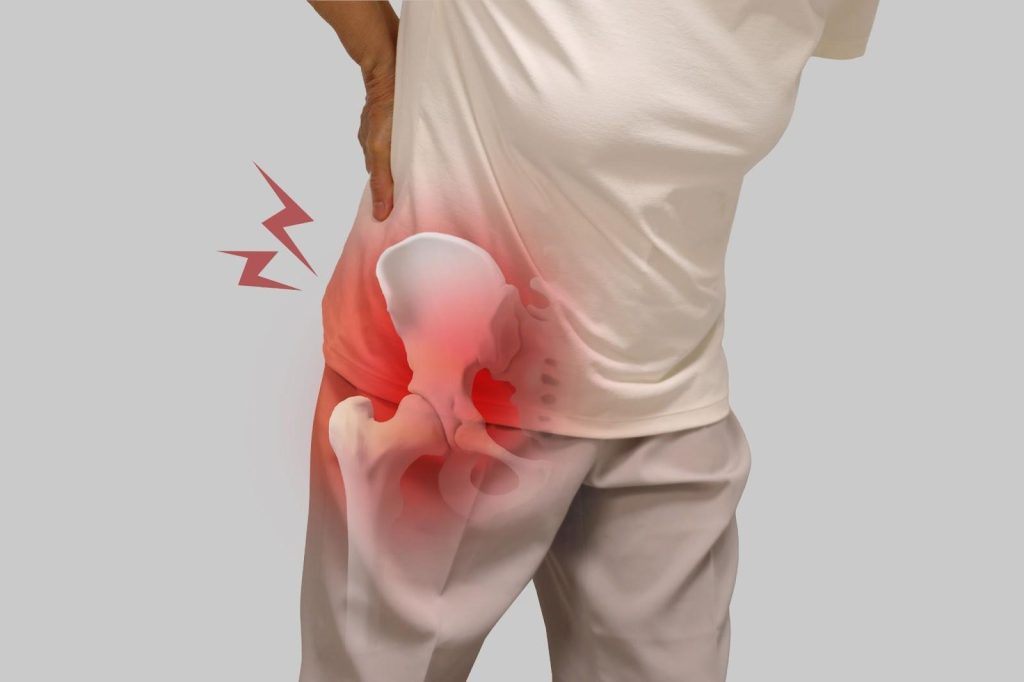
A hip labral tear causes deep, aching pain in the hip or groin, often worsened by movement or prolonged sitting.
Who is at risk of hip labral tear in Singapore?
While a hip labral tear can affect anyone, certain individuals are at greater risk due to their lifestyle, anatomy, or underlying medical conditions. Those more likely to experience a hip labral tear include:
Athletes and active individuals — people who participate in high-impact or repetitive-motion sports, such as football, hockey, golf, running, and dance, place continuous stress on the hip joint. These movements can gradually wear down or acutely injure the labrum.
Individuals with femoroacetabular impingement (FAI) — this anatomical condition causes abnormal contact between the femur and the hip socket, which increases friction and the likelihood of labral damage over time.
People with joint hypermobility or instability — individuals with looser ligaments or connective tissue disorders may have excessive movement in the hip joint, placing the labrum under extra strain.
Older adults — age-related wear and tear on the cartilage, including the labrum, makes older adults more vulnerable to degenerative labral tears, particularly in the presence of osteoarthritis.
Those with previous hip injuries — a history of trauma, such as a dislocation or fracture, can compromise the integrity of the labrum and increase the risk of future tearing.
People with abnormal hip structure — congenital or developmental variations in hip anatomy, such as hip dysplasia, can alter joint mechanics, making the labrum more prone to injury.
If you fall into one of these risk categories and are experiencing unexplained hip or groin discomfort, it may be worth seeking a medical evaluation. Early diagnosis can prevent complications and improve outcomes with conservative or surgical treatment.
How is a hip labral tear diagnosed?
Diagnosing a hip labral tear can be challenging, as the symptoms often mimic other hip, groin, or lower back conditions. A detailed assessment by a medical professional is essential to confirm the diagnosis and guide the appropriate treatment plan.
The diagnostic process typically includes:
Medical history and symptom review — the clinician will begin by discussing your symptoms, lifestyle, activity level, and any history of trauma or hip-related issues. Understanding the pattern of pain and mechanical symptoms, such as clicking or locking, can help raise suspicion for a labral tear.
Physical examination — specific movements and tests will be performed to assess hip function, range of motion, and joint stability. Common clinical tests, such as the FABER (flexion, abduction, external rotation) and impingement tests, may reproduce symptoms and help localise the source of discomfort.
Imaging tests
X-rays may be ordered first to identify any bony abnormalities like femoroacetabular impingement (FAI) or early signs of osteoarthritis.
MRI scans, particularly an MRI arthrogram (where contrast dye is injected into the joint), provide a clearer view of soft tissues and can help detect tears in the labrum with greater accuracy.
In some cases, CT scans may be used to provide more detail about the bone structure, especially if surgical intervention is being considered.
Diagnostic injections — to confirm that the pain is originating from the hip joint, a local anaesthetic may be injected into the joint. If symptoms temporarily improve, this helps pinpoint the joint as the source of the problem.
Gluteus medius tendinopathy can cause pain on the outer hip, especially when walking or climbing stairs. The discomfort results from inflammation or degeneration of the tendon, leading to tenderness and stiffness in the hip region.
What are the treatment options for a hip labral tear in Singapore?
Treatment for a hip labral tear in Singapore depends on several factors, including the severity of the tear, its underlying cause, and the patient’s activity level and overall health. The goal is to relieve symptoms, restore hip function, and prevent further joint damage. Options range from conservative management to surgical repair.
Non-surgical treatment
For mild to moderate tears or early-stage symptoms, conservative treatment is often the first approach:
Activity modification — avoiding activities that aggravate the hip, such as prolonged sitting, pivoting movements, or high-impact sports.
Physiotherapy — targeted exercises prescribed by a physiotherapist can strengthen surrounding muscles, improve joint stability, and enhance flexibility.
Medications — non-steroidal anti-inflammatory drugs (NSAIDs) may be recommended to relieve pain and reduce inflammation.
Joint injections — in some cases, corticosteroid or platelet-rich plasma (PRP) injections may be offered to reduce pain and inflammation, allowing better participation in rehabilitation.
Surgical treatment
If symptoms persist despite conservative management, or if the tear is large or associated with femoroacetabular impingement (FAI), surgery may be advised. In Singapore, this is typically performed using minimally invasive arthroscopic techniques:
Hip arthroscopy — a keyhole procedure where small instruments and a camera are inserted into the joint to repair or remove the damaged part of the labrum.
Labral repair vs. debridement — when possible, the labrum is repaired to preserve its function. In some cases, only the torn or frayed tissue is trimmed (debrided) if repair is not feasible.
Treatment of underlying causes — during the same procedure, bony abnormalities causing impingement may be reshaped to prevent future tears.
Hip arthroscopy is typically performed as a day surgery or short-stay procedure. Most patients can expect a structured rehabilitation programme post-surgery, with gradual return to daily and sporting activities over several weeks to months.
Summary
A hip labral tear is a common yet often underdiagnosed cause of persistent hip or groin pain, especially among athletes, older adults, and individuals with structural hip conditions like femoroacetabular impingement (FAI). Symptoms may include clicking, stiffness, reduced range of motion, and a deep ache in the hip.
Diagnosis involves a thorough clinical assessment, specialised physical tests, and imaging such as MRI arthrograms. Treatment in Singapore ranges from physiotherapy and lifestyle changes to minimally invasive arthroscopic surgery, depending on the severity of the tear.
If you are experiencing ongoing hip discomfort or limited mobility, schedule a consultation with us for a comprehensive assessment and personalised care.
Conditions We Treat
Hip
Head
Hand & Wrist
Foot & Ankle
Elbow
Frequently asked questions
Pain can range from a dull ache to sharp, stabbing discomfort, especially during movement. Any persistent or worsening pain should be professionally assessed.
It can cause ongoing pain and restrict daily or athletic activities. Without treatment, it may significantly reduce your mobility and comfort.
While not all cases are preventable, strengthening hip muscles and correcting movement issues can lower your risk.
No, hip labral tears do not heal naturally and require treatment to relieve symptoms and avoid further joint damage.
Recovery may take weeks with physiotherapy or several months post-surgery, depending on the severity and treatment method.
Yes, especially if the root cause, such as abnormal hip structure, is not addressed through proper care and rehabilitation.
High-impact activities should be avoided, but low-impact exercises may be safe under the guidance of a specialist.
Labral tears cause deep joint pain with clicking or catching, while hip flexor strains cause more superficial, muscle-related pain.
Delaying care can lead to worsening pain, limited movement, and early joint degeneration; therefore, early treatment is highly recommended.
At Cove Orthopaedic Clinic, our utmost importance is in helping our patients maintain or regain the mobility that they deserve, all through excellent patient care right from the start.
Happy and satisfied patients are what keeps us going!
If you have further enquiries or would like to make an appointment at Cove Orthopaedic Clinic, simply fill in the form below or call us at +65 9631 7637.