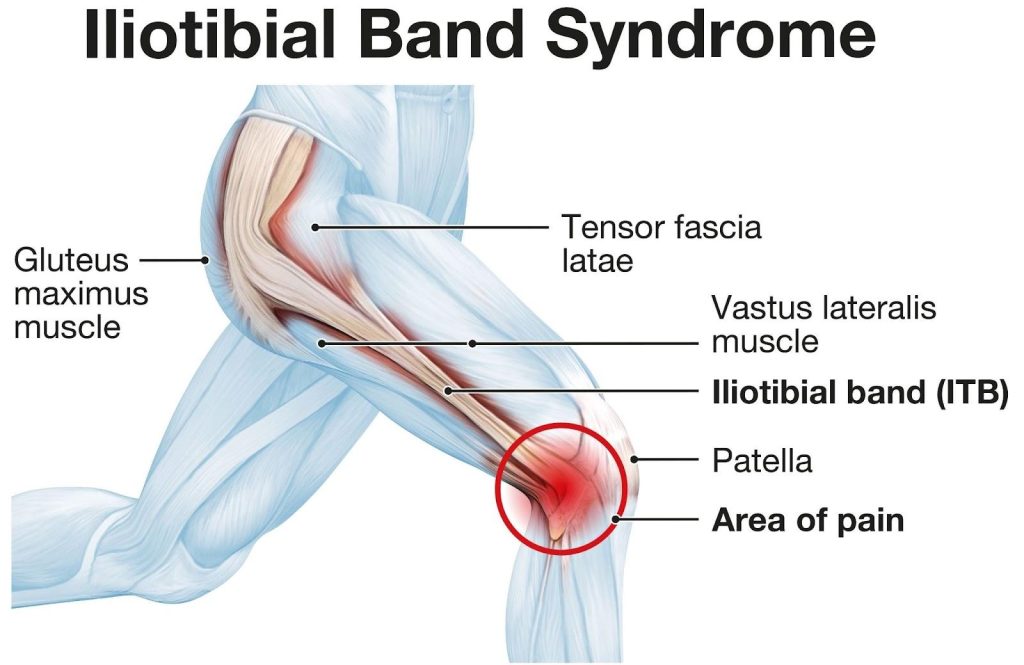
Iliotibial Band Friction Syndrome (ITBS) is a common overuse injury that primarily affects the outer side of the knee.
It occurs when the iliotibial band (IT band) — a thick band of connective tissue that extends from the hip to the outer part of the shinbone — repeatedly rubs against the lateral femoral condyle, a bony prominence on the outer side of the knee. This repetitive friction leads to inflammation, irritation, and pain.
The IT band plays a crucial role in stabilising the knee and supporting the hip during walking, running, or cycling. However, when subjected to repetitive movements, especially involving bending and straightening of the knee, the band can become overly tight or inflamed. This condition is particularly common among athletes, especially runners and cyclists, as their activities involve significant repetitive motion.
ITBS is one of the leading causes of lateral knee pain in active individuals and accounts for a significant percentage of running-related injuries. While the condition most often manifests as sharp or burning pain on the outside of the knee, it can also result in tenderness, swelling, or discomfort during specific activities such as descending stairs or running downhill.
Though ITBS is not typically a serious condition, it can significantly hinder physical performance and daily activities if left untreated. With proper care, including rest, physical therapy, and modifications to training routines, most individuals recover fully and can return to their activities pain-free.
Iliotibial Band Friction Syndrome (ITBS) is caused by repetitive friction of the iliotibial band against the outer knee, leading to irritation and inflammation.
What causes Iliotibial Band Friction Syndrome (ITBS)?
Iliotibial Band Friction Syndrome (ITBS) is caused by the repetitive rubbing or compression of the iliotibial band (IT band) against the lateral femoral condyle. This occurs during activities that involve repeated bending and straightening of the knee, such as running or cycling. As the IT band moves over the femoral condyle, excessive friction generates inflammation and irritation in the tissue.
Over time, this repetitive stress can lead to microtrauma in the IT band itself or the structures beneath it, such as the fat pad or bursa, further exacerbating the condition. The biomechanical movement of the IT band, combined with its tightness and inability to stretch effectively, makes it particularly susceptible to friction during high-impact or repetitive motion activities. Without proper recovery, the ongoing mechanical stress perpetuates the cycle of inflammation and pain, ultimately resulting in ITBS.
What are the symptoms of Iliotibial Band Friction Syndrome (ITBS)?
Iliotibial Band Friction Syndrome (ITBS) primarily presents with pain and discomfort on the outer side of the knee, often worsening during physical activities. The symptoms can vary in severity, but common indicators include:
Pain on the outer side of the knee — typically sharp or burning in nature, often worsening with repetitive movements such as running or cycling.
Tenderness or swelling — sensitivity to touch and occasional swelling in the affected area.
Snapping or popping sensation — a noticeable sensation as the IT band moves over the bony prominence during activity.
Worsening pain during specific activities — increased discomfort when running downhill, climbing stairs, or sitting for extended periods with the knee bent.
Reduced mobility or stiffness — difficulty in fully flexing or extending the knee due to discomfort.
Who is at risk of Iliotibial Band Friction Syndrome (ITBS) in Singapore?
Iliotibial Band Friction Syndrome (ITBS) can affect anyone engaging in repetitive knee-bending activities, but certain factors increase the likelihood of developing this condition. Individuals at higher risk include:
Runners and cyclists — frequent repetitive movements place significant strain on the IT band.
Athletes in high-impact sports — activities like football or hiking, which involve intense knee motion, elevate the risk.
Individuals with poor training habits — sudden increases in training intensity, insufficient warm-ups, or improper recovery can contribute to ITBS.
Office workers and sedentary individuals — prolonged sitting with bent knees can tighten the IT band over time.
How is Iliotibial Band Friction Syndrome (ITBS) diagnosed?
At Cove Orthopaedics, we take a thorough and personalised approach to diagnosing Iliotibial Band Friction Syndrome (ITBS). Our focus is on understanding your symptoms, lifestyle, and physical condition to provide an accurate diagnosis. Methods we use include:
Comprehensive medical history review — our healthcare expert discusses your activity levels, training habits, and the onset of symptoms to identify potential causes of ITBS.
Physical examination — our specialists assess the outer side of your knee for tenderness, swelling, or tightness in the IT band and perform specific tests to pinpoint the source of your pain.
Gait analysis — we observe your walking or running pattern to identify biomechanical issues such as leg alignment, foot pronation, or muscle imbalances.
Range of motion and strength tests — evaluating the flexibility and strength of your hip and knee muscles helps us determine contributing factors.
Imaging studies if necessary — in some cases, we may recommend X-rays, ultrasound, or MRI scans to rule out other knee conditions and confirm the diagnosis.
By combining these diagnostic methods, our team at Cove Orthopaedics ensures you receive a clear and accurate diagnosis, as we pave the way for effective treatment according to your needs.
What are the treatment options for Iliotibial Band Friction Syndrome (ITBS) in Singapore?
At Cove Orthopaedics, we believe in a personalised and holistic approach to treating Iliotibial Band Friction Syndrome (ITBS). Our aim is to alleviate your pain, address the root cause, and help you return to your activities comfortably. Treatment options we offer include:
Rest and activity modification — we guide you in adjusting your physical activities to minimise strain on the IT band and promote recovery.
Physiotherapy — we recommend customised exercise programmes to stretch the IT band, strengthen surrounding muscles, and improve flexibility and stability.
Medications for pain relief — non-steroidal anti-inflammatory drugs (NSAIDs) may be prescribed to reduce inflammation and alleviate discomfort.
Corticosteroid injections — for severe or persistent cases, targeted injections can effectively reduce inflammation and provide relief.
Gait and posture correction — we work with you to identify and correct biomechanical issues such as foot pronation or improper running technique.
Extracorporeal shockwave therapy (ESWT) — a non-invasive option that promotes healing by stimulating blood flow and reducing tissue inflammation.
Surgical intervention as a last resort — in rare cases where conservative treatments do not provide relief, surgical options may be considered to release or lengthen the IT band.
At Cove Orthopaedics, we are dedicated to tailoring your treatment plan to meet your specific needs and lifestyle, so we can ensure optimal outcomes for your recovery.
If you’re experiencing persistent knee pain or discomfort, schedule a consultation with Cove Orthopaedics today for a personalised evaluation and effective treatment plan to get you back to your active lifestyle.
Frequently asked questions
Yes, while ITBS commonly causes pain on the outer side of the knee, it can also lead to discomfort in the hip area due to the continuous tension and inflammation of the iliotibial band.
Recovery time varies depending on the severity of the condition and adherence to treatment. With appropriate rest and therapy, many individuals recover within a few weeks, but more persistent cases may take longer.
It’s important to modify activities to avoid aggravating symptoms. Low-impact exercises that don’t exacerbate pain can be beneficial, but it’s best to consult a healthcare professional for personalised advice.
Yes, wearing worn-out or inappropriate shoes can alter gait and increase stress on the IT band, potentially leading to ITBS. Ensuring proper footwear is crucial for prevention and recovery.
If not properly treated, ITBS can lead to chronic pain and may limit participation in certain activities. Early intervention and adherence to treatment plans are essential to prevent long-term issues.
At Cove Orthopaedic Clinic, our utmost importance is in helping our patients maintain or regain the mobility that they deserve, all through excellent patient care right from the start.
Happy and satisfied patients are what keeps us going!
Consult Us Today
If you have further enquiries or would like to make an appointment at Cove Orthopaedic Clinic, simply fill in the form below or call us at +65 9631 7637.